International Day of the Girl Child 2026: October 11 theme and key facts
International Day of the Girl Child 2026 is observed on Sunday, October 11. Here is the confirmed UN theme, the date, key context and practical ways to mark it respectfully.
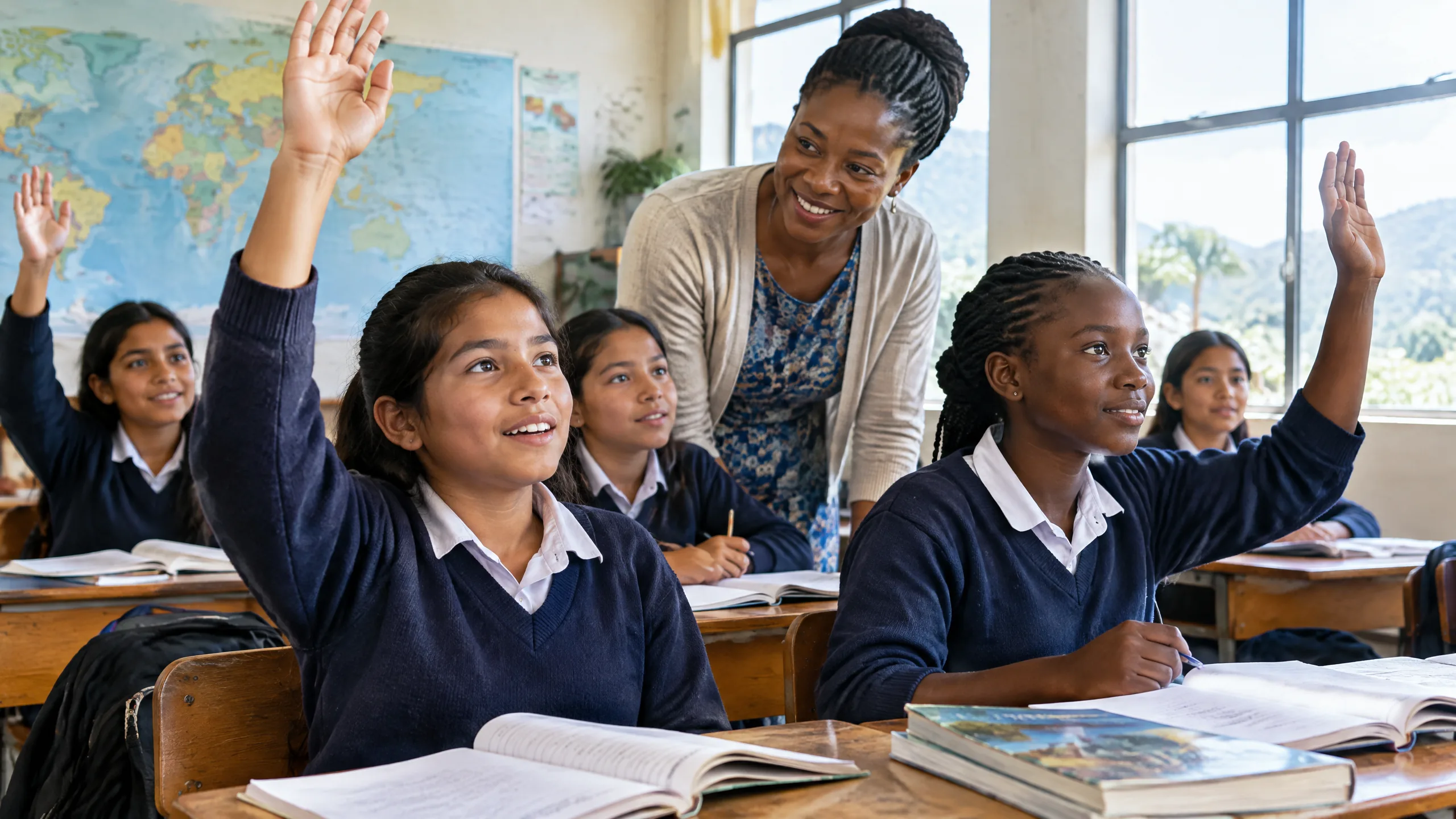
- International Day of the Girl Child 2026 falls on Sunday, 11 October, including in India.
- The United Nations’ stated 2026 theme is “End child marriage and invest in girls’ rights!”.
- The official UN page says more than 12 million girls are married before adulthood each year; it also says progress is possible through measures including education, legal reform and social protection.
- The observance is a global rights-focused date, not evidence of a confirmed India-wide public holiday, ceremony or local programme.
- A useful local activity centres girls’ views, safeguarding and accurate information rather than asking girls to speak publicly or disclose personal experiences.
International Day of the Girl Child 2026 date: the direct answer
**International Day of the Girl Child 2026 is on Sunday, 11 October.** The date is observed annually around the world, including in India. For readers looking for the International Day of the Girl Child 2026 date, October 11 is the confirmed answer. It is a United Nations observance focused on girls’ rights and on the distinct challenges that girls can face in everyday life.
The United Nations page for the observance states that the 2026 theme is **“End child marriage and invest in girls’ rights!”** That wording matters. It places the focus on girls as rights-holders: people entitled to safety, education, health, participation and the freedom to make choices about their own lives. It is not a request to reduce girls to a problem to be solved or to speak about them without listening to them.
This is an advance guide, prepared on 5 October 2026 IST, six calendar days before the observance. The cited pages establish the annual October 11 date and the UN theme. They do not set a single worldwide start time, an India-specific programme time, or a nationwide Indian event schedule. Readers should use a school, local authority or organiser’s current notice for any local arrangements.
What is confirmed for 2026 — and what should not be assumed
**Confirmed:** the UN says International Day of the Girl is celebrated every year on 11 October. Its current page describes the day as a global moment to celebrate girls, amplify their voices, actions and leadership, and advocate for the full range of girls’ rights. The same official page identifies the 2026 theme as “End child marriage and invest in girls’ rights!” and says it was developed through consultations with girls, girls’ organisations, girl-led networks, civil-society organisations and United Nations partners.
**Confirmed:** the observance has a formal UN history. According to the UN background on the page, the General Assembly adopted Resolution 66/170 on 19 December 2011, declaring 11 October the International Day of the Girl Child. The purpose is to recognise girls’ rights and the particular challenges they may encounter, while supporting empowerment and the fulfilment of human rights. This history explains why the day is more than a social-media date or a generic celebration.
**Not confirmed by the sources used here:** an India-wide public holiday, a government-hosted national ceremony, a specific venue, a speaker list, a broadcast, or a common school timetable for October 11. None should be inferred from the international observance. An organisation that plans an activity should publish its own accessible details and safeguarding arrangements; a family or student should not rely on an old poster or an unsourced forward for attendance information.
The difference between confirmed information and local expectation is especially important when the subject involves children. A national or international date can be certain while a neighbourhood event is not. Clear wording protects readers from disappointment and protects organisers from accidentally presenting an informal activity as an official UN or government programme.
Why the day centres girls’ rights rather than a single symbolic gesture
International Day of the Girl Child is often described as a celebration, but the official framing is broader. It calls attention to barriers that can prevent girls from enjoying their rights on equal terms. The UN says adolescent girls have the right to a safe, educated and healthy life during adolescence and as they grow into women. That sentence gives a practical test for any discussion of the day: does it respect a girl’s safety, learning, health, agency and voice?
A people-first approach begins by recognising that girls are not a single, uniform group. Their opportunities and risks can differ by age, disability, caste, language, location, family income, migration status and many other circumstances. It is therefore better to listen to girls’ own priorities than to assume that adults already know what every girl needs. Participation should be voluntary, age-appropriate and safe; no child should be pressed to share a personal story in public.
The day can also help adults examine routine choices. Does a school have a private way to report concerns? Can a girl participate in a class activity without being mocked for her language, appearance or ambition? Are health and education discussions accessible to students with disabilities? Are chores, care work or unsafe travel limiting attendance? These questions do not require a grand event. They require attention, respectful conversation and follow-through.
For people searching “why is International Day of the Girl Child observed,” the direct answer is that it creates a shared annual moment to recognise rights and confront unequal barriers. A card, poster or assembly can be meaningful when it supports that purpose. It is not sufficient if it replaces girls’ safety, privacy and access to support with performance or publicity.
The 2026 theme: ending child marriage and investing in girls’ rights
The UN’s 2026 theme, **“End child marriage and invest in girls’ rights!”**, connects a specific harmful practice with the wider conditions that make choices possible. The official page says more than 12 million girls are married before reaching adulthood each year, or roughly one every three seconds. It identifies child marriage as one of the most widespread violations of girls’ rights and says it can deny girls the opportunity to remain in school, protect their health, live free from violence and fulfil their potential.
Equality Now, the independent source in the approved manifest, also marks the day each year on 11 October and focuses its 2026 information on child, early and forced marriages and unions. It describes child marriage as preventable and says girls subjected to it can be disproportionately excluded from education and economic opportunity, more likely to experience sexual and gender-based violence, and face heightened risks associated with early pregnancy and maternal mortality. These are rights and health concerns, not a reason to blame girls or families facing pressure.
The sources point to connected drivers rather than a simple explanation. Equality Now names poverty, gender inequality, harmful social norms and gaps in systems that support families. It says climate shocks, conflict and economic stress can increase household vulnerability. This context matters because respectful public discussion avoids stereotypes about a country, community or religion. Prevention requires practical support and accountable systems as well as changes in attitudes.
The UN page also records progress: it says an estimated 68 million child marriages have been averted over the past 25 years through investments in girls’ education, legal reform and social protection. That is a confirmed retrospective estimate cited by the UN, not a forecast for 2026. The page identifies keeping girls in school, access to health, protection and social services, work with families and communities, and support for girls’ leadership as important approaches.
How a school, family or community group can mark October 11 thoughtfully
A practical observance does not need to be elaborate. A school can begin with a short, accurate introduction: October 11 is International Day of the Girl Child; the 2026 UN theme is “End child marriage and invest in girls’ rights!”; and the aim is to recognise rights and listen respectfully. A class can then discuss what makes a learning environment safer and more inclusive, without asking any student to reveal a private experience or represent an entire group.
One useful activity is a confidential suggestion process open to all students, with clear limits on confidentiality and a named adult who can respond safely to safeguarding concerns. Another is a library or classroom display that credits reliable sources and explains where young people can seek help through the school’s established safeguarding process. A student council can review practical participation issues, such as accessible facilities, safe travel, sports access, sanitation or whether school rules affect girls and boys fairly. These are examples, not an official UN activity list.
Families can use the date for a calm conversation about education, friendships, digital safety, health questions and future choices. The most helpful approach is to ask before advising and to make room for an honest answer. Adults can also notice whether a girl has the information, time, transport, documents, privacy and trusted support she needs to participate in school and community life. Respect means not turning the conversation into a test of gratitude or obedience.
Community groups should set boundaries before inviting young people to take part. Obtain appropriate permissions, explain how photographs or quotations would be used, offer a way to opt out without penalty and avoid collecting unnecessary personal data. Do not publicise a child’s situation, use a survivor’s story as a campaign prop, or promise services that the group cannot provide. If a disclosure of harm is made, follow the relevant safeguarding and referral procedures rather than attempting an improvised response.
Practical planning checklist for an upcoming local activity
First, confirm the basics in writing: the local organiser, venue or online platform, start and finish times, accessibility details, responsible adults and contact method. International Day of the Girl Child is on October 11, but that date alone does not confirm a local event. If an activity is held before or after the date because October 11 falls on a Sunday in 2026, describe it accurately as a local observance connected to the day rather than as the official global programme.
Second, make safeguarding a planning item rather than an afterthought. Check who is responsible for children during the activity, whether there is an approved photography policy, how a concern can be raised and whether participation is voluntary. Keep topics age-appropriate. If the programme addresses child marriage, violence or other serious harms, use trained facilitators and ensure that young people know how to access established support through the relevant school, service or authority.
Third, use reliable language. Quote the UN’s theme accurately, credit the source and distinguish global facts from local experience. Avoid claims that all girls face the same barriers, that a particular child needs rescuing, or that an event has official backing when it does not. If a speaker, partner, budget or service is not confirmed, leave it out of publicity. Accuracy is part of respect.
Finally, keep the measure of success human rather than promotional. A well-run activity might give students useful information, make a school procedure clearer, identify an accessibility gap or create a safer channel for feedback. It need not generate photographs, personal testimonies or a large audience. The important question is whether participants leave with greater dignity, clarity and support.
India context and related Reddy News reading
The global observance can be relevant in India without turning an international theme into a claim about one local reality. Readers seeking current India-specific services, legal information or school procedures should check the responsible local institution or official authority rather than rely solely on a general observance explainer. The sources for this article do not announce a 2026 India-wide schedule, holiday or national programme for October 11.
For related, separate reporting, Reddy News has covered a [National HPV vaccination campaign that passed 80 lakh administered doses](https://metalscommoditytrading.com/india/india-hpv-vaccination-campaign-80-lakh-doses/). That article concerns a specific public-health campaign and should not be treated as part of International Day of the Girl Child programming. It is relevant here only because accessible, voluntary and well-explained adolescent health services are part of the wider conditions in which girls can exercise their rights.
Reddy News has also reported that [Bengaluru Police said 529 children were removed from workplaces in a one-day drive](https://metalscommoditytrading.com/india/bengaluru-police-529-children-rescued-child-labour-drive/). The report carefully attributes its figures to police and treats registered cases as allegations, not findings of guilt. Its connection to this observance is the shared public-interest concern for children’s safety and education; it does not establish a programme or a trend for October 11.
For an education-policy perspective, readers can see the [Telangana education policy framework guide](https://metalscommoditytrading.com/reddy/telangana-education-policy-revanth-reddy-framework/). It reports a separate proposed framework and is not a girls’ rights initiative. Reading related coverage with those boundaries in mind is more useful than forcing unrelated developments into a single narrative. On October 11, the clearest verified message remains the UN’s: protect girls’ rights, listen to girls and support the conditions that let every girl learn, stay safe and choose her own future.
Reader guide
Article questions, answered
Short answers to common reader questions based on the reporting above.
When is International Day of the Girl Child 2026?
International Day of the Girl Child 2026 is on Sunday, 11 October. The United Nations says the observance is held every year on October 11, including when the date falls on a weekend in India.
What is the International Day of the Girl Child 2026 theme?
The United Nations’ stated 2026 theme is “End child marriage and invest in girls’ rights!” Use that wording for a factual notice or classroom introduction rather than inventing an unofficial slogan.
Is there a fixed event time for International Day of the Girl Child 2026 in India?
The sources used for this article establish the October 11 calendar observance but do not give a universal or India-specific event start time. Check a school, local authority or organiser’s current notice for any local programme time and venue.
Is October 11 a public holiday in India for the observance?
Do not assume so. The UN and Equality Now pages confirm the annual observance and its rights context, not a nationwide Indian public holiday or school-closure notice. Check the relevant school, employer or local authority calendar.
How can a school observe International Day of the Girl Child respectfully?
A school can share the accurate date and theme, create an age-appropriate discussion about rights and inclusion, and use safe channels for student feedback. Participation should be voluntary; students should not be asked to disclose personal experiences or be photographed without appropriate permission.
Why does the 2026 theme focus on child marriage?
The UN says child marriage can deny girls the chance to stay in school, protect their health, live free from violence and fulfil their potential. Equality Now describes it as a preventable rights violation connected to factors including poverty, gender inequality, harmful social norms and gaps in support systems.
Sources and further reading
These references support the factual context used in this article. Links open the original publisher.
- International Day of the Girl Child — 11 OctoberUnited Nations · accessed 2026-10-05 IST
- International Day of the Girl ChildEquality Now · accessed 2026-10-05 IST