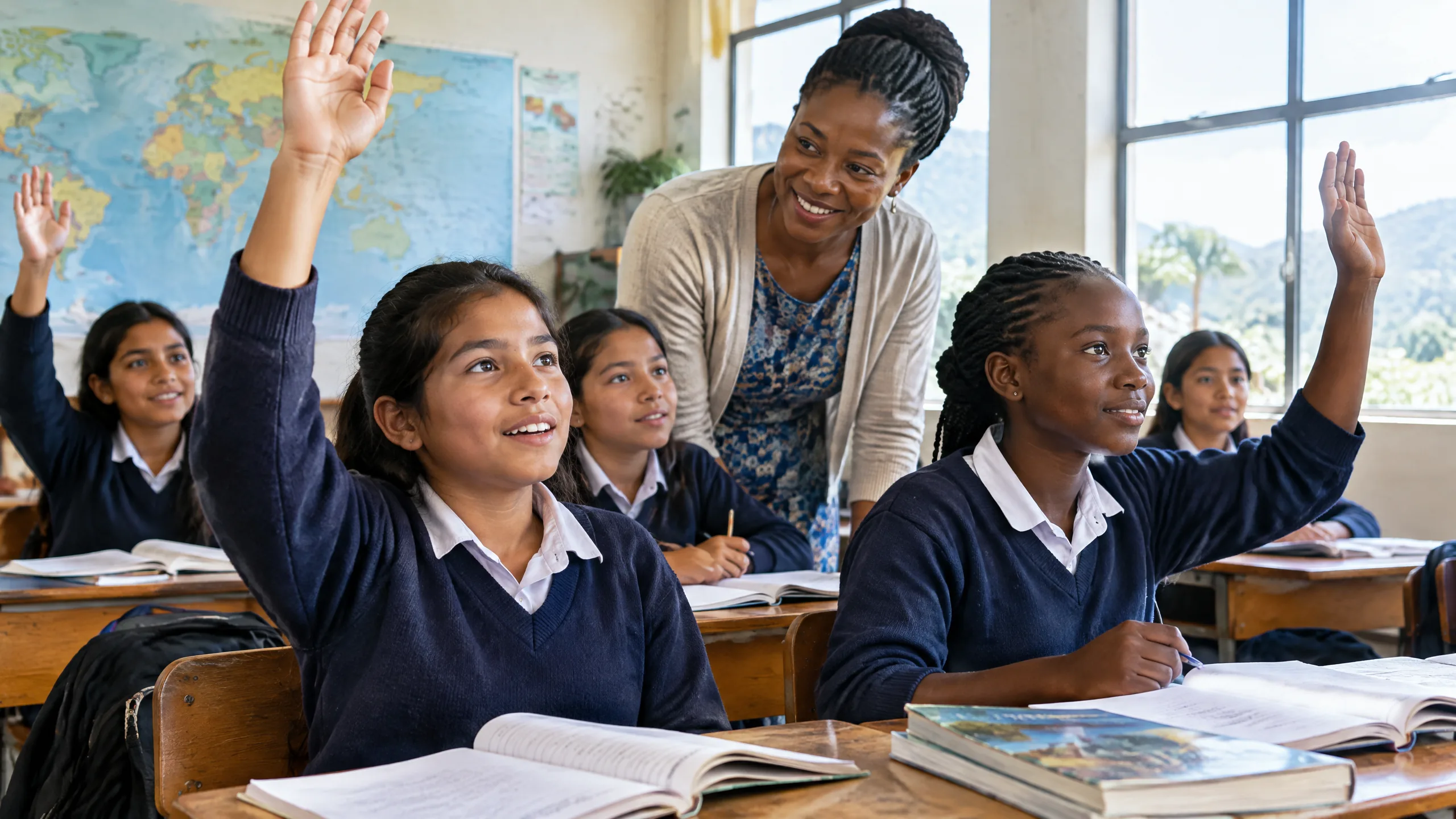
World Sight Day 2026: October 8 observance focuses on eye care that is accessible, available and affordable
World Sight Day 2026 falls on Thursday, October 8. Here is the confirmed date, the Love Your Eyes campaign context, what accessible eye care means in practical terms, and how people, schools and workplaces can prepare without assuming an unconfirmed local programme.
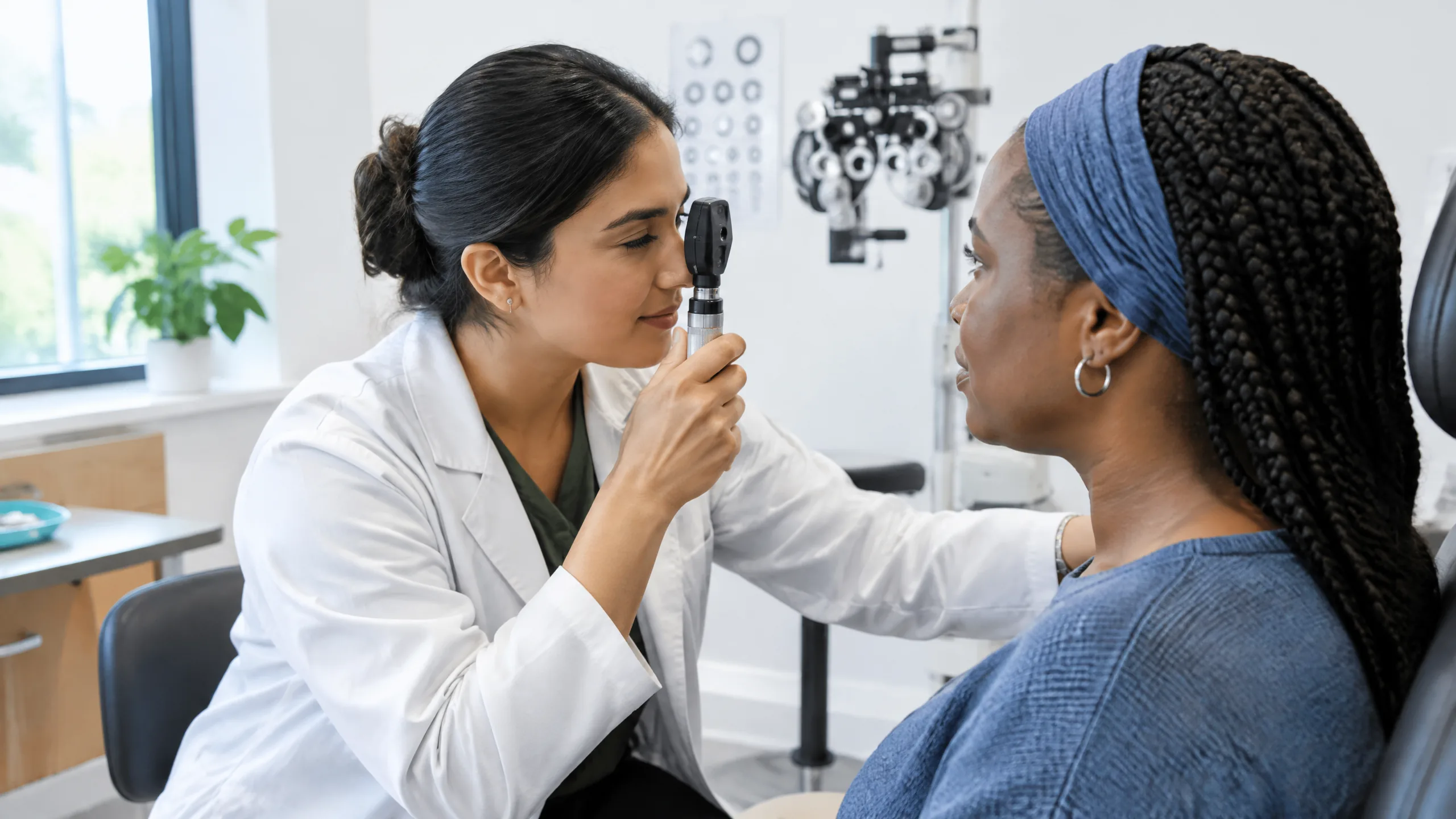
- World Sight Day 2026 is scheduled for Thursday, 8 October; it is three calendar days, or 72 hours, after this 5 October IST guide was prepared.
- The International Agency for the Prevention of Blindness says the 2026 observance will focus attention on eye care that is accessible, available and affordable to all.
- There is no single India-wide venue, timetable, public holiday or local programme confirmed by the two sources reviewed for this article. Check the organiser or institution that is hosting any local activity.
- The campaign’s confirmed message is wider than a one-day reminder: it links eye health to the ability to learn, work, travel, communicate and take part in everyday life.
- Practical observance ideas should be inclusive, voluntary and grounded in reliable local eye-care information rather than in self-diagnosis or unverified screening claims.
World Sight Day 2026 date: the direct answer
**World Sight Day 2026 is on Thursday, 8 October.** The International Agency for the Prevention of Blindness (IAPB) identifies that date on its World Sight Day page and asks people to focus the world’s attention on eye care that is accessible, available and affordable to all. Sightsavers USA independently lists the same Thursday, 8 October 2026 date for the annual event.
For readers in India, the date is 8 October 2026. This guide was checked on 5 October 2026 IST, leaving three calendar days before the observance, recorded here as a 72-hour lead time. The observance is global and annual rather than a single ticketed programme with one universal opening time, so no event start time in IST is stated. A school, clinic, employer, local government or community group may choose its own schedule; its current notice is the appropriate source for its time, place, access arrangements and registration details.
The clearest short answer for notices and conversations is: World Sight Day is on the second Thursday of October, and in 2026 that is 8 October. Do not turn that calendar fact into a claim that a particular city has an official event, that a local service is free, or that institutions will close. Those details have not been established by the campaign pages reviewed here.
What is confirmed for the 2026 observance
The confirmed campaign focus is eye care that is **accessible, available and affordable to all**. IAPB presents World Sight Day as a moment to spotlight the importance of eye care and invites people to use the Love Your Eyes message. Its page says the observance is held every October on the second Thursday and describes it as an opportunity to make eye health harder to ignore.
IAPB also states that nearly everyone will experience an eye-health issue during their lifetime and that more than one billion people still lack access to the services and treatments they need. Sightsavers USA similarly says that at least one billion people have a visual impairment that is unaddressed or could have been prevented. These are global campaign-context figures, not estimates for any particular Indian state, district, school or workplace.
The phrase “Love Your Eyes” is the campaign call, not a diagnosis, treatment plan or substitute for professional care. It can be a useful prompt to give eye health attention, but a person with a concern should use an appropriately qualified local eye-care provider or health service for individual advice. Someone with a sudden or severe eye problem should seek prompt local medical help rather than wait for an awareness day or rely on an online checklist.
Why accessible eye care is a people-first issue
Eye care is often discussed through statistics, but access is experienced one person at a time. A child who cannot see a board clearly may find reading, copying work or joining in at school more difficult. An adult whose vision changes may face obstacles in travel, tasks at work, caring for family or managing daily errands. An older person may need information and support that fit their language, mobility, finances and household situation. The point is not to assume that any person’s difficulty has one cause; it is to recognise that eye-care barriers can touch ordinary independence and participation.
Sightsavers USA says that the burden of vision impairment is not distributed equally: women and girls account for 55 per cent of people with visual impairment, and more than 90 per cent of people who are blind live in low- and middle-income countries. It also links access to quality eye care with learning, employment opportunities, health outcomes and progress towards universal health coverage. Those statements help explain why the 2026 message includes affordability and availability as well as physical access.
In practical terms, a service can exist on paper yet still be hard to use. Distance, transport, inaccessible buildings, unclear information, cost, appointment delays, language, stigma, caregiving duties and a lack of suitable follow-up can all shape whether a person reaches care. A people-first observance makes room for these realities. It does not frame people with vision impairment as a problem to be solved, and it does not reduce eye health to a test, a product or one day on the calendar.
What accessible, available and affordable can mean in practice
The three words in the campaign message describe related but distinct questions. **Accessible** asks whether people can physically and practically use a service: can they get there, enter it, communicate with staff, receive information in an understandable format and use the process with dignity? **Available** asks whether the needed service, trained workforce, equipment and referral pathway are actually present when required. **Affordable** asks whether the cost of consultation, tests, spectacles, treatment, travel and time away from work creates a barrier.
For a local organiser, this can shape modest but meaningful choices. Use high-contrast, readable notices; provide clear written directions; avoid assuming that everyone can use a QR code; say whether a venue has step-free access; and offer a contact method for access questions. If a screening or referral activity is proposed, the organiser should explain who is providing it, what it can and cannot assess, whether participation is voluntary, what happens to any personal information and where follow-up advice will come from. These are planning principles, not a claim that every World Sight Day activity must use one format.
For a workplace or school, accessibility also means not placing the burden of education on a person with a disability or an eye condition. Invite qualified professionals or trusted local services where appropriate, seek consent before sharing anyone’s story or image, and make participation optional. A respectful programme can include people with lived experience without asking them to disclose private health information or speak on behalf of everyone else.
What individuals and families can do before October 8
An awareness day can be a reason to make a practical plan rather than a reason to worry. Families can ask a regular health provider, qualified eye-care professional, school health contact or local public-health service how to access routine eye-care information in their area. If a person already uses spectacles, medication or another care plan, World Sight Day may be a sensible prompt to follow the advice they have been given and to ask where to go if their needs change. It is not a basis for changing treatment independently.
A useful conversation can be simple: Does anyone in the household need help arranging an appointment, transport, a reminder, an interpreter or someone to accompany them? Are there official local sources that explain where eye-care services are offered? Is an older relative, a child or a neighbour facing a practical access barrier? Asking respectfully can be more helpful than making assumptions about what someone can see or do.
Care should be taken with health claims shared online. A campaign poster may raise awareness, but it cannot determine the cause of blurred vision, pain, injury or any other symptom. Posts that promise to restore sight, guarantee results, sell unverified remedies or discourage professional care should not be treated as medical guidance. Reliable local services and licensed clinicians are better placed to advise on a person’s circumstances.
How schools, workplaces and community groups can observe the day
There is no IAPB-confirmed nationwide programme for India in the source material reviewed for this article. That leaves room for local institutions to choose an appropriate scale, but it also means they should not label an independently planned activity as an official national event. A short assembly message, staff briefing, library display or community discussion can accurately state the date and the campaign’s focus on accessible, available and affordable eye care.
A school might prepare age-appropriate material about respecting classmates who use spectacles, assistive devices or different formats for learning. A workplace might review whether health information and safety communications are readable and whether staff know how to request reasonable access support. A residents’ group might compile verified local contact details for public facilities or reputable providers, while making clear that availability, cost and eligibility must be confirmed directly. The value lies in information that people can use, not in overstating what an event can deliver.
When organising a session, include a clear boundary between awareness and health care. Do not promise diagnosis, treatment or referral outcomes unless a qualified provider has agreed to them and the terms are confirmed. Do not photograph participants, especially children, without suitable consent. Build in time for questions, use plain language, and tell attendees where the organiser obtained its core facts. These steps help keep a well-intended observance trustworthy and welcoming.
Confirmed facts versus local expectations
**Confirmed:** World Sight Day 2026 is Thursday, 8 October. IAPB says it is observed on the second Thursday in October, uses the Love Your Eyes campaign message, and is focusing attention on eye care that is accessible, available and affordable to all. Sightsavers USA confirms the date and describes the observance as annual awareness of avoidable blindness and vision impairment. These points are supported by the two source pages checked on 5 October 2026.
**Not confirmed by the sources reviewed:** an India-wide ceremony, a specific Indian theme event, a national public holiday, a single screening timetable, a universal venue, a streaming schedule, local eligibility rules or the cost and availability of a particular eye-care service. Readers should not infer these details from the international campaign pages. Contact the named local organiser or service before travelling, sharing personal data or making plans around an activity.
That distinction protects readers from a common problem with awareness-day information: a fixed international date gets repeated alongside imagined local arrangements. Accurate advance coverage can still be useful. It tells people what is settled, gives them time to look for a suitable local service or event, and leaves uncertain details open until an organisation with responsibility for them publishes a current notice.
Why the day matters beyond October 8
World Sight Day is a date on the calendar, but the access questions it raises continue throughout the year. IAPB’s description of more than one billion people lacking needed services or treatment points to a systems issue as well as an individual one. Sightsavers USA describes work that includes training eye-health staff, supporting local services and strengthening health systems. These are examples of the kinds of capacity that make care more consistently reachable; they should not be read as a claim about the provision of a particular service in India.
Readers interested in the wider public-health setting can also see Reddy News’ coverage of [India’s HPV vaccination campaign](https://metalscommoditytrading.com/india/india-hpv-vaccination-campaign-80-lakh-doses/), which explains how to read programme measures carefully, and the report on [Andhra Pradesh’s critical-care blocks and public-health laboratories](https://metalscommoditytrading.com/india/andhra-pradesh-critical-care-blocks-public-health-labs-pm-abhim/). Those are separate health stories, but both concern how services are organised and how official claims should be read precisely. More coverage is available in the [India section](https://metalscommoditytrading.com/india/).
For World Sight Day 2026 itself, the reliable practical summary is straightforward: mark Thursday, 8 October; use the confirmed campaign message accurately; respect people’s privacy and choices; and confirm local details with the organisation responsible for them. Awareness is most useful when it leads to information people can actually reach and use.
Reader guide
Article questions, answered
Short answers to common reader questions based on the reporting above.
When is World Sight Day 2026?
World Sight Day 2026 is on Thursday, 8 October 2026. IAPB observes the day on the second Thursday of October, and Sightsavers USA lists the same date.
What is the World Sight Day 2026 focus?
IAPB says the observance will focus attention on eye care that is accessible, available and affordable to all. Its campaign call is Love Your Eyes.
Is there a confirmed World Sight Day 2026 event in India?
The two sources checked establish the global date and campaign focus, but they do not confirm a single India-wide venue, timetable or public programme. Check a local organiser, school, clinic, employer or public authority for its own current notice.
Is World Sight Day a public holiday in India?
Do not assume that it is. The source pages establish an annual observance date, not an India-wide public-holiday or closure announcement. Confirm operational arrangements with the relevant school, employer or authority.
What can a school or workplace do for World Sight Day?
It can share the confirmed date and accessible-eye-care message, use readable and inclusive communications, and point people to verified local services. Any screening, referral or health activity should clearly state who provides it, whether it is voluntary and what follow-up is available.
Where should someone go for individual eye-care advice?
A qualified local eye-care professional or health service can advise on an individual situation. Campaign materials raise awareness but cannot diagnose an eye condition or replace prompt local medical care for sudden or severe symptoms.
Sources and further reading
These references support the factual context used in this article. Links open the original publisher.
- World Sight DayInternational Agency for the Prevention of Blindness (IAPB) · accessed 2026-10-05
- World Sight DaySightsavers USA · accessed 2026-10-05