Google Project Suncatcher’s first AI-chip satellite targets SpaceX’s 1 October Transporter-18 mission
Google’s first Project Suncatcher satellite is targeted for SpaceX’s 1 October Transporter-18 mission to test TPU survival and cooling in orbit.
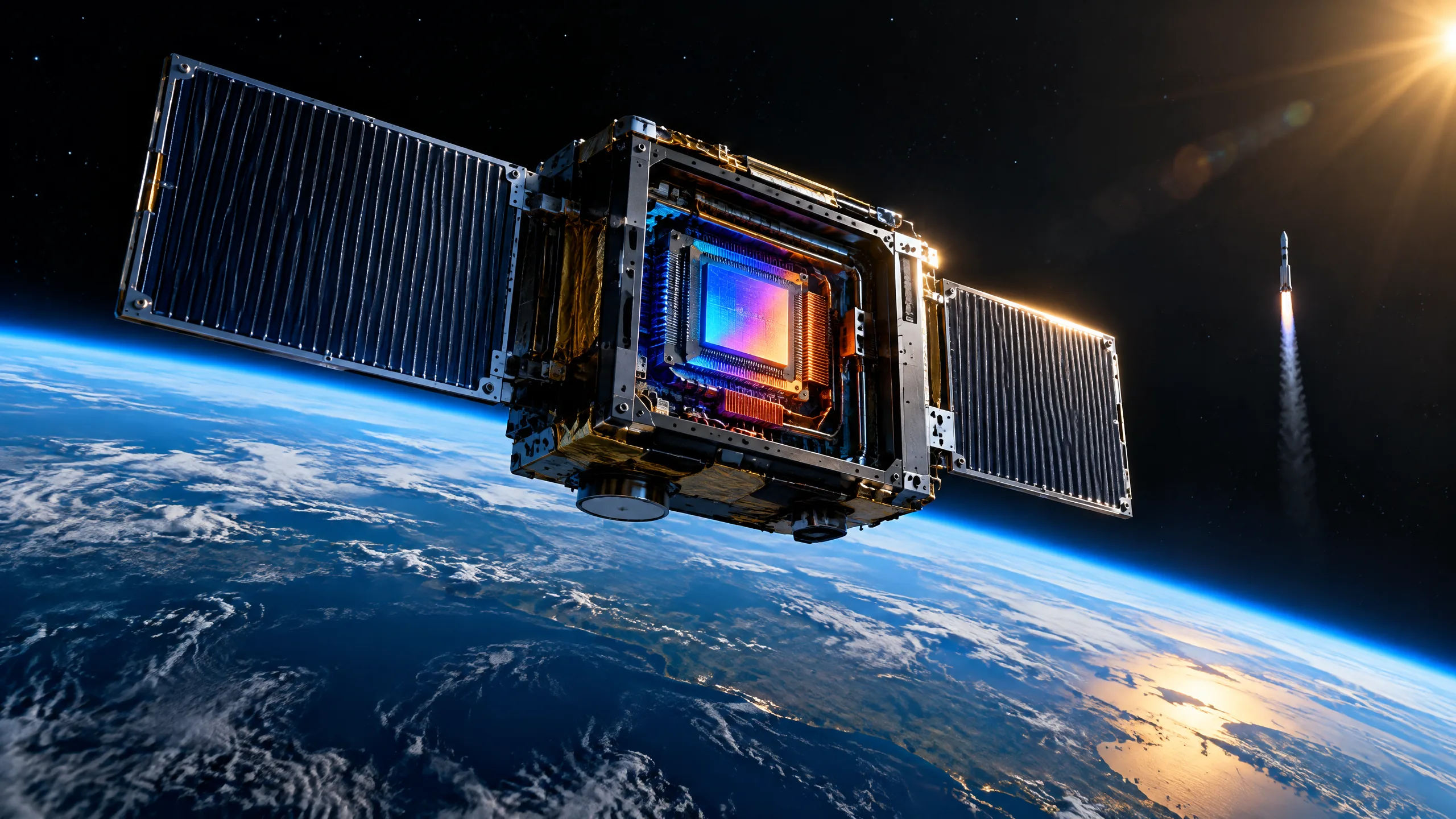
- Google’s prototype Project Suncatcher satellite is scheduled to fly on SpaceX’s Transporter-18 rideshare mission, which SpaceX is targeting for 1 October from Vandenberg Space Force Base in California.
- The first mission is a research test of Google Tensor Processing Units in orbit, including their response to launch loads, radiation and thermal conditions; it is not a working commercial data centre.
- SpaceX lists Project Suncatcher M1 in Transporter-18’s planned deployment sequence and says the mission has 130 payloads in total.
- Google is testing cooling based on heat pipes and radiators because conventional airflow cooling does not work in the vacuum of space.
- Google’s stated next milestone is a two-satellite mission in 2027 to test high-bandwidth laser links, while the economic and engineering feasibility of large orbital compute clusters remains unproven.
Google Project Suncatcher’s first AI-chip satellite is scheduled for Transporter-18
Google Project Suncatcher’s first AI-chip satellite is scheduled for SpaceX’s 1 October Transporter-18 mission, according to Google and the launch provider’s current mission page. SpaceX says it is targeting a Falcon 9 liftoff from Space Launch Complex 4E at Vandenberg Space Force Base in California, with the 58-minute window opening at 11:18 a.m. PT. A 2 October opportunity at the same time is listed as the backup. Until liftoff occurs, the date should be read as targeted rather than confirmed.
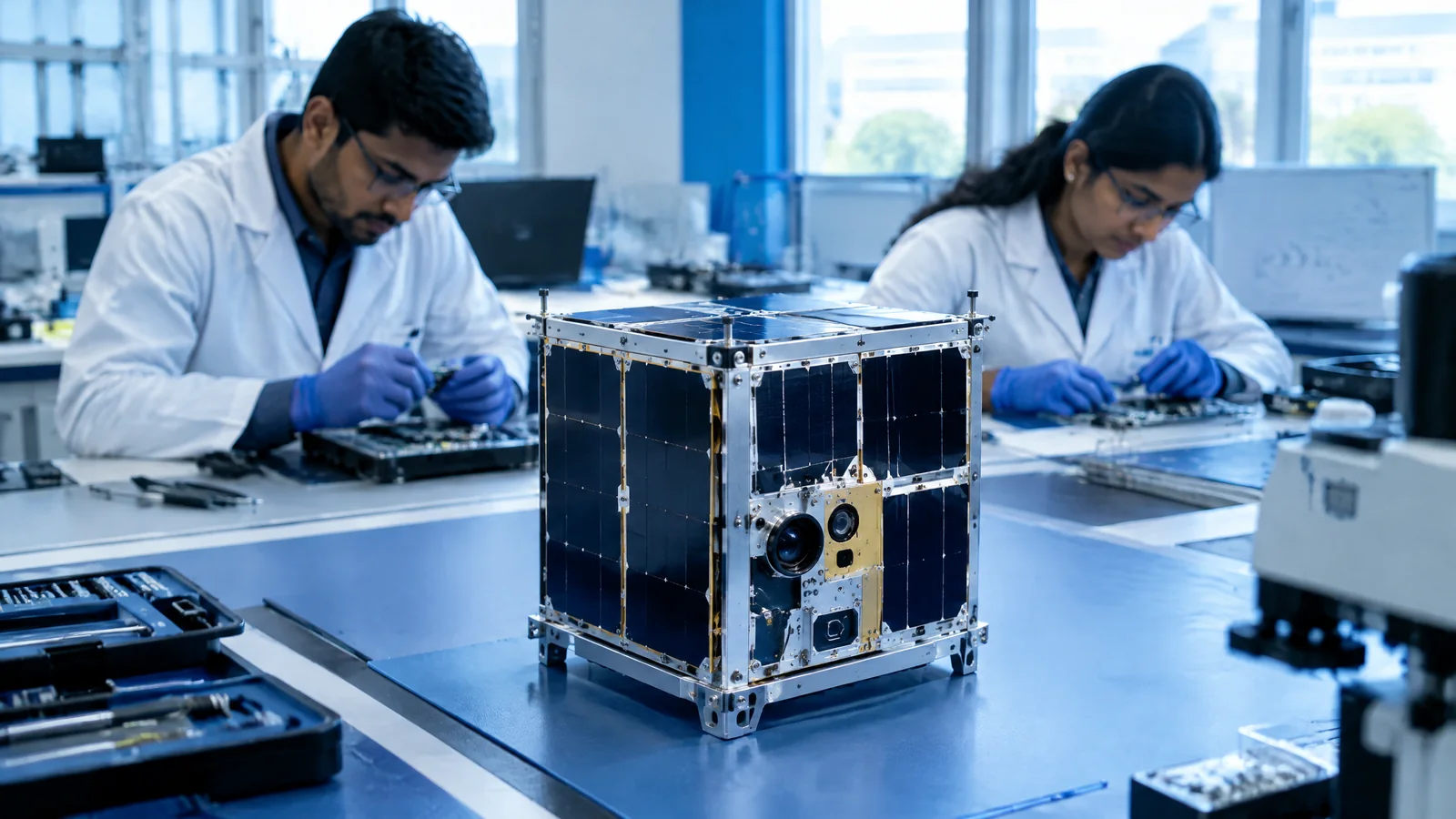
The payload is a prototype, developed with satellite company Planet, that is intended to put Google Tensor Processing Units, or TPUs, through the physical reality of low-Earth orbit. Google calls the work a long-term research moonshot into whether scalable machine-learning infrastructure could one day operate in space. That framing matters: the immediate question is whether the hardware and its thermal design work there, not whether an orbital AI service is ready for customers.
What this first Suncatcher test is designed to prove — and what it is not
The mission has a deliberately narrow purpose. Google says it wants in-orbit data on how its TPUs cope with the forces of launch and with radiation and thermal extremes after deployment. The company had already subjected the components to vibration tests and exposed running TPU workloads to a proton beam at the University of California, Davis. Those ground results are useful preparation, but they cannot reproduce every condition of a working spacecraft in orbit.
Google’s project note and Space.com’s report show that the mission is designed to gather in-orbit operational data, rather than demonstrate an operational orbital data centre. That is the most important distinction in the announcement. A satellite running an AI accelerator for an experiment is not the same as a reliable, scalable network that can deliver sustained computing capacity, move data, manage failures and make economic sense over years.
Ars Technica reports that the experimental spacecraft carries four of Google’s custom TPUs and is expected to run them only in short periods of roughly 15 minutes at a time. That reported operating pattern reinforces the research nature of the flight: it is a bounded engineering trial, not an indication that large AI workloads can now be processed continuously in space.
Why put AI hardware in orbit at all?
The premise behind Project Suncatcher is energy. Google says satellites in low-Earth orbit can access near-constant sunlight and potentially generate up to eight times more solar power than on Earth. That makes orbit an intriguing theoretical location for energy-hungry computing hardware as demand for AI infrastructure rises. It does not remove the need to build, launch, operate and replace spacecraft, or to send information to and from them.
The attraction is therefore only one side of the equation. On the ground, data centres benefit from established power networks, maintenance access, dense networking and mature cooling systems. In orbit, a project must solve radiation tolerance, spacecraft power, heat rejection, communications, pointing, component reliability and the cost of getting mass to space. Space.com reports that cooling is a major challenge because there is no airflow in space to carry heat away; Google also identifies radiation, chip cooling and laser communications as unresolved engineering work. Those constraints show why the concept remains experimental.
Google is not presenting the 1 October flight as proof that those trade-offs have been resolved. Its published description is more measured: learn what works, find the points of failure and use those findings to guide later designs.
Cooling and radiation are the hard parts of the AI-chip experiment
A powerful AI chip turns electrical energy into both computation and heat. On Earth, fans and air-conditioning systems are familiar parts of managing that heat. In the vacuum of space, there is no airflow, so the heat has to be moved through a different path and radiated away. Google says it is testing a cooling approach that combines heat pipes and radiators, after work in a thermal-vacuum chamber. The orbital test is meant to show how that system behaves outside the laboratory.
Radiation presents a separate reliability challenge. Solar events and cosmic rays can interfere with electronics, including by causing data errors commonly called bit flips. Google says its initial proton-beam work found that Trillium TPUs could withstand a total ionising dose greater than what they would receive during a five-year space mission. The company nevertheless says some questions can only be answered in orbit, where hardware faces its actual thermal, radiation and operational environment together.
Launch itself is also a test. Google says a trip to low-Earth orbit lasts about 10 minutes and subjects a spacecraft to vibration and acceleration; individual components can experience much greater forces than the spacecraft as a whole. The first flight will help establish whether the TPU hardware, supporting electronics and cooling assembly remain functional after that journey, not simply whether a chip can produce an AI result in a controlled setting.
The 2027 laser-link milestone is a different, larger test
If this single-satellite experiment returns useful results, Google’s next stated milestone is a 2027 test with two satellites. The focus would shift towards high-bandwidth laser communication between spacecraft. Google says future designs would need satellite clusters, with each satellite carrying dozens of TPUs, to take on larger workloads.
That requires more than an optical link that merely works. The links would have to maintain very high bandwidth over short distances between moving satellites, while the vehicles know their positions relative to one another precisely. Google compares the pointing challenge to hitting a coin-size target from miles away while both points are moving. A two-satellite link test would still be research evidence, not a commercial constellation or a declaration of data-centre capacity.
The stepwise plan is sensible context for the launch. Hardware survival, heat management and inter-satellite networking are connected problems, but they are not solved by one another. A successful deployment on Transporter-18 would only clear the first of several technical gates.
What Transporter-18 adds to the picture
Transporter-18 is a dedicated small-satellite rideshare mission, not a mission built solely around Google’s payload. SpaceX says the Falcon 9 flight has 130 payloads, including cubesats, microsatellites, hosted payloads, spacecraft with re-entry vehicles and orbital transfer vehicles. Its planned deployment list includes Project Suncatcher M1, manifested by Planet Labs, at approximately one hour, one minute and 25 seconds after liftoff. That timing is part of a pre-launch sequence and can change with mission operations.
The rideshare setting underlines why small satellites can be valuable for early research: a team can seek in-orbit evidence without first funding a dedicated launch. It also means a payload’s appearance in the launch plan should not be confused with a completed experiment. The meaningful results will come later, if Google publishes telemetry, engineering findings or a status update after deployment and initial operations.
For a broader primer on the opportunities and constraints of this kind of mission, see Reddy News’ related explainer, Small satellites are changing how research reaches orbit.
What to watch on 1 October and after launch
The first checkpoint is straightforward: whether Transporter-18 launches in its targeted window or moves to the listed backup date. SpaceX says its webcast is due to begin about 15 minutes before liftoff. A launch, however, would establish only that the payload reached the mission’s planned deployment stage. It would not by itself show that the TPU, cooling system or later AI workload testing performed as intended.
After that, the useful evidence would be a specific post-flight statement from Google or Planet on satellite contact, health, power, thermal behaviour, radiation-related observations and whether the planned compute tests began. Claims that Project Suncatcher has created a commercial space data centre, solved AI’s energy demand or made a consumer service available would go beyond the evidence available before launch.
Readers following the terrestrial side of AI infrastructure can also compare this research project with Reddy News coverage of Microsoft’s live Hyderabad cloud region, while Google’s Gemini 3.8 Live and Extended Thinking guide explains a separate, software-facing part of Google’s AI work. Those articles provide context, not evidence for this mission.
Reader guide
Article questions, answered
Short answers to common reader questions based on the reporting above.
When is Google Project Suncatcher scheduled to launch?
SpaceX is targeting Thursday, 1 October 2026 for Transporter-18 from Vandenberg Space Force Base in California, with the launch window opening at 11:18 a.m. PT. SpaceX lists Friday, 2 October at the same time as a backup opportunity. The launch remains scheduled or targeted until it happens.
Is Project Suncatcher a commercial AI data centre in space?
No. Google describes the flight as an early research test of TPU hardware in orbit, and Space.com reports that its main goal is to measure how the chips perform in space rather than demonstrate an operational orbital data centre.
What will Google test on the satellite?
Google says it will study how its TPU hardware handles launch forces, radiation and thermal extremes in orbit. It will also evaluate a cooling design based on heat pipes and radiators, which is needed because conventional airflow cooling cannot operate in a vacuum.
What is planned after the first Project Suncatcher satellite?
Google says it is working towards a 2027 milestone involving two satellites to test high-bandwidth laser links. That is a proposed next research step, not a confirmed commercial satellite network.
Sources and further reading
These references support the factual context used in this article. Links open the original publisher.
- Behind Project Suncatcher, our moonshot to put AI in spaceGoogle · accessed 27 September 2026
- Transporter-18 MissionSpaceX · accessed 27 September 2026
- SpaceX launching prototype Google AI satellite next weekSpace.com · accessed 27 September 2026
- Google’s first Suncatcher orbital data center test launches October 1Ars Technica · accessed 27 September 2026