OpenSea Adds Live Solana NFT Support, Starting With Selected Collections
OpenSea’s Solana NFT support is live as of August 31, 2026. The marketplace update brings selected Solana collections to OpenSea; it is not an NFT mint or drop.
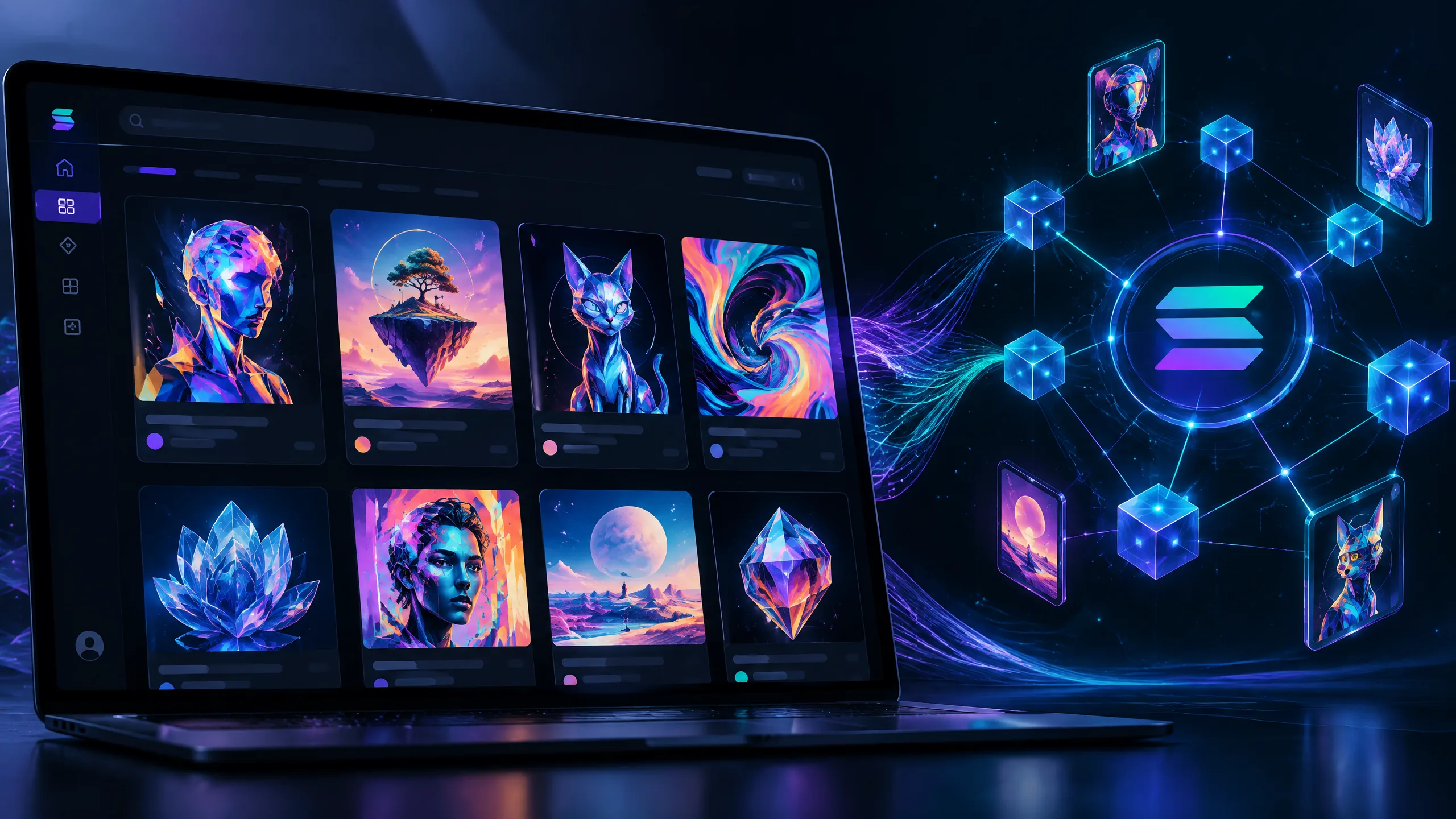
OpenSea Solana NFTs are live — but this is a marketplace rollout, not a mint
OpenSea has added live support for Solana NFTs, allowing people to discover, buy and sell eligible Solana-based digital collectibles through its marketplace. The company says the support began on August 31, 2026, and describes Solana as joining the more than 25 blockchains available on OpenSea. [1] The company’s same-day distributed release also says the integration is “now live,” so this is a completed product launch rather than a proposal, beta sign-up or future-dated plan. [2]
The important qualification is scope. OpenSea is not presenting the launch as a universal index of every NFT on Solana. Its support documentation says the marketplace is adding a selected group of established Solana collections one at a time, with more collections added over time. [3] That distinction matters for anyone reading a headline that says “OpenSea adds support for Solana NFTs”: the statement is true, but it does not mean every Solana collection is immediately available for every marketplace action.
This is also not an NFT launch, mint or drop. No new OpenSea-branded Solana collection has been announced in the materials reviewed. It is a marketplace and digital-collectibles infrastructure update: OpenSea is extending its existing marketplace to eligible assets that were created on the Solana network. OpenSea’s help centre further states that it does not create Solana NFTs or host Solana drops. [4]
What OpenSea’s Solana NFT support includes
At launch, OpenSea named Claynosaurz, Mad Lads, Collector Crypt and Phygitals among the Solana NFT collections people can find on the platform. [1] The accompanying Business Wire release also named BoDoggos. [2] These examples establish that recognizable collections are part of the opening lineup, but neither source should be read as a complete, permanent catalogue. The company says its inclusion process is gradual, and availability can change as the rollout expands. [3]
For supported collections, OpenSea says people can browse items, purchase them, list them and make offers. [4] Its compatibility page likewise describes Solana as a network where users can swap tokens and buy and sell Solana NFTs from a selected group of collections. [5] OpenSea also says its newer implementation can display listings from other Solana marketplaces, giving users a way to compare prices in one place. [6] That is a marketplace-design claim, not evidence that every listing on the network is automatically executable through OpenSea.
The platform has documented support for several Solana NFT formats. Metaplex legacy NFTs, programmable NFTs (pNFTs), Metaplex Core NFTs and compressed NFTs can support purchases, listings, item offers and collection offers when their collection is included. Token-2022 items have a narrower set of conditions, while Wen New Standard items may be visible and browsable without purchase, listing or offer functions. Plain SPL tokens that do not carry NFT metadata are not supported as NFTs. [3] These distinctions are technical, but they explain why an item may appear in a marketplace search while offering fewer actions than another item in the same ecosystem.
Why the selected-collection limit is the key detail
The selected-collection approach is the central fact beneath the broader announcement. OpenSea says that, if a collection cannot be found in its current catalogue, it is not yet part of the rollout. Once a collection is included, the company says its items and pages are created automatically and its supported marketplace functions become available. [3]
For readers, that means “OpenSea supports Solana NFTs” is best understood as a platform capability with a controlled coverage boundary. It does not promise identical support for every collection, every token design or every asset that someone informally calls an NFT. The public help documents are unusually explicit on this point, which makes them more useful than general launch language for describing the present scope.
OpenSea’s documentation also indicates that most covered Solana collections use SOL-denominated listings, while some collections associated with physical trading cards or other physical collectibles use USDC on Solana. [7] This describes the payment denomination chosen for those collections; it is not a claim that all Solana NFT listings take USDC, or that the marketplace is offering a cross-chain payment conversion for every asset. The company separately describes platform fees, creator earnings and Solana network-related charges as potentially distinct components of a transaction, without a single fixed percentage in the Solana-specific FAQ reviewed for this article. [8]
The practical editorial takeaway is simple: coverage should avoid implying universal availability, universal pricing or uniform functions. OpenSea itself frames the initial product as a selection of collections with format-specific capabilities, not a blanket import of the Solana NFT universe. [3]
A return to Solana, built differently from OpenSea’s earlier support
This is not OpenSea’s first encounter with the Solana NFT market. Its current help centre says the company supported Solana NFTs in 2022 and wound that support down in 2023. It characterizes the 2026 service as a new build, rather than the old product being switched back on. [6]
Contemporaneous reporting helps place the earlier episode in context. On March 29, 2022, NFT Now reported that OpenSea had announced plans to begin adding Solana NFTs in April of that year. [9] More recent independent coverage describes the April 2022 version as a beta and Solana as OpenSea’s first non-EVM network at the time. [10] The current company documentation is the stronger source for the 2023 wind-down and new-build description, while the historical reports provide useful timing context for the original rollout.
According to OpenSea, the new implementation differs in several ways. The company says it formats Solana listings for its own Solana marketplace program, displays listings from other Solana marketplaces for comparison, supports collections priced in USDC on Solana, and works with newer standards including Metaplex Core, compressed NFTs, pNFTs and Token-2022. [6] Those are product-scope statements from OpenSea, not independently audited performance benchmarks. They nonetheless show that the 2026 launch is more than a restored 2022 interface: it is positioned as a rebuilt marketplace integration with a different set of technical and liquidity-related features.
OpenSea has also documented that one account can link wallets across EVM and Solana blockchains, with a stated maximum of ten linked wallets. [11] That account-level design fits the company’s stated goal of bringing multiple blockchain ecosystems into one marketplace experience. It should not be mistaken for a claim that Solana and EVM assets share the same address format or settlement system; OpenSea’s own Solana FAQ notes that an Ethereum address cannot hold a Solana NFT. [4]
What the update means for the NFT marketplace landscape
OpenSea’s rationale is cross-chain consolidation. Devin Finzer, OpenSea’s co-founder and CEO, said the platform should be “the home for everything you collect, no matter which chain it lives on.” [1] In the company’s framing, Solana NFTs now sit beside Solana tokens and collections from other supported blockchains, reducing the need to visit separate marketplace interfaces. That is a strategic product objective, not a guaranteed outcome for participation or liquidity.
Solana already has an NFT ecosystem with marketplaces and infrastructure of its own. Solana’s developer site highlights marketplaces including Tensor, Solanart, Magic Eden and Hyperspace, and describes the network’s NFT tooling around standards, storage and state compression. [12] OpenSea’s new support therefore adds another venue to a market that already has Solana-native options. Its help documentation’s reference to showing listings from other Solana marketplaces suggests an effort to make comparison and discovery part of its proposition. [6]
The available primary materials do not provide targets for Solana NFT trading volume, user adoption, market share or revenue from the rollout. Independent reporting also noted that OpenSea did not supply those forecasts when discussing the product. [10] It would be premature to turn a support announcement into a claim about market leadership or demand. The verifiable news is narrower: an established multi-chain platform has made a new, selected-collection Solana NFT marketplace program live.
For creators, the change may add another discovery channel once their collection is included, but it does not create an automatic listing right for every Solana project. For collectors, it may increase the number of interfaces showing eligible assets, yet collection coverage, NFT standard and listing status still determine what can be viewed or traded. Those are operational facts, not judgments about the value of any token, collection or marketplace.
What remains to be watched
The most material open question is how quickly OpenSea adds collections and whether the selected-collection policy evolves. The company says more collections are added over time, but it does not publish a fixed timetable or promise that a particular collection will be included. [3] The format matrix also leaves some assets visible but non-tradable through the platform, reinforcing that discovery and marketplace functionality are not always the same thing.
Another question is how the platform’s stated comparison features perform in practice across fragmented Solana liquidity. OpenSea says it can show listings from other Solana marketplaces, but the company has not published a public measurement in the announcement of listing coverage, price improvement or execution quality. [6] Those are separate issues from the existence of the launch itself.
Editorial caveat: Collection availability, supported standards and marketplace fees can change after publication. This draft relies first on OpenSea’s August 31, 2026 announcement and current help-centre pages, with an independent historical source for the 2022 context. Claims about the number of supported blockchains and named collections are attributed to OpenSea and should be treated as time-sensitive platform information, not as a complete market inventory. Nothing in this report is financial, trading or valuation advice.
Reader guide
Article questions, answered
Short answers to common reader questions based on the reporting above.
Has OpenSea actually launched Solana NFT support?
Yes. OpenSea’s announcement says Solana NFT support began on August 31, 2026, and the company’s Business Wire release says the integration is now live. This is a completed marketplace launch, not a proposed future feature. [1] [2]
Does OpenSea now support every Solana NFT collection?
No. OpenSea says it is covering a selected group of established Solana collections and adding more over time. If a collection is not in the current rollout, OpenSea says it is not yet included. The company does not promise when or whether any particular collection will be added. [3]
Which Solana NFT collections did OpenSea name at launch?
OpenSea’s blog named Claynosaurz, Mad Lads, Collector Crypt and Phygitals. Its distributed release also named BoDoggos. These are examples of the launch catalogue, not a complete list of every supported collection. [1] [2]
Is this a new Solana NFT mint or OpenSea drop?
No. This is a marketplace and digital-collectibles infrastructure update. OpenSea says it does not create Solana NFTs or host Solana drops; it is enabling marketplace functions for eligible existing Solana collections. [4]
Did OpenSea support Solana NFTs before 2026?
Yes. OpenSea says it supported Solana NFTs in 2022 and wound the service down in 2023. It describes the current support as a new build rather than the old integration being turned back on. Historical reporting documented the earlier announcement in March 2022 for an April rollout. [6] [9]
What Solana NFT standards are supported on OpenSea?
OpenSea documents differing support by standard. Metaplex legacy NFTs, pNFTs, Metaplex Core and compressed NFTs can support purchases, listings and offers in included collections. Token-2022 and Wen New Standard assets have more limited functionality, while plain SPL tokens without NFT metadata are not supported as NFTs. [3]
Sources and further reading
These references support the factual context used in this article. Links open the original publisher.
- OpenSea Adds Support for Solana NFTsOpenSea · accessed