Bloomberg New Economy Forum 2026 India: New Delhi Dates, Theme and Draft Programme
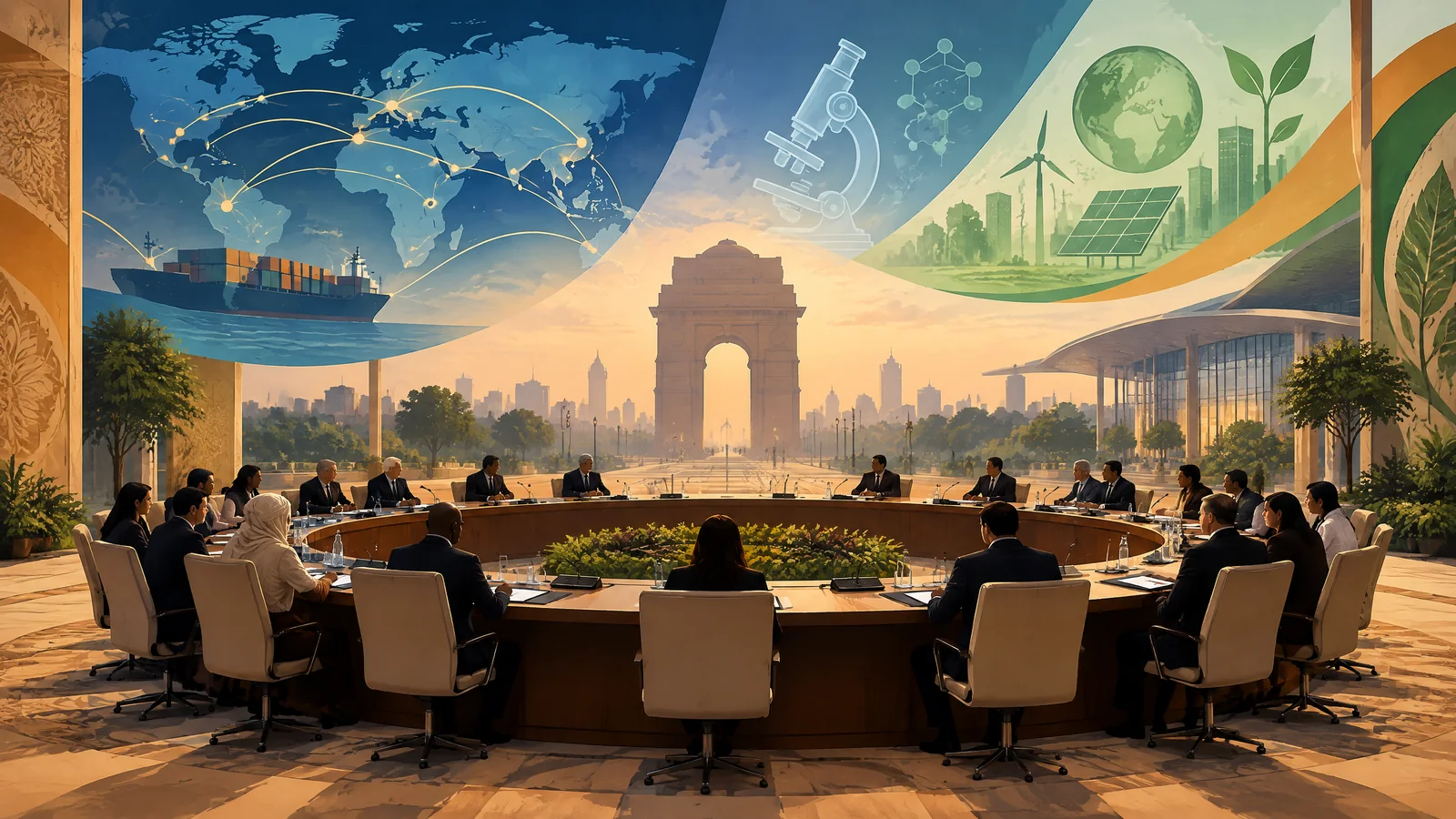
Bloomberg New Economy Forum 2026 is scheduled in New Delhi from 13 to 15 October, with the first listed session at 7:45 AM IST on 13 October. The invitation-only forum’s theme is “A World in Play: Defining the New Levers of Power”; its published programme is explicitly a draft and may change.
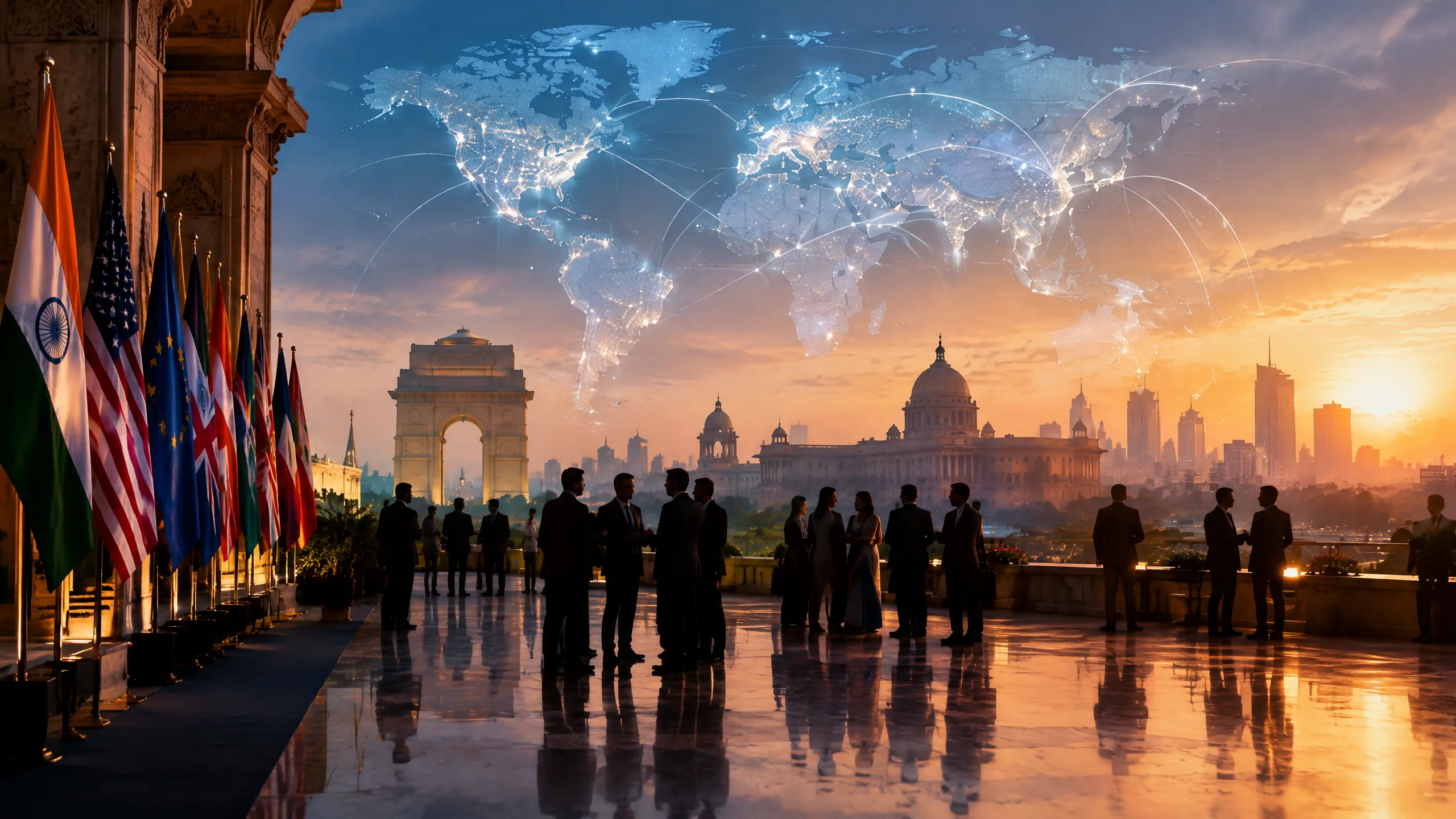
- Bloomberg New Economy Forum 2026 is scheduled in New Delhi from Tuesday, 13 October through Thursday, 15 October 2026. The official programme lists the first welcome remarks at 7:45 AM IST on 13 October.
- The official theme is “A World in Play: Defining the New Levers of Power.” Bloomberg says the invitation-only forum is intended to bring together public- and private-sector leaders for discussions on changing geopolitical and economic conditions.
- The organiser’s programme page says all listed times are in IST, but also says the programme is in draft and subject to change. It is useful for planning, not a guarantee of final session times or speaker appearances.
- Published day-one topics include economic policy and AI, investment in emerging economies, the changing investment environment, scientific discovery, infrastructure for a digital future and organisational adaptation. A venue address has not been confirmed in the sources reviewed.
- The official event page links to an invitation-request form. That establishes an enquiry route, not public walk-in access, a ticket sale, livestream availability or an assured invitation.
Bloomberg New Economy Forum 2026 India: when and where is it?
The Bloomberg New Economy Forum 2026 is scheduled to take place in New Delhi, India, from Tuesday, 13 October to Thursday, 15 October 2026. Bloomberg’s official programme lists welcome remarks at 7:45 AM Indian Standard Time on 13 October, so that is the earliest published start point for the three-day forum. On the execution date of 5 October, the opening is eight calendar days away—about 192 hours when measured from the start of the day—well beyond a 24-hour pre-event window.
For a reader trying to make a practical decision, the simple answer is: the city and dates are confirmed by the organiser, and the initial listed time is 7:45 AM IST. The specific building or street address is not stated on the official event page, programme page or announcement reviewed for this article. It would be misleading to supply a venue based on another New Delhi conference or an older Bloomberg event. Anyone considering travel should wait for a location confirmation directly from the organiser before making arrangements that depend on it.
Bloomberg calls this the eighth edition of its New Economy Forum and says that the 2026 edition will be hosted in India for the first time. The official announcement says it is intended to convene more than 500 public- and private-sector leaders. That is an organiser’s prospective attendance description, not a verified headcount before the event. It also does not mean that every person named in a speaker list will necessarily be present until the programme is final and the forum has occurred.
What is the theme, in direct terms?
The official theme is “A World in Play: Defining the New Levers of Power.” Bloomberg frames the forum around a period in which conflict, competition, sovereignty and strategic autonomy are taking a larger role in economic and geopolitical decisions. The organiser says the meeting will examine risks and opportunities in that environment and provide space for exchange among leaders. The theme is a programme frame; it is not a policy declaration, an investment recommendation or proof of an agreed outcome.
In practical language, the listed subjects connect questions that affect people beyond conference rooms: how countries secure energy and critical technologies; how companies choose supply chains and investment locations; how AI changes work, scientific research and public policy; and how capital and infrastructure are organised. These are useful topics to follow because choices in those areas can influence jobs, services, prices and access to technology. But the forum is a discussion venue. A session title does not itself change a law, commit public money or award a contract.
The choice of New Delhi matters to the organiser’s stated rationale. Bloomberg says India’s role in innovation, investment and global supply chains makes the city an appropriate meeting point, while Prime Minister Narendra Modi’s quoted statement describes India as actively helping define the new economy. Those are positions presented by the organiser and its speakers. Readers should distinguish them from independently measured outcomes or commitments that would need their own official documents.
What time does the forum start, and is the schedule final?
All timings on Bloomberg’s published 2026 programme are in IST. On Tuesday, 13 October, it lists welcome remarks at 7:45 AM, followed by a session titled “The End of Predictability” at 7:55 AM. The opening address is listed at 9:00 AM, a programme introduction at 9:30 AM, and the first plenary day is scheduled to end at 5:15 PM. These details answer the timing question for people following India time without requiring a conversion from another zone.
The vital qualification is on the same official programme page: Bloomberg says the programme is currently in draft and subject to change. It also contains some entries marked “Speaker to be announced.” A draft schedule can still be helpful for understanding the planned shape of the day, but it should not be treated as a final itinerary. Session timing, speaker line-ups, access arrangements and the running order can change before 13 October.
The safest way to use this information is to separate confirmed event facts from planned programme facts. The 13–15 October dates, New Delhi location, theme and invitation-only format are published event details. The day-by-day running order is a published draft. Neither category supports a claim that a listed conversation has already happened or that a person will appear at a particular minute until Bloomberg confirms the final schedule or the session occurs.
What is on the published first-day programme?
The draft agenda gives a concrete view of the questions Bloomberg plans to put before delegates. The early programme addresses uncertainty in the global economy, followed by an opening address and conversations with newsmakers, although some newsmaker names remain unannounced. In the afternoon, “Economic Policy in the Age of AI” is listed at 1:15 PM. The session description raises questions about productivity, labour markets, inflation, fiscal stability, capital, energy and computing capacity. These are discussion prompts, not conclusions reached by the forum.
At 1:40 PM, the draft lists “Frontier Capital: Accelerating Investment in Economic Transformation,” focused on conditions that may shape investment in physical and digital infrastructure in emerging economies. At 2:15 PM, “The World. Repriced.” is scheduled to consider how assumptions about globalisation, rates, political stability and disinflation are being tested. For readers, the useful distinction is between a forum examining an issue and a forum announcing a transaction: the source reviewed establishes the former, not the latter.
The remainder of the published day-one outline turns to AI and infrastructure. It includes a presentation titled “We’re Watching the Wrong AI Race,” a session on AI and scientific discovery, a presentation on technological supremacy, and a discussion called “All About Scale: Pushing the Physical Limits of a Digital Future.” The latter explicitly raises power generation, transmission, data centres, engineering talent and industrial infrastructure as constraints. The day closes with a scheduled conversation on adaptation and a session on sport, pressure and leadership.
What does the draft agenda say about technology, supply chains and energy?
Wednesday’s published programme begins with a discussion of technological sovereignty. Its description names AI, semiconductors, cloud services and the infrastructure that connects them, while asking how countries can pursue greater control without isolating themselves from global technology. It is a relevant frame for Indian workers, founders, researchers and businesses because the debate is not only about software: it also involves skills, reliable infrastructure, supply relationships and the rules under which technology is used.
Other listed Wednesday topics include critical minerals, semiconductors, energy and food as strategic levers; the role of middle powers; conditions that support business investment; and a changing map for global supply chains. The agenda also lists a presentation on energy demand and supplies and a discussion of how power can be built and financed. These descriptions show where the organiser intends to focus the conversation. They do not identify a new supply-chain policy, a factory investment, an energy project or a cross-border agreement.
That distinction matters for a people-first reading of a business forum. A headline about technology sovereignty can sound remote, but its practical consequences can include the resilience of essential services, the affordability of inputs, the availability of skills and the pace at which digital tools are adopted. A forum can make those choices more visible. The evidence reviewed, however, does not establish which specific decisions participants will make, if any, during the event.
Which speakers are publicly listed—and what should readers not assume?
Bloomberg has published a 2026 speakers page and a draft programme that name a range of public officials, business leaders, investors and technology figures. Names listed on the official pages include Michael R. Bloomberg, Nirmala Sitharaman, Ashwini Vaishnaw, Piyush Goyal, Subrahmanyam Jaishankar, Natarajan Chandrasekaran, Uday Kotak, Lila Ibrahim, Kiran Mazumdar-Shaw, Salil Parekh, Sunil Bharti Mittal, Chuck Robbins and Christopher Waller. The speaker page also lists moderators from Bloomberg.
The draft schedule connects some people to particular sessions. For example, it lists Nirmala Sitharaman on the 1:40 PM discussion of frontier capital on 13 October; Lila Ibrahim and Kiran Mazumdar-Shaw on the 2:55 PM session on AI and scientific discovery; and Ashwini Vaishnaw on the 8:40 AM technological-sovereignty session on 14 October. These are published scheduling details as checked on 5 October, rather than a report of appearances already completed.
Readers should not infer a bilateral meeting, policy endorsement, commercial partnership or speech content solely from a person’s name on a forum page. Nor should they fill gaps where the programme says a speaker is to be announced. The organiser’s clear warning that the programme is draft applies to session-level attribution as well. This guide therefore does not claim any new policy, deal, funding decision or joint statement from the listed participants.
Can the public attend, buy a ticket or watch online?
Bloomberg describes the 2026 Forum as invitation-only and provides a form to request an invitation. That is the confirmed access route found in the sources reviewed. An invitation-request form is not the same thing as a public ticket counter, walk-in admission or a guarantee of entry. People who need certainty for work, caregiving or travel should not assume access unless they receive direct confirmation from the organiser.
The official announcement says Bloomberg’s media platforms will deliver the forum’s consequential conversations and insights to audiences worldwide. It does not, in the material reviewed for this story, confirm a complete public livestream schedule, an individual session watch link, a broadcast timetable or the availability of recordings. The practical option for remote readers is to monitor Bloomberg New Economy’s official forum page and its published channels rather than rely on third-party claims about streaming.
The invitation-only format also helps set expectations about information. Private breakouts and bilateral meetings are mentioned in the organiser’s announcement, but a private meeting is not automatically public, and a participant list is not a record of attendance. A responsible pre-event guide can explain what the organiser says is planned without guessing who will meet, what will be agreed, or which conversations will be released publicly.
Why the forum is relevant to everyday economic questions
Large forums can seem distant from day-to-day life, yet the listed subjects describe systems that shape ordinary choices. Energy reliability and the cost of building grids influence homes and workplaces. Semiconductor and cloud supply chains affect the devices and services people use. Investment in physical and digital infrastructure can alter access to transport, communications and jobs. AI policy can influence how workers are trained, how organisations make decisions and what protections people expect when automated tools are used.
The value of following the forum is not in treating every panel as a forecast. It is in recognising the trade-offs under discussion. A country can want resilient supply chains while still needing open markets. A company can want to deploy AI while facing limits in power, computing capacity, skills and public trust. An infrastructure plan can promise growth but still require transparent financing, maintenance and a clear public purpose. Those are questions that affect communities as much as boardrooms.
For readers looking for evidence rather than atmosphere, the useful test after the forum will be specific documentation. An announced policy should have a competent government source. A commercial arrangement should be confirmed by the organisations involved. A research claim should identify its method and limitations. A session description, however interesting, is not a substitute for those records. Keeping that line clear prevents an agenda from being mistaken for an outcome.
What to check before 13 October
First, check the official Bloomberg New Economy Forum page for a final programme, venue address and any revised speaker information. The currently published programme is useful because it gives IST timings and topic detail, but it expressly says it is subject to change. Second, if attendance matters, use the official invitation-request route and wait for confirmation; do not assume access from an online form or a social-media post.
Third, separate the core facts from expectations. Confirmed for this guide are the 13–15 October dates, New Delhi city, the “A World in Play” theme, the invitation-only format, the 7:45 AM IST first listed session on 13 October, and the existence of published speaker and programme pages. Expected or changeable items include the detailed schedule, session participation and any still-unannounced speakers. The sources do not confirm a venue address, public ticketing, universal access or a full streaming plan.
Finally, use related Reddy News reporting for context rather than assuming a forum solves the issues it discusses. Our coverage of India’s BRICS declaration examines a separate New Delhi diplomatic outcome, while reporting on semiconductor production and practical AI looks at concrete technology developments. A guide to sustainable startup growth offers a useful lens on business decisions beyond fundraising. Those articles are genuinely related context, not evidence that their subjects will be decided at this forum.
Reader guide
Article questions, answered
Short answers to common reader questions based on the reporting above.
When is Bloomberg New Economy Forum 2026 in India?
It is scheduled in New Delhi from Tuesday, 13 October to Thursday, 15 October 2026. Bloomberg’s draft programme lists welcome remarks at 7:45 AM IST on 13 October as the first published event time. The event is still ahead as of 5 October 2026.
Where in New Delhi will Bloomberg New Economy Forum 2026 take place?
Bloomberg confirms New Delhi, India, as the host city. The official event page, programme page and announcement reviewed for this guide do not state a specific venue address. Readers should wait for an organiser update rather than assume a location.
What is the Bloomberg New Economy Forum 2026 theme?
The official theme is “A World in Play: Defining the New Levers of Power.” Bloomberg says the programme will address geopolitics, economic prosperity, technology and innovation amid changing global conditions.
Is the Bloomberg New Economy Forum 2026 programme final?
No. Bloomberg’s programme page says that all timings are in IST but that the programme is currently in draft and subject to change. Some entries also say that a speaker is to be announced. Treat listed sessions and times as planned information, not a final guarantee.
Can members of the public attend Bloomberg New Economy Forum 2026?
Bloomberg describes the forum as invitation-only and provides an official invitation-request form. The sources reviewed do not confirm public walk-in admission, ticket sales or that submitting a request guarantees an invitation.
Will Bloomberg New Economy Forum 2026 be livestreamed?
The official announcement says Bloomberg media platforms will share key conversations and insights worldwide, but the sources reviewed do not confirm a complete public livestream schedule, session links or broadcast times. Check Bloomberg New Economy’s official channels closer to the event.
Who are some of the speakers listed for the 2026 Forum?
Bloomberg’s speakers and draft-programme pages list, among others, Michael R. Bloomberg, Nirmala Sitharaman, Ashwini Vaishnaw, Piyush Goyal, Subrahmanyam Jaishankar, Natarajan Chandrasekaran, Uday Kotak, Lila Ibrahim and Kiran Mazumdar-Shaw. Because the programme is labelled draft, these listings should not be treated as a final attendance guarantee.
Sources and further reading
These references support the factual context used in this article. Links open the original publisher.
- Bloomberg New Economy: 2026 ForumBloomberg New Economy · accessed 2026-10-05
- Bloomberg New Economy: 2026 ProgramBloomberg New Economy · accessed 2026-10-05
- Bloomberg New Economy: Bloomberg New Economy Forum 2026 SpeakersBloomberg New Economy · accessed 2026-10-05
- Eighth Bloomberg New Economy Forum to Convene Over 500 Global Leaders in New Delhi, October 13-15: A World in Play: Defining the New Levers of PowerBloomberg New Economy · accessed 2026-10-05
- Bloomberg Media makes major move into IndiaAxios · accessed 2026-10-05