IMF World Bank Annual Meetings 2026: Bangkok dates, programme and practical guide
The IMF World Bank Annual Meetings 2026 are scheduled for Bangkok, Thailand, from Monday, October 12 to Sunday, October 18. The official programme lists the Development Committee meeting on October 15, the Annual Meetings Plenary Session on October 16 and the IMFC Plenary on October 17. This guide separates confirmed arrangements from details that are not yet stated publicly, including individual speakers and session times.
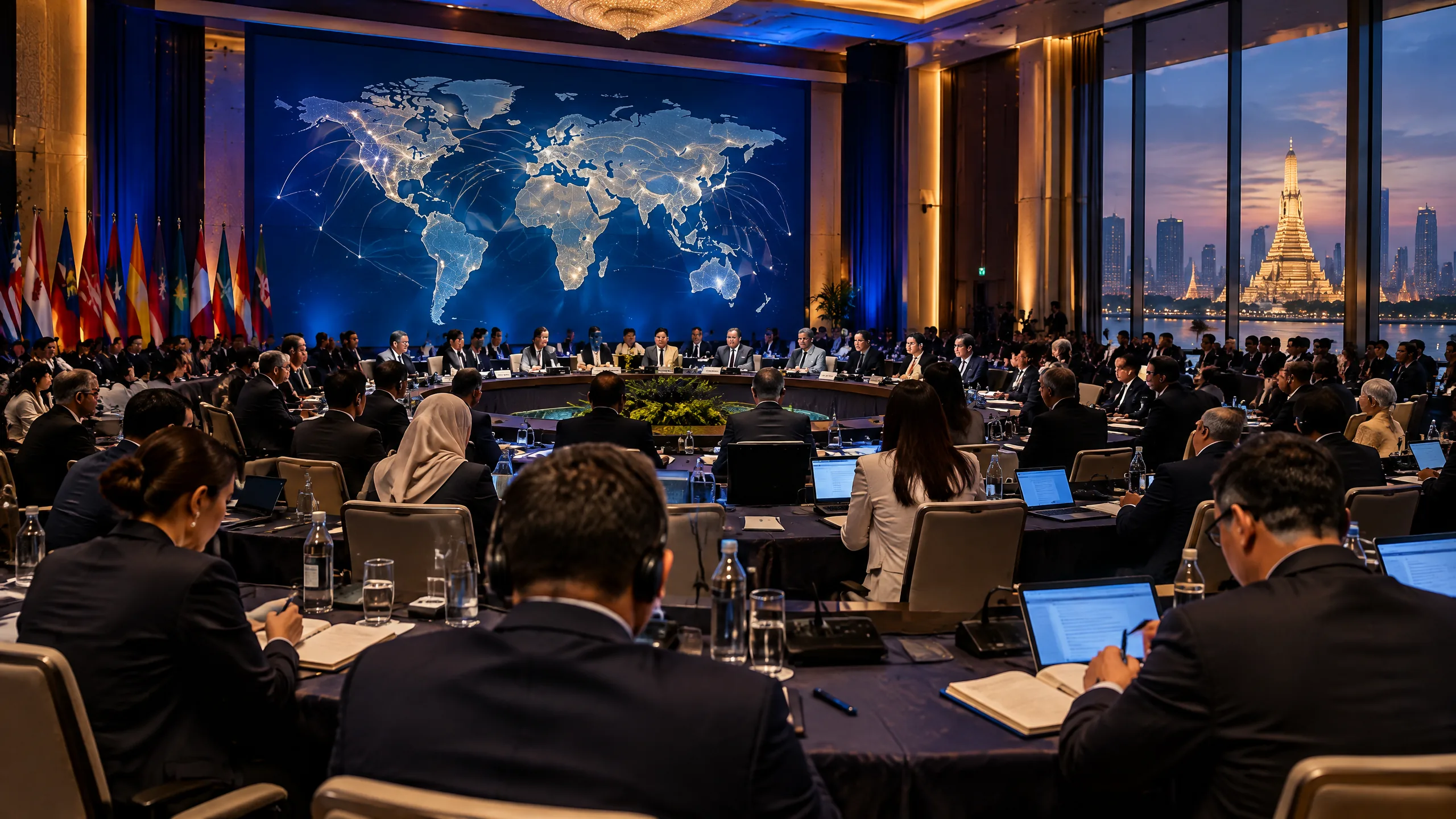
- Confirmed: the 2026 Annual Meetings of the IMF and World Bank Group are scheduled for Bangkok, Thailand, from Monday, October 12 through Sunday, October 18.
- Confirmed: Queen Sirikit National Convention Center is the main meetings venue; an Annual Meetings badge is required for external participants to enter the venue and attend events.
- Confirmed: the official overview lists the Development Committee Ministerial Lunch and Development Committee Meeting for October 15, the Annual Meetings Plenary Session for October 16, and the IMFC Plenary for October 17.
- Practical access: the public programme is to be streamed on World Bank Live without registration, while guest and CSO/parliamentarian registration had closed by the October 5 source check.
- Not yet confirmed on the reviewed programme: individual participants, complete session times, outcomes, announcements and any conclusions from the meetings.
The answer first: when and where are the IMF World Bank Annual Meetings 2026?
The **IMF World Bank Annual Meetings 2026** are scheduled to run from **Monday, October 12, through Sunday, October 18, 2026**, in Bangkok, Thailand. The World Bank Group’s official Annual Meetings overview identifies those dates and says the 2026 gathering brings together the International Monetary Fund and World Bank Group. The independent IISD event listing gives the same October 12–18 date range and Bangkok location.
The main meeting venue is the **Queen Sirikit National Convention Center (QSNCC)** in central Bangkok, near Benjakitti Park, according to the official venue page. The page describes QSNCC as the campus for meeting rooms, participant services, exhibition areas, dining and transport connections. It does not make an individual hotel, airline or local itinerary an official part of the programme.
This is an upcoming-event guide prepared on October 5, 2026, IST. The first meeting date is seven calendar days away, or **168 hours** when measured from the start of October 5 to the start of October 12 in the stated date schedule. The official overview does not publish a single opening-clock time for the overall event, so this article does not invent one. Readers should treat October 12 as the confirmed start date and check the organiser’s live schedule for any session-specific timing.
What the Annual Meetings are — and why the programme matters to people
The Annual Meetings are a recurring forum for the Boards of Governors of the World Bank Group and IMF. The IISD’s event description says the meetings bring together central bankers, finance and development ministers, private-sector executives, civil-society representatives, media and academics to discuss matters of global concern. Its examples include the world economic outlook, financial stability, poverty reduction, inclusive growth and jobs, climate change and development finance.
That institutional description can sound remote from everyday life. In practice, the subjects listed by the organisers connect to household concerns: the availability and cost of essential services; the quality of jobs; access to finance for smaller businesses; the resilience of communities facing climate shocks; and the public choices involved in funding infrastructure, health, education and social protection. The meetings themselves do not automatically change a country’s policy or a family’s circumstances. They are a place for formal governance meetings, public discussion, research launches and stakeholder exchange.
It is helpful to keep those roles distinct. A speech, panel or report issued during the week may set out an institution’s analysis or a participant’s view. It is not, by itself, proof that every government agrees, that a policy has been adopted, or that a stated goal has been achieved. This guide records the scheduled event and access information, not results that have not happened.
Confirmed programme dates: Development Committee, plenary and IMFC
The official overview currently lists several key ministerial events. On **Thursday, October 15**, it lists both the **Development Committee Ministerial Lunch** and the **Development Committee Meeting**. On **Friday, October 16**, it lists the **Annual Meetings Plenary Session**. On **Saturday, October 17**, it lists the **IMFC Plenary** — the plenary of the IMF’s International Monetary and Financial Committee.
The overview also names two World Bank Group flagship programme items: **“Small AI, Big Jobs”** on Monday, October 12, and **“Mobilizing Private Capital for Jobs”** on Wednesday, October 14. These are scheduled programme titles, not evidence of a particular job outcome, investment commitment or policy decision. The source does not, on the reviewed page, state the complete timetable, room assignments or confirmed speaker lists for every item.
The Civil Society Policy Forum is also part of the stated programme. The World Bank says it provides an opportunity for civil-society organisations to exchange views with World Bank Group and IMF staff, peers, government delegations and other stakeholders. Separately, the Bank’s civil-society page says CSOs take part in the forum at Spring and Annual Meetings. That confirms a forum function; it does not confirm that any particular organisation, issue or individual will appear in Bangkok.
Readers seeking a concise calendar can therefore use the official dates above, but should avoid turning a listed event into a claimed outcome before the meeting takes place. Neither the sources reviewed nor this article announce decisions, communiqués, loan agreements, speaker appearances or policy changes in advance.
How can the public follow the meetings without travelling to Bangkok?
For people who are interested in the programme but are not accredited participants, the most direct official route is **World Bank Live**. The Annual Meetings venue page says the public programme of events will be streamed there, that those events are open to everyone, and that registration is not required to view the event streams. The safest approach is to use the official streaming page rather than rely on unverified clips, reposted schedules or social-media claims about access.
Streaming availability does not mean every meeting room, side event or closed discussion is public. The venue page specifically refers to the public programme. It also says registration is required for external participants to access the meeting venues and attend events. In other words, viewing an announced public stream and entering the Bangkok campus are different forms of access.
A useful viewing checklist is simple: check the official schedule on the day; note the event’s date and stated time zone before converting it; use the title and the original event page when sharing a claim; and distinguish a live discussion from a subsequently published document. If an item is not listed on the official programme or World Bank Live, this article cannot verify that it will be broadcast.
For broader context on a major publication planned during the week, readers can see Reddy News’s existing [IMF World Economic Outlook October 2026 guide](https://metalscommoditytrading.com/world/imf-world-economic-outlook-october-2026-india-growth-guide/). That is a separate report-release explainer; it should not be read as a prediction of what this meeting will conclude.
Can people still register or enter the QSNCC campus?
The answer depends on the participant category, and the official registration rules matter more than an informal invitation or third-party travel offer. The registration page says **all participants must be accredited before a badge is issued**, that registration is non-transferable, and that on-site accreditation is not guaranteed. Delegates are governmental officials of member countries and register through their relevant Executive Director’s office. Observers represent pre-approved and invited international, regional or economic organisations.
As checked on October 5, the page says **guest registration closed on October 2**. It also says **CSO/parliamentarian registration closed on October 2**. The guest category covers, among others, private-sector representatives and qualifying academics or students, subject to the process described by the organiser. The page says working press need Annual Meetings credentials and outlines the professional credentials or assignment evidence required for accreditation. These are organiser requirements, not a general invitation to the public.
For people already registered, badge pickup for international participants is scheduled to open on Sunday, October 11. Campus access begins on Monday, October 12. The organiser says participants need their registration confirmation letter and government-issued photo ID to collect a badge, must collect their own badge and will be photographed. Badge desks have published hours, but a scheduled desk time does not override a person’s registration status.
The practical rule is clear: do not travel on the assumption that registration can be arranged at the door. Check the official category guidance, confirmation messages and the World Bank’s current registration page. The stream is the confirmed public option for people who are not accredited.
Practical Bangkok details for confirmed participants
For accredited attendees, the World Bank’s venue page identifies QSNCC as the main campus and says badges permit campus entry from October 12 to 18. A security perimeter is scheduled to operate around QSNCC from October 11 to 18. Participants must wear their badge visibly inside that perimeter, and bags, laptops and other items will be screened before entry. The page advises allowing extra time for screening and access controls.
The official site also describes travel options for participants rather than for the general public. It says complimentary Annual Meetings shuttles are scheduled between Suvarnabhumi Airport, official hotels and QSNCC, subject to the displayed service arrangements. It notes that passengers should present an Annual Meetings badge when boarding; people who have not yet collected one may present their registration confirmation letter. The precise operations and eligibility are matters for the organiser, so confirmed participants should recheck the live page before departure.
QSNCC is directly connected to the MRT Blue Line via Queen Sirikit National Convention Centre Station, according to the venue page. The organiser also warns that traffic, security screening and access controls can add time. That is useful planning information, not a guarantee of a journey length. Participants using taxis or ride-hailing services are told that pickup and drop-off locations are outside the security perimeter.
For international travel, the registration page says passports used for travel must be valid beyond April 2027 and directs participants to official Thai visa guidance. It says Thailand’s Digital Arrival Card should be completed within 72 hours before departure for Thailand. Entry rules can change, and nationality-specific conditions are not set out in this article; travellers should use Thai government sources and their own travel documents to confirm what applies to them.
What is confirmed, what is scheduled, and what remains unknown
**Confirmed from the sources checked on October 5:** Bangkok is the host city; QSNCC is the main venue; the meeting week is October 12–18; external venue access requires registration and a badge; the public programme will stream on World Bank Live; and the official overview lists the named ministerial and flagship items by date. The IISD listing independently corroborates the dates and Bangkok location.
**Scheduled, rather than completed:** the Development Committee events on October 15, the Annual Meetings Plenary Session on October 16, the IMFC Plenary on October 17, the two listed World Bank Group flagship events and the Civil Society Policy Forum. A schedule says an event is planned. It does not say that its discussion has occurred, that every listed detail will remain unchanged, or that it will produce a particular agreement.
**Not confirmed in the reviewed material:** a single opening time for the full Annual Meetings; a full speaker roster; all individual session times; meeting outcomes; communiqués; country-specific commitments; and the content of speeches or announcements. This article deliberately does not supply those missing details from guesswork.
For India-facing readers, the meetings are relevant context for global economic and development conversations, but the event does not replace domestic policy processes. Reddy News’s [RBI MPC October 2026 meeting guide](https://metalscommoditytrading.com/business/rbi-mpc-october-2026-meeting-dates-policy-statement/) covers a distinct institution and timetable. Keeping sources separate helps readers avoid attributing an IMF or World Bank event to the Reserve Bank of India, or the reverse.
A people-first way to read meeting-week coverage
Meeting-week information can arrive quickly, often in technical language. A practical reader can begin with four questions. **Who is making the statement?** An IMF official, World Bank official, minister, civil-society representative or independent researcher may have different roles. **What kind of item is it?** A speech, a formal communiqué, a research report and an event listing carry different weight. **Who could be affected?** Look for the communities, workers, small firms, borrowers or public services a proposal discusses. **What is actually decided?** Do not treat a goal, a forecast, or a request for action as a completed result.
Use the original document where possible, especially for figures, conditions and institutional commitments. Read a headline alongside the date, source and scope. When a source speaks about a global or regional trend, it may not establish the position of an individual country or household. When it refers to a risk, it describes a possibility rather than an assured outcome.
This approach leaves room for genuine public interest without overstating the evidence. It respects people who want usable information: what is on, how public access works, and where facts can be checked. It also avoids turning an upcoming international meeting into an unsupported claim about markets, currencies, loans, jobs or government decisions.
Reader guide
Article questions, answered
Short answers to common reader questions based on the reporting above.
When do the IMF World Bank Annual Meetings 2026 start and end?
The official World Bank overview schedules the 2026 Annual Meetings in Bangkok from Monday, October 12, through Sunday, October 18, 2026. The reviewed overview does not state one overall opening-clock time for the full event.
Where are the 2026 Annual Meetings being held?
Bangkok, Thailand, is the confirmed host city. The official venue page names Queen Sirikit National Convention Center as the main meeting venue.
Can anyone watch the meetings online?
The World Bank says the public programme will be streamed on World Bank Live and that registration is not required to view those public event streams. This does not provide access to every meeting or to the physical venue.
Do I need a badge to enter the Bangkok meeting venue?
Yes. The venue page says external participants need registration to access meeting venues and attend events, and Annual Meetings badges must be scanned to enter QSNCC. All participants must be accredited before badge issuance.
Is guest registration still open?
No. On the official registration page checked October 5, guest registration and CSO/parliamentarian registration were both stated to have closed on October 2. People should rely on the organiser’s current page for any later update.
What are the main confirmed programme dates?
The official overview lists the Development Committee Ministerial Lunch and Development Committee Meeting on October 15, the Annual Meetings Plenary Session on October 16, and the IMFC Plenary on October 17. It also lists World Bank Group flagship events on October 12 and October 14.
Sources and further reading
These references support the factual context used in this article. Links open the original publisher.
- 2026 Annual Meetings: Overview and ScheduleWorld Bank Group · accessed 5 October 2026
- 2026 Annual Meetings: RegistrationWorld Bank Group · accessed 5 October 2026
- 2026 Annual Meetings: Venue, access and participant servicesWorld Bank Group · accessed 5 October 2026
- 2026 World Bank Group/International Monetary Fund Annual MeetingsInternational Institute for Sustainable Development SDG Knowledge Hub · accessed 5 October 2026