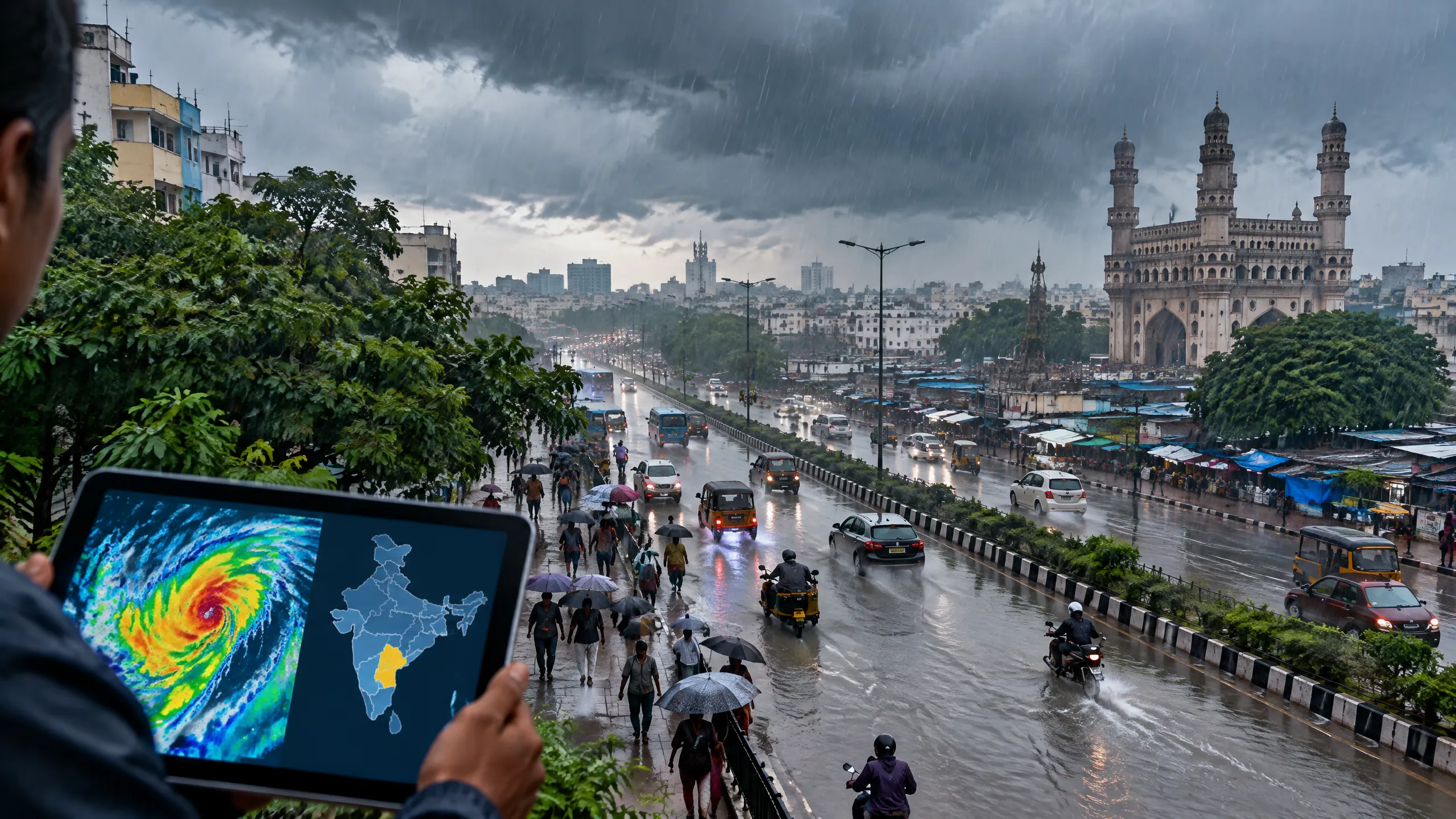
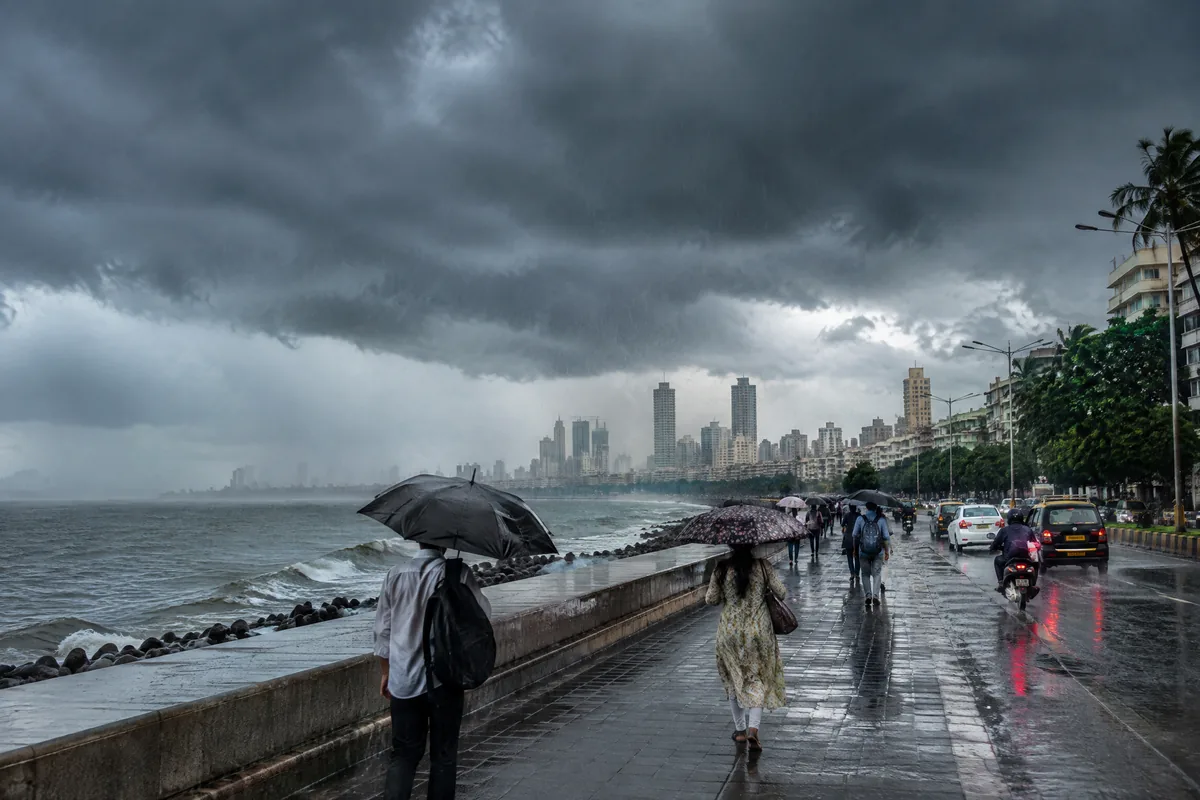
పిడుగు: Why Lightning Searches Are Surging in Andhra Pradesh and Telangana
పిడుగు means lightning in Telugu. See why the term is trending, today’s IMD warnings, reported storm impacts, Damini alerts and essential safety steps.
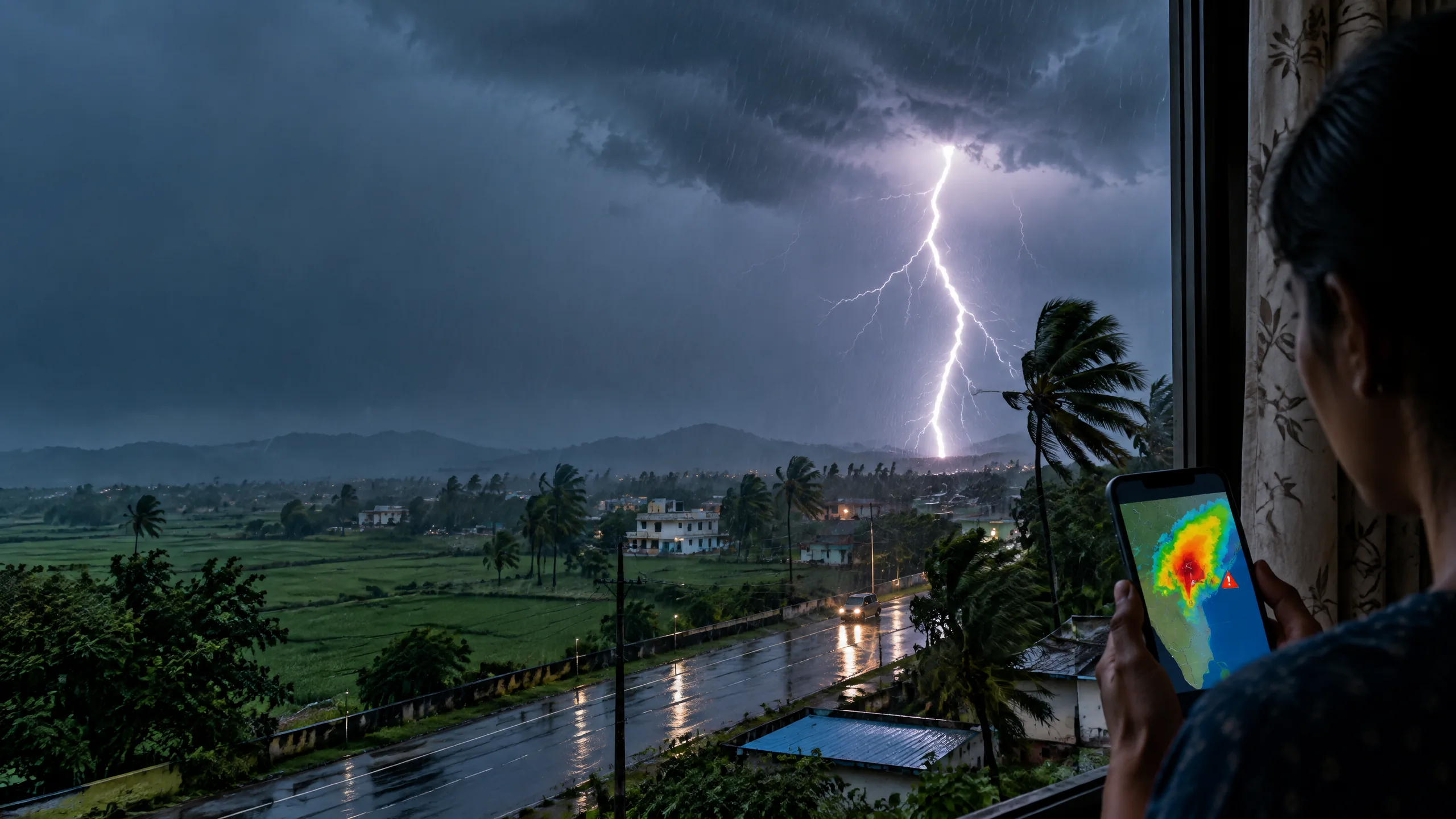
- Google Trends showed పిడుగు as an active India query on 24 September 2026, crossing the platform’s rounded 500+ search threshold and rising about 700% from its usual level.
- The Telugu word పిడుగు means lightning or a thunderbolt, and the search rise coincided with severe rain, gusty winds and fresh lightning reports in Andhra Pradesh and Telangana.
- IMD’s 24 September afternoon bulletins warned of thunderstorms with lightning and gusty or squally winds in parts of Telangana, while Coastal Andhra Pradesh and Yanam faced a thundersquall warning.
- A local report from Huzurabad said a lightning strike damaged a house and electrical equipment in about 20 nearby homes, but reported that family members escaped injury.
- The IITM-developed Damini app shows nearby lightning activity and can issue GPS-based alerts for activity within 20 km and 40 km, but it should be used with current IMD and NDMA warnings.
- When thunder is heard, the safest response is to move into a substantial enclosed building or a hard-topped enclosed vehicle and remain away from trees, water, open ground and electrical conductors.
Why పిడుగు is trending now
పిడుగు is the Telugu word commonly used for lightning or a thunderbolt. Google Trends marked the query as active in India on 24 September 2026. At the time checked, the dashboard showed a rounded threshold of 500+ searches, an increase of about 700%, and a start time roughly one hour earlier. Google Trends does not provide an exact search-volume total in this panel, so the figure should be read as a live activity threshold rather than a precise count.
The timing matches a cluster of weather developments across Telugu-speaking regions. Google’s own news panel associated with the trend surfaced reports about heavy coastal rain and trees brought down by gusty winds. Separately, local Telugu reporting described a lightning strike in Gandhinagar, Huzurabad, and the India Meteorological Department issued updated warnings for thunderstorms, lightning, heavy rain and strong winds in Telangana and Coastal Andhra Pradesh. Together, those reports explain why readers may be searching the single-word query పిడుగు for meaning, current warnings, local incidents and immediate safety information.
This article separates three different kinds of information. Google Trends shows that interest is rising. IMD and NDMA provide official warnings and safety guidance. Local reports describe events said to have occurred at specific places. A trend signal alone does not confirm that lightning has struck a reader’s location, and a state-level warning does not mean every district or village will experience the same conditions.
Today’s IMD lightning warnings for Telangana and Andhra Pradesh
IMD Hyderabad’s press release issued on 24 September said light to moderate rain or thundershowers were very likely at most places over Telangana during the Day 1 period. It placed seven districts—Komaram Bheem Asifabad, Mancherial, Peddapalli, Jayashankar Bhupalpally, Mulugu, Bhadradri Kothagudem and Khammam—under an orange warning for isolated heavy to very heavy rainfall. The same bulletin warned of thunderstorms with lightning and squally winds of 40–50 kmph, gusting to 60 kmph, at isolated places in 12 northern and eastern districts.
A further 12 Telangana districts, including Khammam, Nalgonda, Suryapet, Mahabubabad, Warangal, Hanamkonda and Jangaon, were listed for thunderstorms with lightning and gusty winds of 30–40 kmph. Hyderabad’s local forecast called for a generally cloudy sky with light to moderate rain or thundershowers and gusty winds during the next 24 hours. These are time-bounded forecasts. Readers should check a newer district warning or nowcast if conditions change after publication.
IMD’s all-India afternoon bulletin also warned of a thundersquall over Coastal Andhra Pradesh and Yanam on 24 September, with winds reaching 50–60 kmph and gusting to 70 kmph. It forecast isolated very heavy rainfall over Coastal Andhra Pradesh and Yanam and Telangana. For 25 September, the national bulletin retained thunderstorm, lightning and gusty-wind risks over parts of both regions, while the exact wind range and coverage changed by area. The practical point is that పిడుగు risk must be checked by district and time, not inferred from a statewide headline alone.
What local reports say happened in Huzurabad
Disha Daily reported that lightning struck a residence in Gandhinagar, Ward 23, within Huzurabad town during overnight rain with thunder and lightning. According to the report, part of a pillar was damaged, electrical equipment in the home was burnt, and the surge affected wiring, meters and appliances in about 20 nearby houses. The report said the family members were alert and escaped injury. The number of affected homes and the equipment damage come from that local account and should not be expanded into a wider district estimate without an official assessment.
A separate Disha report described trees falling across the Warangal–Karimnagar highway near Nagendra Dhaba during heavy rain and gusty winds. It said the obstruction disrupted traffic and damaged power lines before police and electricity staff worked to restore movement and supply. That report concerns wind and rain impacts, not proof that every fallen tree was caused by lightning. Keeping those hazards separate matters because each requires a different response: lightning calls for immediate enclosed shelter, while fallen trees and live wires require distance and instructions from emergency or utility personnel.
Another Telugu report from Eenadu highlighted lightning deaths earlier in September in Nellore district and explained the Damini alert service. Those deaths were reported for 14 September, not for the current Google Trends window. They provide safety context but should not be presented as casualties from today’s storm. The current Huzurabad report did not describe a death or injury in the affected household.
What పిడుగు means—and what a lightning warning does not mean
In everyday Telugu, పిడుగు refers to lightning or a thunderbolt. Related searches may use phrases such as పిడుగు పడటం for a lightning strike, పిడుగు హెచ్చరిక for a lightning warning, or పిడుగు జాగ్రత్తలు for safety precautions. The exact one-word query can therefore represent several intentions at once: understanding the word, checking a local incident, finding the forecast, or learning what to do during a thunderstorm.
Thunder is the sound produced by the rapid heating and expansion of air along a lightning channel. If thunder is audible, lightning is close enough to create a risk even when rain has not yet reached the listener. A forecast mentioning thunderstorms with lightning describes a probability within a defined area and validity period. It does not predict the exact street or minute of a strike. A nowcast or location alert is more specific, but it still cannot remove all uncertainty.
The live Google Trends increase is also not a weather measurement. It shows unusually high search activity for the keyword compared with its normal baseline. It cannot establish the number of lightning strikes, their location, casualty figures or the severity of a storm. Those questions require IMD observations, lightning-detection products, district alerts and verified local reporting.
How the Damini lightning-alert app can help
Damini is a lightning-alert application associated with the Indian Institute of Tropical Meteorology in Pune and the Ministry of Earth Sciences system. IITM’s Thunderstorm Dynamics page lists Damini as a product for society and links to its Android and iPhone versions. The Google Play listing says the app monitors lightning activity across India, displays nearby activity, and sends GPS-based notifications when lightning is detected within 20 km and 40 km of the user.
The app also provides instructions and precautions for people in lightning-prone areas. To receive location-relevant alerts, the device must have the necessary location and notification permissions and a functioning data connection. The Google Play data-safety section says the app may collect location and personal information, that data is encrypted in transit, and that the developer reports no sharing with third parties. Users should review the current store disclosure and privacy policy before enabling permissions because app practices can change.
Damini is an additional warning channel, not a promise of a fixed lead time before every strike. A phone may be offline, notifications may be disabled, and fast-developing storms can change quickly. Use the app alongside the latest IMD warning, the NDMA Sachet portal, district administration notices and conditions visible at the location. If thunder is already audible, do not wait for another notification before seeking safe shelter.
పిడుగు safety: what to do outdoors and indoors
The first rule is simple: when thunder is heard or lightning is seen, move indoors. A substantial enclosed building is preferred. A hard-topped enclosed vehicle with the windows closed can provide protection when a building is unavailable. Open shelters, porches, tents, motorcycles and open vehicles are not reliable lightning shelters. Do not remain in an open field, on an elevated ridge, beside a water body or under an isolated tall tree.
Farmers, outdoor workers and travellers should stop exposed activity early rather than wait for rain to intensify. Move away from wire fences, power lines, poles, metal equipment and irrigation water. Never approach a fallen electric line or a tree touching a line; report it to the electricity utility or local emergency service. If a group is caught without shelter, spreading out can reduce the chance that one ground current injures several people, but the priority remains reaching enclosed shelter quickly.
Inside a building, stay away from windows, doors, balconies and porches. Avoid contact with running water and plumbing during the storm. Do not use devices connected to wall outlets, corded phones or appliances that create a path through the electrical system. A mobile phone that is not plugged in is different from a corded device: the phone itself does not attract lightning, but standing outdoors to use it remains dangerous because exposure is the problem.
CDC guidance advises waiting at least 30 minutes after the last thunder before resuming outdoor activity. That rule is useful because lightning can occur near the beginning or end of a storm and outside the area of heaviest rain. Local official instructions take priority if authorities extend a warning or restrict access to roads, fields, coastal areas or water bodies.
What to do if someone is struck by lightning
A person struck by lightning does not retain an electrical charge and can be touched safely. First make sure the area is not exposing rescuers to continuing lightning, fallen power lines or another hazard. Call India’s emergency number 112 and give the clearest available location, the number of people affected and whether the storm is continuing.
Check whether the person is breathing and responsive. Lightning can cause cardiac arrest. If the person is not breathing and a trained responder is available, begin cardiopulmonary resuscitation and continue until professional help arrives or the person recovers. An automated external defibrillator should be used if available and if the operator knows how to follow its instructions. Burns, hearing problems, confusion, weakness and injuries from a fall also require medical assessment even when the person is conscious.
Do not delay help because of the myth that a lightning victim remains electrically charged. At the same time, do not create another casualty by standing in an exposed field during continuing strikes. Move the person to a safer nearby place only when it can be done without worsening a suspected serious injury, and follow the emergency operator’s instructions.
Where to check the next alert
For the newest official picture, use IMD’s district forecast and nowcast products and the NDMA Sachet National Disaster Alert Portal. Sachet publishes area-specific warnings from authorised agencies and state or Union Territory disaster-management authorities. It also allows people to view current alerts, subscribe to other locations and read hazard-specific dos and don’ts. The portal showed active Telangana lightning, squall, thunderstorm and heavy-rain alerts when this article was prepared.
Readers who need the wider rain context can use Reddy News’s detailed explainer on the IMD Telangana extreme-rain warning for 24 September. The earlier Gujarat rain warning illustrates why every alert must be tied to a date and district, while the monsoon guide explains how a broad weather pattern differs from a short-term local warning. None of those pages replaces the latest IMD or district authority update.
The key takeaway from the పిడుగు trend is practical rather than sensational. Search interest rose quickly because weather warnings and local storm reports created an immediate information need. Use the exact location and current warning time, move to proper shelter as soon as thunder is heard, keep clear of electrical and water pathways, and treat official alerts as live information that can be revised.
Reader guide
Article questions, answered
Short answers to common reader questions based on the reporting above.
What does పిడుగు mean in English?
పిడుగు is a Telugu word for lightning or a thunderbolt. In a weather context, searches for పిడుగు usually concern a lightning strike, warning, local incident or safety precautions.
Why is పిడుగు trending in India today?
Google Trends showed the query as active on 24 September 2026, with a rounded 500+ threshold and about a 700% increase. The rise coincided with IMD lightning and storm warnings plus fresh Telugu reports of severe rain, gusty winds and a lightning incident.
Which Telangana districts have a lightning warning?
IMD Hyderabad’s 24 September bulletin listed thunderstorms with lightning across 24 Telangana districts in two wind bands. Because district coverage and validity periods change, check the latest IMD or NDMA Sachet alert instead of relying on a static list after publication.
What is the Damini lightning-alert app?
Damini is linked by IITM as a public lightning-alert product. Its Google Play listing says it monitors lightning activity in India, shows nearby strikes and can send GPS-based notifications for activity within 20 km and 40 km.
Is it safe to use a mobile phone during lightning?
A mobile phone that is not connected to a charger is generally safe to use inside proper shelter. The main risk is remaining outdoors or using corded and plugged-in equipment that can provide a path for a lightning surge.
Can I touch someone who has been struck by lightning?
Yes. A lightning victim does not retain an electrical charge. Make the scene safe, call emergency number 112, check breathing and responsiveness, and begin CPR if needed and if you are trained, following the emergency operator’s directions.
Sources and further reading
These references support the factual context used in this article. Links open the original publisher.
- Google Trends India — active query: పిడుగుGoogle Trends · accessed 24 September 2026
- All India Weather Summary and Forecast Bulletin, 24 September 2026, afternoonIndia Meteorological Department · accessed 24 September 2026
- Telangana Press Release, 24 September 2026, 1400 ISTIndia Meteorological Department, Meteorological Centre Hyderabad · accessed 24 September 2026
- Sachet National Disaster Alert PortalNational Disaster Management Authority · accessed 24 September 2026
- Thunderstorm Dynamics — Damini productsIndian Institute of Tropical Meteorology · accessed 24 September 2026
- Damini: Lightning AlertGoogle Play / SAFAR Team · accessed 24 September 2026
- Safety Guidelines: LightningUS Centers for Disease Control and Prevention · accessed 24 September 2026
- Lightning strike in Gandhinagar reportedly damages electrical equipment in nearby homesDisha Daily · accessed 24 September 2026
- Trees toppled on Warangal–Karimnagar highway during heavy rain and gusty windsDisha Daily · accessed 24 September 2026
- Damini lightning alerts and Nellore safety contextEenadu · accessed 24 September 2026