Virat Kohli 15,000 ODI Runs: India Beat West Indies by Eight Wickets
Virat Kohli made an unbeaten 139 and became the second men’s ODI batter to reach 15,000 runs as India beat West Indies by eight wickets.
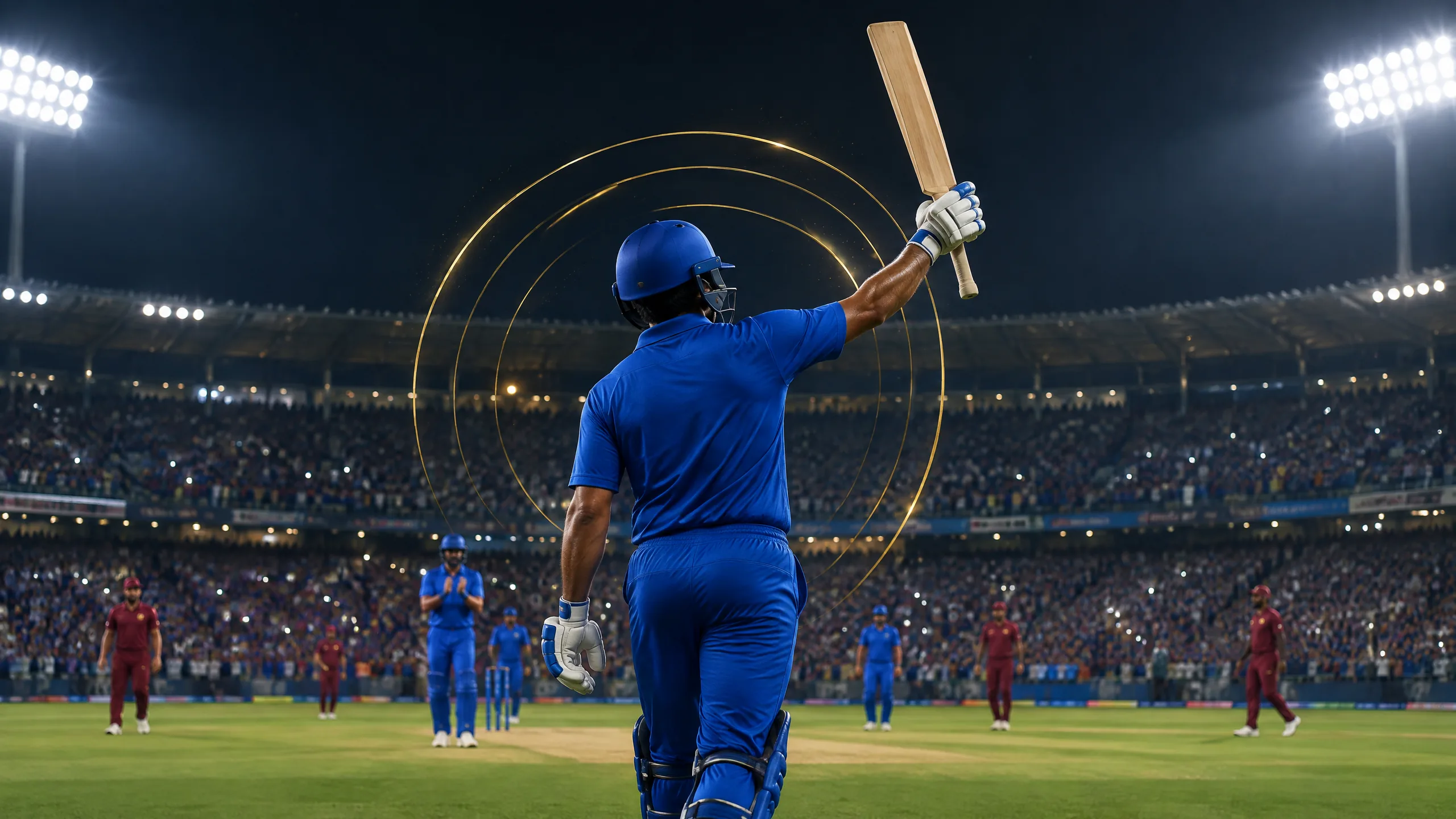
- India made 300 for 2 in 41.4 overs to chase West Indies' 295 for 7 and win the first ODI by eight wickets, with 50 balls remaining.
- Virat Kohli finished unbeaten on 139 from 88 balls, reached 15,000 men's ODI runs and made his 55th ODI century.
- Kohli is the second men's ODI batter to pass 15,000 runs after Sachin Tendulkar; sources agree he is the fastest to the mark, although published innings counts conflict.
- Shubman Gill scored 110, while the Kohli-Gill stand added 151 in 132 balls after the opening partnership had been broken.
- Kuldeep Yadav's 4 for 40 pulled West Indies back from a 135-run opening stand before Amir Jangoo's unbeaten 58 helped the visitors reach 295 for 7.
- The result puts India 1-0 ahead in the three-match series; the second ODI is scheduled for 30 September in Guwahati.
India won the match, and Kohli made the landmark
Virat Kohli's 15,000 ODI runs landmark arrived in a completed India victory, not as an isolated personal milestone. India made 300 for 2 in 41.4 overs to overhaul West Indies' 295 for 7 in the first ODI at Thiruvananthapuram on 27 September, winning by eight wickets with 50 balls unused. Kohli was unbeaten on 139 from 88 balls; Shubman Gill made 110.
That result supplies the essential context. West Indies posted a substantial target of 296 after being asked to bat, and India did not merely edge home. The chase was finished more than eight overs early, with only two wickets down. Kohli's record and his 55th ODI hundred were the most conspicuous features of the evening, but the win was also built on a decisive bowling recovery and a century partnership in the chase.
The historical comparison is exact: Kohli is only the second batter in men's ODI cricket to reach 15,000 runs, after Sachin Tendulkar. It is a format-specific milestone. It does not change the score of this match or determine anything about the rest of the series, but it gives a clear measure of the volume Kohli has accumulated in one-day internationals.
What the 15,000-run record establishes
The sources reopened for this report agree on the central record: Kohli is the fastest batter to 15,000 men's ODI runs and Tendulkar is the only other player over the threshold. ICC's record table lists Tendulkar on 18,426 runs and Kohli on 15,002 at the point of its report. Kohli had crossed the landmark during the chase with a boundary off Alzarri Joseph in the 29th over.
There is an important precision issue with the widely repeated innings figure. An ICC record article describes Kohli as reaching the mark in 315 innings, but its adjacent table labels 315 as matches. ESPNcricinfo's statistics report gives 303 innings and compares that with Tendulkar's 377. The publications therefore agree that Kohli is fastest by innings but not on the number printed for his innings count. Rather than turn that discrepancy into a false certainty, this report does not attach a single exact innings figure to the record.
Kohli's century was his 55th in ODIs, according to ICC and the match reports. The 139 not out was also a winning innings: he remained there when the target was reached. That matters more than a generic career total in explaining this match, because the innings both carried India through the middle of the pursuit and ended it.
West Indies began fast before Kuldeep changed the shape of the innings
West Indies' 295 for 7 was not a total produced from a single late surge. Justin Greaves and John Campbell gave the visitors 135 for the first wicket in 19.2 overs. Campbell made 62 from 60 balls and Greaves went on to his maiden ODI century, scoring 101. For roughly the first 20 overs, that opening partnership gave West Indies both a solid base and scoring momentum.
Kuldeep Yadav altered the course of the innings after the opening pair had put India under pressure. He dismissed Campbell for the breakthrough and returned figures of 4 for 40. ESPNcricinfo's report and scorecard show a period in which West Indies lost four wickets for 22 runs between the 31st and 36th overs; a side that had been well placed was forced to rebuild rather than simply accelerate through the closing overs.
Amir Jangoo's unbeaten 58 from 43 balls ensured the visitors still finished at 295 for 7. Prasidh Krishna took 2 for 60. The final total was competitive enough to make the chase meaningful, but the middle-overs wickets meant India faced a target rather than an even larger one. Kuldeep was named Player of the Match by ESPNcricinfo's scorecard, a useful reminder that the record-breaking chase had an equally consequential first-innings phase.
A fast start gave the chase its platform
India's response began with a 74-run opening stand between Rohit Sharma and Gill before Sharma was dismissed in the 12th over. That opening did not settle the target by itself, but it ensured that Kohli entered an innings with the chase moving rather than stalled. India were 70 without loss after the first 10 overs, according to ICC's match report, and the early run rate left room for the next pair to manage the required total without a late scramble.
Gill and Kohli then added 151 in 132 balls. The partnership was the match's clearest batting turning point: it combined Gill's 110 from 108 balls with Kohli's increasingly forceful scoring and took the chase from an opening-platform stage to one West Indies could not recover. Gill reached his 10th ODI century before Roston Chase dismissed him.
Kohli completed his hundred and kept going. ICC and Sky Sports report that he sealed the win with a six and ended on 139 from 88 balls. India crossed 296 in the 42nd over, with Ruturaj Gaikwad unbeaten on 13 alongside Kohli.
Why the scorecard points to a two-part India performance
The match can be read in two connected parts. First, India contained a West Indies side that had raced to 135 without loss. Kuldeep's four wickets were central to limiting the visitors to 295 rather than allowing the opening stand to become the basis for an unbroken 50-over assault. Jangoo's late innings then ensured that the bowlers' recovery was valuable, not decisive on its own.
Second, India made the target look more manageable than it was at the interval. The top order maintained an early tempo, Gill and Kohli shared the largest stand of the chase, and Kohli stayed to finish. This is why an eight-wicket margin should be understood alongside the 41.4-over finish: India had to chase 296, but the sequence of partnerships meant West Indies did not take regular wickets after the first breakthrough.
The individual numbers reinforce that shape without requiring broader claims about form or selection. West Indies had three half-century-or-better contributions—Greaves' 101, Campbell's 62 and Jangoo's 58 not out. India answered with two centuries. On this day, the difference was not one player alone; it was India's ability to produce a bowling interruption in the first innings and a long, match-defining stand in the second.
The series position after the first ODI
The practical series consequence is straightforward. India lead the three-match series 1-0. ICC lists the second ODI for 30 September in Guwahati. That schedule is the current fixture information verified for this report; it is not a basis for predicting a result, a playing XI or any selection change.
For West Indies, the first ODI showed that a strong opening partnership and a late counterattack can still produce a demanding total, but the visitors did not defend it. For India, the win confirmed only this match result and the early series lead. Each side will carry the scoreline into the next game, while the outcome of that game remains to be played.
A record report, not a retirement or World Cup story
Kohli's 15,000-run achievement naturally invites discussion of his place in ODI history, but this report should not be confused with a separate story about his stated 2027 World Cup endpoint. Sunday's match establishes a completed score, a century, a record threshold and a 1-0 series lead. It does not announce a retirement, settle future selection, or provide a new World Cup development.
The more useful way to read the milestone is in the match context. Kohli joined Tendulkar as the only men's ODI batters past 15,000, reached another ODI hundred, and remained unbeaten while India completed a 296-run chase. The next verifiable question is not a forecast about his career; it is the on-field result of the scheduled second ODI in Guwahati.
Reader guide
Article questions, answered
Short answers to common reader questions based on the reporting above.
How many ODI runs did Virat Kohli have after the first ODI against West Indies?
ICC's record report listed Kohli on 15,002 ODI runs after his unbeaten 139 in Thiruvananthapuram. He became the second men's ODI batter to cross 15,000, after Sachin Tendulkar.
Did Virat Kohli reach 15,000 ODI runs faster than Sachin Tendulkar?
Yes. ICC and ESPNcricinfo both describe Kohli as the fastest to 15,000 men's ODI runs by innings. However, their published exact innings totals conflict: an ICC article says 315 while its table labels 315 as matches, and ESPNcricinfo reports 303 innings. The shared, supported conclusion is that Kohli was fastest to the landmark.
What was the India vs West Indies first ODI result?
West Indies made 295 for 7 and India replied with 300 for 2 in 41.4 overs. India won by eight wickets with 50 balls remaining.
Who were the leading performers in the match?
For India, Kohli made 139 not out and Gill made 110. Kuldeep Yadav took 4 for 40. For West Indies, Justin Greaves made 101, John Campbell scored 62 and Amir Jangoo finished unbeaten on 58.
When is the second India vs West Indies ODI?
ICC lists the second ODI on 30 September in Guwahati. India lead the three-match series 1-0 after the first match.
Sources and further reading
These references support the factual context used in this article. Links open the original publisher.
- Kohli masterclass helps India clinch first ODI against WindiesInternational Cricket Council · accessed 2026-09-28
- Virat Kohli scales another remarkable ODI recordInternational Cricket Council · accessed 2026-09-28
- India vs West Indies: Virat Kohli joins Sachin Tendulkar in passing 15,000 ODI runs as his 55th ton fires India to victorySky Sports · accessed 2026-09-28
- Kuldeep reels West Indies in, Gill and Kohli tons knock them outESPNcricinfo · accessed 2026-09-28
- Stats - Virat Kohli fastest to 15,000 ODI runsESPNcricinfo · accessed 2026-09-28