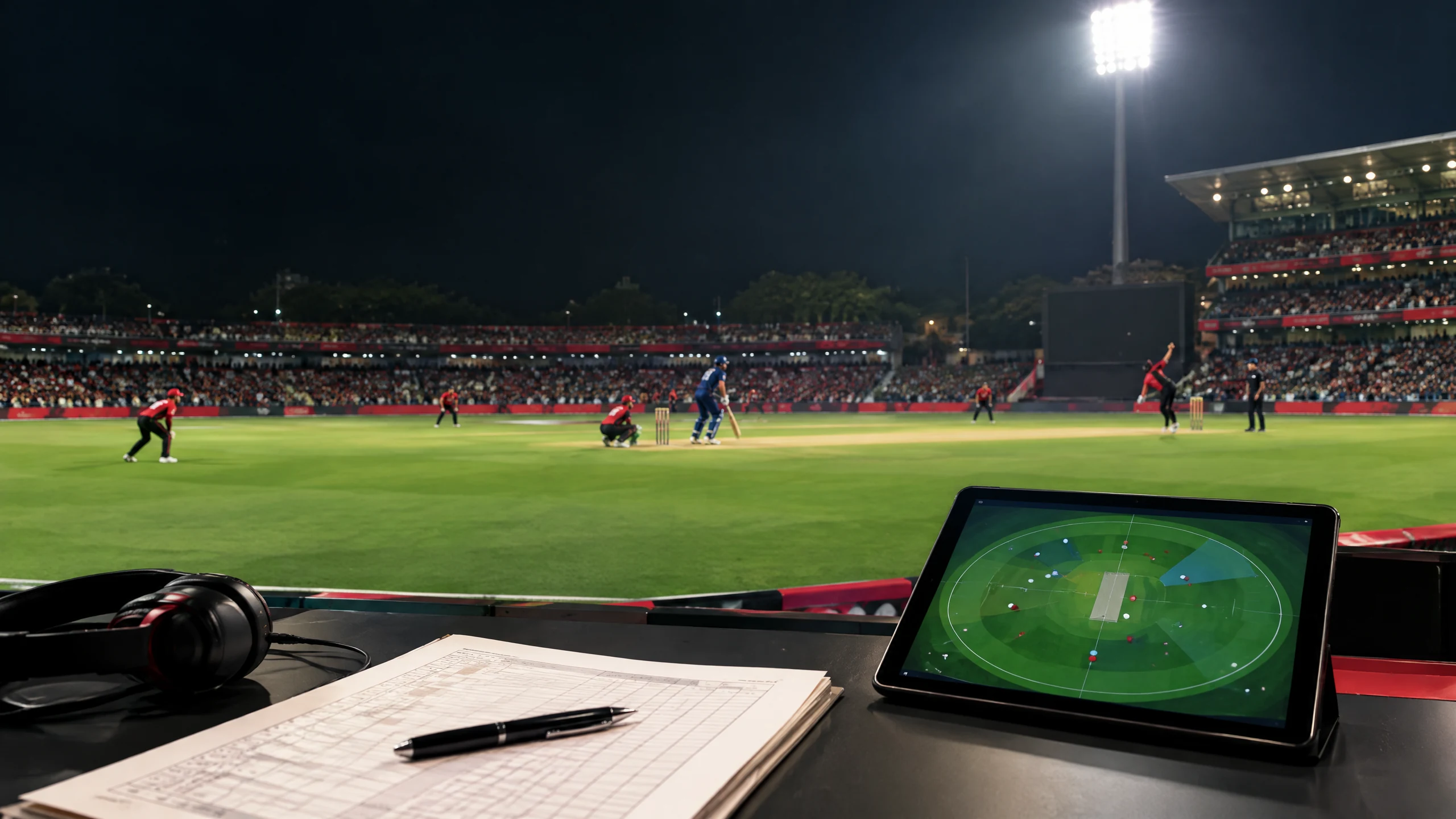
Powerplay numbers: what the first six overs reveal
The opening six overs offer a useful statistical snapshot of intent, risk and match-ups—but only when read beyond boundary counts.

- Powerplay value combines scoring speed with wickets preserved.
- Boundary rate needs context from dots, match-ups and conditions.
- Repeated powerplay patterns reveal strategy better than one innings.
A fast start is more than a boundary count
In T20 cricket, the powerplay covers the first six overs, when only two fielders may be outside the inner circle. That restriction creates scoring opportunities, but it also shapes how batters choose their risks. A strong powerplay is not simply a high total; it is a period in which a team gains momentum without surrendering too many wickets.
The most useful starting numbers are runs, balls faced, boundary percentage and scoring rate. Read together, they show whether an innings was built through clean hitting, busy running or a few isolated boundaries. A side can score briskly while remaining vulnerable if its batters are repeatedly beaten or dependent on one player’s improvisation.
Wickets change the meaning of every run
Powerplay wickets deserve equal billing with runs because they alter the shape of the middle overs. Losing an opener early may force a team to protect inexperienced batters, while keeping both established hitters in can make later acceleration easier. The same score therefore carries different value depending on who remains, how many resources are available and which bowlers are left.
Strike rate alone can also mislead. A batter facing a difficult new ball, a strong swing bowler or a particular match-up may be doing valuable work by rotating strike and avoiding a dismissal. Conversely, a rapid cameo can conceal pressure created by a cluster of dot balls. Dot-ball percentage, dismissal timing and balls per boundary add necessary context to the headline rate.
How to compare powerplays fairly
Comparisons work best when they account for conditions and roles. A score made on a slow surface should not be judged against one from a flat pitch without adjustment, and an opener’s numbers cannot be read exactly like those of a designated aggressor. Venue history, innings position, bowling quality and the match situation all influence what a sensible powerplay looks like.
For readers, the clearest method is to combine three questions: did the team score efficiently, did it preserve wickets, and did it create a favourable platform for the next phase? Tracking those answers across several matches reveals a team’s habits more reliably than one eye-catching start. Powerplay statistics are most valuable as clues to strategy, not as a verdict on an innings.