Nepal beat UAE to win Premier Cup and qualify for 2027 Asia Cup
Nepal beat UAE by 44 runs after Aasif Sheikh’s century and secured a place in the 2027 Men’s Asia Cup, its second appearance after 2023.
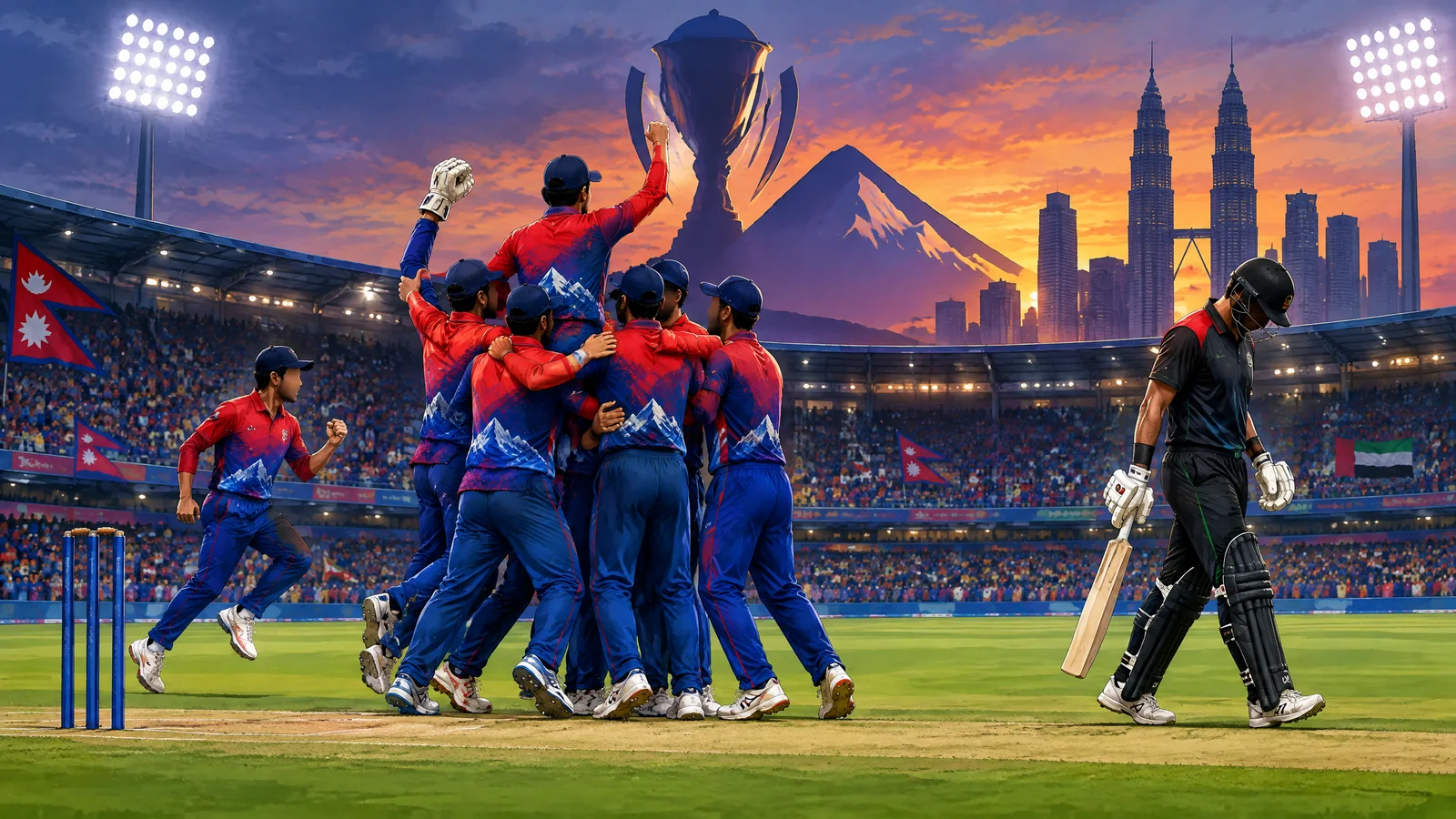
- Nepal won the ACC Men’s Premier Cup 2026 final by 44 runs after making 313 for 9 and bowling UAE out for 269.
- Aasif Sheikh’s 102 from 106 balls gave Nepal’s innings its foundation, before Gulshan Jha added 52 from 38 deliveries in the closing stages.
- Karan KC’s 3 for 49 led a collective defence; UAE’s Rahul Chopra finished unbeaten on 100 but could not complete the chase.
- The ICC says the title secured Nepal’s place in the 2027 Men’s Asia Cup, its second appearance after 2023.
Nepal’s Premier Cup title brings a verified Asia Cup berth
Nepal have won the ACC Men’s Premier Cup 2026, beating the United Arab Emirates by 44 runs in the final at Bayuemas Oval in Kuala Lumpur on 12 September. Nepal posted 313 for 9 from 50 overs and then dismissed UAE for 269. It was a completed title-winning performance rather than a qualification scenario left to later results: the ICC says the final victory secured Nepal’s place in the 2027 Men’s Asia Cup.
The result carries two distinct pieces of significance. First, Nepal lifted the Premier Cup after building and defending the highest total of the match. Second, the team has a confirmed route back to the Asia Cup. The ICC identifies 2027 as Nepal’s second appearance in the competition, after its first in Sri Lanka in 2023. That is the firm consequence of the final; the verified reports do not establish the 2027 fixture list, dates or full line-up of teams.
For a broader guide to keeping track of confirmed fixtures rather than assumptions, readers can consult Reddy News’ cricket calendar.
Sheikh supplied the platform; Jha changed the scale of the target
Aasif Sheikh’s innings was the centre of Nepal’s first-innings control. The opener made 102 from 106 balls, an innings described by the Asian Cricket Council as composed and authoritative. Arjun Kumal contributed 43 and Rohit Paudel 40, leaving Nepal with a working base rather than a scramble for a defendable score. Sheikh’s hundred ultimately earned the Player of the Match award.
The total became much more formidable in the closing stages. Gulshan Jha struck 52 from 38 balls as Nepal accelerated, while the ACC also credited late contributions from Dipendra Singh Airee and Basir Ahamad. The official report’s sequence matters: the early support and Sheikh’s long innings created the platform; Jha’s faster scoring lifted the final demand to 314. It is a more useful reading than reducing a 313-for-9 scorecard to a single century.
There is no need to infer an unreported tactical blueprint from those scores. What the verified record shows is a division of innings roles: a century that held the batting together, useful top-order support and a late innings that added enough urgency to make the chase demanding. The same principle—runs, wickets and phase context travelling together—is explored in Reddy News’ guide to why cricket statistics need context.
UAE’s resistance did not break Nepal’s control
UAE did not fade without a fight. Tanish Suri gave the reply early momentum with 42 from 28 balls, Sohaib Khan made 52, and Rahul Chopra carried the innings deep with an unbeaten 100 from 105 balls. Those contributions explain why the chase remained alive well into the final phase rather than becoming a routine defence of a large total.
Nepal, however, continued to take wickets at moments that prevented the reply from settling into the kind of partnership that could reshape the match. Karan KC led the figures with 3 for 49. Lalit Rajbanshi took 2 for 43, according to the scorecard, while the ACC noted further breakthroughs from Dipendra Singh Airee, Jha and Basir Ahamad. UAE were eventually all out for 269, 44 short of the target.
The conclusion supported by the scorecard is measured but clear: Nepal’s margin came from combining a high first-innings total with a bowling effort that kept removing resources from the chase, even as Chopra remained unbeaten. It should not be overstated as proof that every field setting or delivery plan was predetermined. For a fuller framework for reading a defence across its phases, see how match decisions change a game.
Awards reflect the final and the full campaign
Sheikh’s Player of the Match recognition is directly tied to the innings that anchored the final. Sandeep Lamichhane’s Player of the Series award speaks to a longer tournament contribution: the ICC reports that the Nepal captain finished the campaign with 17 wickets. The ICC’s official match centre lists Sheikh as Player of the Match, while the ICC qualification report confirms Lamichhane as Player of the Series.
Those awards describe different levels of achievement. The match honour identifies the individual contribution most decisive on the day; the series award recognises a sustained tournament impact. Nepal’s result was nevertheless collective in its construction: the title came through batting contributions around Sheikh, late acceleration from Jha and wickets shared across the defence. The ACC’s official account frames that blend of timely contributions as central to the campaign’s finish.
Why the qualification matters—and what it does not settle
For Nepal, the new fact is qualification, not merely a place in a results table. The ICC states that the win puts the side in the 2027 Men’s Asia Cup, where it notes Nepal could have the prospect of meeting full-member nations including India, Sri Lanka and Pakistan. That wording signals opportunity, but it is not a confirmed match-up or fixture announcement.
The return also gives Nepal a second Asia Cup appearance after 2023. It places this Premier Cup final in a larger competitive context without needing unsupported claims about future selection, venues or tournament format. Readers following the current continental title match can also find Reddy News’ report on the confirmed India–Sri Lanka Women’s Asia Cup final. The two events should be kept distinct: Nepal’s qualification concerns the 2027 Men’s Asia Cup, while that report concerns the 2026 women’s final in Dubai.
For Reddy News readers, the reason to remember this final is the order of cause and effect. Nepal first made a substantial score, then defended it under continued resistance, then collected the Premier Cup and the Asia Cup qualification that came with victory. The qualification is verified; predictions about how Nepal will perform in 2027 are not.
What to watch next
The immediate watchpoint is administrative rather than speculative: future official announcements about the 2027 Men’s Asia Cup’s schedule, venues, participating teams and Nepal’s fixtures. None of those details should be assumed from the Premier Cup result alone. Until they are announced by the relevant organisers, Nepal’s confirmed status is qualification.
On the cricket side, the final offers concrete reference points rather than a forecast. Sheikh has a final-winning century on the record, Jha supplied an important late 52, Karan KC led the bowling return with 3 for 49, and Lamichhane completed the tournament with 17 wickets. Future matches will show whether those performances develop into repeatable patterns; a single final and a single tournament do not settle every longer-term question.
When the next set of fixtures is verified, the useful lens will remain the same: assess the opening platform, the middle and closing phases, and the wickets available to a chasing side. Reddy News’ explainer on what the first six overs reveal offers a related way to read momentum and resource preservation, while recognising that the Premier Cup final itself was a 50-over contest.
Reader guide
Article questions, answered
Short answers to common reader questions based on the reporting above.
What was the result of the Nepal vs UAE ACC Men’s Premier Cup final?
Nepal made 313 for 9 and dismissed the United Arab Emirates for 269, winning the 12 September 2026 final by 44 runs at Bayuemas Oval in Kuala Lumpur.
How did Nepal qualify for the 2027 Men’s Asia Cup?
The ICC says Nepal’s victory over UAE in the ACC Men’s Premier Cup 2026 final secured its place in the 2027 Men’s Asia Cup. The reports verified for this article do not provide a fixture list, dates or a complete confirmed field for that tournament.
Has Nepal played in the Men’s Asia Cup before?
Yes. The ICC identifies 2027 as Nepal’s second Men’s Asia Cup appearance and says its first came in Sri Lanka in 2023.
Who won the individual awards in the Premier Cup final?
Aasif Sheikh was Player of the Match after scoring 102 from 106 balls. Nepal captain Sandeep Lamichhane was Player of the Series, with the ICC reporting 17 wickets in the tournament.
Sources and further reading
These references support the factual context used in this article. Links open the original publisher.
- Aasif Sheikh’s Century and Nepal’s Collective Effort Deliver Premier Cup GloryAsian Cricket Council · accessed 13 September 2026
- Nepal qualify for Men’s Asia Cup 2027International Cricket Council · accessed 13 September 2026
- Nepal vs United Arab Emirates, ACC Men’s Premier Cup 2026 Final — official match centreInternational Cricket Council · accessed 13 September 2026