Reddy Anna IPL Analysis: How to Read an IPL Match Beyond the Score
Reddy Anna IPL analysis explains powerplay intent, middle-over control, death-over execution, Impact Player choices and the decisions behind an IPL result.
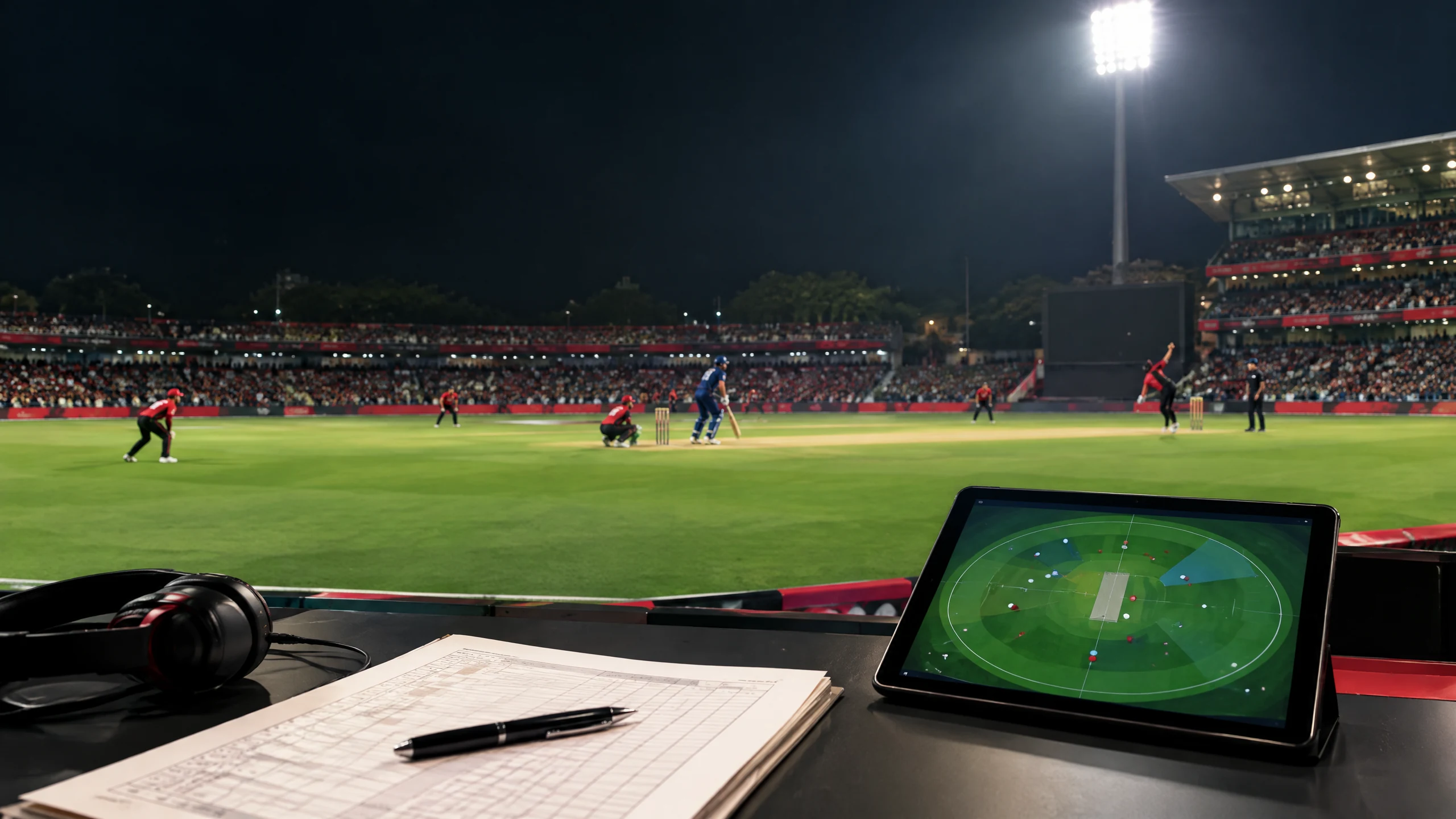
- Reddy Anna IPL analysis starts with game state: score, target, balls remaining, wickets, batters, bowlers and conditions.
- Powerplay, middle overs and death overs must be read as different tactical phases rather than one continuous scoring race.
- Strike rate and economy rate become useful only when combined with role, matchup, pitch, boundary size and wickets in hand.
- Impact Player use, field placement and DRS decisions should be judged by the options available at that moment, not only by the outcome.
- The 2026 IPL final shows how a short-ball plan, a 62-run opening stand and an Impact Player promotion changed the match equation.
What Reddy Anna IPL analysis means
Reddy Anna IPL analysis is a Reddy News method for explaining what happened in an Indian Premier League match and why it happened. It begins with verified match information, then examines innings phases, wickets, scoring pressure, player roles, bowling plans, field settings and tactical substitutions. The aim is to help a reader move beyond the final score without pretending that every private team conversation is known.
The name needs a clear boundary. Reddy Anna Cricket is the cricket editorial section of Reddy News on metalscommoditytrading.com. It is not an IPL team, the BCCI, an official league product, a score provider or a representative of any player or franchise. When this article uses the phrase Reddy Anna analysis, it means independent editorial analysis supported by official playing conditions, scorecards and attributed reporting.
A good IPL report answers who won. A useful Reddy Anna Cricket analysis goes further: which phase changed the required rate, whether wickets altered the value of attacking shots, how a bowler's length matched the field, and whether an Impact Player solved a real problem. Those questions create information gain. Repeating a scorecard with extra adjectives does not.
Start with the match state, not the highlight
Before judging a shot or delivery, write down the format, innings, score, overs completed, target, wickets in hand, batters at the crease and bowlers still available. Add the toss decision, venue, visible surface behaviour, boundary dimensions when reliably reported, and weather. A six struck at 35/0 in the fourth over carries a different cost from the same shot at 35/3. The action looks identical; the decision does not.
For a chase, calculate the required run rate from runs still needed and legal balls remaining. For a defence, ask how many overs the captain can still obtain from the strongest bowlers and which batters are likely to face them. Wickets are a resource because they affect how aggressively a side can pursue runs. Overs are also a resource because delaying a difficult bowler can create an even harder final phase.
Keep pre-ball information separate from hindsight. A well-planned yorker that becomes a low full toss may be an execution error. A poorly matched delivery can take a wicket through a mistimed shot. Reddy Anna Cricket analysis judges the quality of the choice and the quality of the execution separately, then uses the result as one piece of evidence rather than the entire verdict.
Reddy Anna Cricket IPL analysis by innings phase
The opening phase is shaped by fielding restrictions, the new ball and the risk of early wickets. Track runs and wickets together. Also note dot balls, balls per boundary, movement through the air or off the pitch, and whether the batting side is finding singles when the boundary ball does not arrive. A rapid powerplay built around one batter can be strong, but it can also leave a fragile middle order exposed if two wickets fall close together.
The middle overs test whether a team can preserve scoring options. This is where spin matchups, pace changes, boundary size and strike rotation become visible. A rate of seven or eight per over can be acceptable if wickets are secure and finishers remain. The same rate can be damaging when a chase is already above eleven per over. Reddy Anna IPL analysis therefore compares the current rate with the match requirement rather than calling every quiet over a failure.
The death overs expose resource planning. Check which bowlers have overs left, whether they can defend the shorter boundary, and whether the set batter retains strike. A side that reaches the final four overs with wickets in hand but no established batter may have less control than the score suggests. Conversely, one set batter can make a difficult equation manageable if the bowling side has already used its safest matchup.
Read the scorecard as a sequence of pressure
Batting strike rate is runs divided by balls faced, multiplied by 100. Bowling economy is runs conceded per over. These are useful summaries, not final judgments. A batter's 130 strike rate against the new ball on a difficult surface can have more value than a 170 strike rate made after the target is almost settled. A bowler's economy can be protected by dropped chances, while an expensive over can include several deliveries that followed the correct plan.
Partnerships show how pressure moved. Record the score at each wicket, the length of the stand and which batter controlled strike. Then look for clusters. Two wickets in four balls can force a reset even when the required rate remains modest. A fifty-run partnership can reduce risk for the next batter, but its value depends on the balls consumed and the difficulty of the remaining bowling.
Dot-ball percentage and boundary frequency explain the route to a total. Six dots and two boundaries across two overs produce a different tactical picture from twelve singles even when the aggregate is similar. The first pattern suggests pressure interrupted by release shots. The second shows reliable rotation. Reddy Anna analysis uses those sequences to explain control instead of treating every run as equal.
Matchups, bowling plans and field settings
A matchup is not just right hand versus left hand or pace versus spin. It includes release angle, line, length, pace range, boundary size, batter movement and field protection. Ask what the bowler is trying to remove. A wide line may deny the leg-side swing, while a hard length can challenge a batter moving forward. The field should protect the likely miss as well as the intended delivery.
Field placement is easiest to read as a map of permitted and denied runs. A deep square fielder and fine leg may support a short-ball plan, but the exact plan still depends on pace and line. Extra cover protection can invite a straighter shot. An aggressive ring can create dot-ball pressure while leaving a boundary area exposed. Without a full field view, state the limitation rather than inventing a position that television did not show.
Watch the response after a batter changes method. If the batter moves across the crease, does the bowler change line or keep the original plan? If a slower ball is read early, does the captain alter protection? Repeated adjustment is stronger evidence than one delivery. Reddy Anna Cricket IPL coverage should explain that contest ball by ball when the footage and score record are available.
How the Impact Player changes IPL analysis
The Impact Player rule gives each team a tactical substitution from a nominated list, subject to the current competition conditions. The incoming player can take an active batting or bowling role, unlike an ordinary substitute fielder. The replaced player cannot return to the match. Overseas-player limits also affect which replacement is available, so the team sheet matters before a tactical judgment is made.
Do not grade the move only by the substitute's runs or wickets. Ask what flexibility the substitution created. A batter can lengthen the chase and release the top order to attack. A bowler can add a matchup that the original XI lacked. Timing matters: an early substitution may respond to a clear innings plan, while a late one may preserve optionality until the match state is known.
The relevant comparison is not Impact Player versus perfection. It is the chosen player versus the realistic alternatives on the nominated list, at the moment the decision was made. Reddy Anna IPL analysis should identify that counterfactual carefully and avoid claiming knowledge of fitness, team instructions or private data unless an authoritative source has reported it.
DRS and DLS need their own evidence rules
The ICC describes the Decision Review System as a technology-based process that assists match officials. An on-field umpire can consult the third umpire through an Umpire Review, and players can request a Player Review under the competition protocol. In analysis, note the on-field decision, the type of dismissal, reviews remaining, the visible evidence and the final ruling. A failed review can still have been understandable if the available cues were strong and the match cost was low.
The Duckworth-Lewis-Stern method is used when weather interrupts a limited-overs match and totals or targets must be recalculated. Do not estimate a revised target from raw run rate. The official calculation accounts for match resources, and the published target is the reliable reference. When rain threatens, a useful Reddy Anna analysis can discuss wickets, overs and the official par position only when those numbers are supplied by the match source.
Competition playing conditions control the match. MCC writes and interprets the Laws of Cricket, while the IPL and ICC can apply format-specific conditions. That distinction prevents a common analytical error: importing a general Law, an outdated season rule or a future amendment into a match governed by a different document.
Worked Reddy Anna IPL analysis: the 2026 final
The 31 May 2026 final provides a clean worked example. The official IPL report and match page record Gujarat Titans at 155/8 from 20 overs and Royal Challengers Bengaluru at 161/5 from 18 overs. RCB won by five wickets with 12 balls remaining. The target of 156 required 7.80 runs per over at the start of the chase; RCB's completed innings rate was 8.94.
RCB chose to field after winning the toss. According to the official report, their seamers used a short-ball plan and six of Gujarat's eight dismissals came from short-length deliveries. That is a tactical pattern, not merely a list of wickets. The plan connected delivery length with likely scoring areas and catches, while regular wickets prevented Gujarat from building the partnerships that had supported earlier performances.
Washington Sundar's unbeaten 50 from 37 balls held the innings together. His calculated strike rate was 135.14, but the more useful context is that wickets were falling around him and Gujarat still reached 155/8. Rasikh Salam's 3/27 and Bhuvneshwar Kumar's 2/29, recorded by ESPN, show how wicket-taking and run control combined rather than belonging to separate stories.
Why RCB's opening phase changed the chase
The official IPL report says RCB reached 50 in 3.3 overs, which is 21 legal balls and an equivalent rate of 14.29 runs per over for that passage. ESPN records a 62-run opening partnership between Virat Kohli and Venkatesh Iyer. That start reduced the required rate rapidly and changed the risk available to every batter who followed.
Iyer entered as an Impact Player and made 32 from 16 balls, a strike rate of 200. His promotion was valuable not only because of the runs. It gave the chase an immediate attacking role while Kohli could remain involved through the innings. When Iyer was dismissed, the rate pressure had already been reduced and RCB had retained wickets for the middle phase.
Gujarat did create a response. The official report records Rashid Khan dismissing Rajat Patidar and Krunal Pandya within four deliveries, while a successful review removed Tim David later. Those events briefly tightened the chase. Yet Kohli was set, the original required rate had been beaten early, and RCB still had two full overs unused at the finish. The sequence shows why a wicket cluster must be measured against the equation it inherits.
Kohli's innings shows why role matters more than a label
Kohli finished unbeaten on 75 from 42 balls and was Player of the Match. His calculated strike rate was 178.57. Calling the innings an anchor performance alone would miss its pace; calling it only an attacking innings would miss the continuity he provided through the wicket cluster. His role changed as the chase changed.
The first partnership allowed RCB to move ahead of the rate. After wickets, the established batter's value increased because a new batter did not have to control the entire chase immediately. Kohli could continue scoring while absorbing the uncertainty created by Rashid's double strike. Jitesh Sharma's unbeaten support then helped complete the chase without another late reversal.
This is the central lesson of the worked Reddy Anna Cricket analysis: role is dynamic. A batter can attack in one phase, protect continuity in another and finish when the equation is controlled. The final scorecard preserves all three, but the sequence explains how they fit together.
A repeatable Reddy Anna analysis checklist
First, record the source and game state. Use the official scorecard where available, then corroborate major claims with reliable reporting. Note the toss, innings, score, target, overs, wickets, current players and conditions. Second, divide the innings into phases and identify where the required rate, wicket risk or available bowling changed materially.
Third, connect numbers to roles. Calculate run rate and strike rate, but ask what each player was selected to do. Track partnerships, wicket clusters, dot-ball pressure and boundary release. Fourth, map tactics: delivery plan, field protection, batter movement, bowling changes, Impact Player timing and DRS use. State when the available video does not show enough to support a precise claim.
Finally, separate decision, execution and outcome. Ask whether the plan suited the match state, whether the player executed it, and what the result changed. Repeat the test with the outcome reversed: would the choice still look reasonable if a boundary had been a catch, or a wicket ball had cleared the fielder? That check reduces hindsight and makes Reddy Anna IPL analysis more consistent.
How this article fits the Reddy Anna Cricket analysis hub
This guide sits in the Reddy Anna Cricket Analysis collection, where match reports and explainers are grouped by evidence rather than by search phrases alone. Readers can use the collection to compare final-over decisions, powerplay patterns, scorecard statistics and current match reports. The parent Reddy Anna Cricket page also connects analysis with fixtures, live-score context, domestic coverage and player profiles.
New match analysis should add a new verified example instead of rewriting this guide with a different team name. That keeps the main page focused on method while individual reports explain specific matches. It also reduces keyword overlap: Reddy Anna IPL analysis is the core guide, while match reports target the teams, event and result they actually cover.
No editorial page can guarantee search visibility or a sporting result. What this page can provide is a stable, source-transparent framework that remains useful after a highlight cycle ends. That is the standard Reddy Anna Cricket will apply when turning an IPL score into a clear explanation of the decisions behind it.
Reader guide
Article questions, answered
Short answers to common reader questions based on the reporting above.
What is Reddy Anna IPL analysis?
Reddy Anna IPL analysis is Reddy News editorial coverage that explains an IPL match through verified scores, innings phases, wickets, run rates, player roles, field settings and tactical decisions. It is not an IPL team, governing body or official competition service.
How do you analyse an IPL match properly?
Start with the game state: toss, target, overs, wickets, required rate, current batters, available bowlers and conditions. Then divide the innings into phases and compare the plan, the execution and the result instead of judging one highlight in isolation.
Which numbers matter most in IPL match analysis?
Team run rate, required run rate, wickets in hand, boundary frequency, dot-ball pressure, batter strike rate, bowler economy, partnership size and overs remaining are useful. Each number needs context from the pitch, matchup, innings role and match phase.
Why does the Impact Player matter in Reddy Anna Cricket IPL coverage?
The Impact Player can change the balance between batting depth and bowling resources. Good analysis asks who entered, whom that player replaced, when the change occurred, which matchup it addressed and whether the replacement improved the team's options.
How should DRS be assessed in an IPL analysis?
Treat a review as a decision made with limited time and available evidence. Note the match state, the remaining reviews, the type of appeal and the technology result. A successful or unsuccessful review alone does not prove the original choice was sensible.
Does Reddy Anna Cricket promise a match outcome?
No. This page is an evidence-led reading guide. It explains completed-match facts and the tactical choices visible in official records or reliable coverage; it does not promise results or present uncertainty as certainty.
Sources and further reading
These references support the factual context used in this article. Links open the original publisher.
- Match Playing ConditionsIndian Premier League · accessed 17 September 2026
- TATA IPL 2026 Match Playing ConditionsIndian Premier League · accessed 17 September 2026
- TATA IPL 2026, Final: RCB v GT — Match ReportIndian Premier League · accessed 17 September 2026
- Royal Challengers Bengaluru vs Gujarat Titans — IPL 2026 FinalIndian Premier League · accessed 17 September 2026
- Royal Challengers Bengaluru beat Gujarat Titans by five wicketsESPN · accessed 17 September 2026
- Playing ConditionsInternational Cricket Council · accessed 17 September 2026
- Decision Review SystemInternational Cricket Council · accessed 17 September 2026
- Duckworth Lewis SternInternational Cricket Council · accessed 17 September 2026
- The Laws of CricketMarylebone Cricket Club · accessed 17 September 2026
- Impact Player rule in IPL explainedOlympics.com · accessed 17 September 2026
- A glossary of cricket termsESPNcricinfo · accessed 17 September 2026