Technology news: Meta Connect 2026 unveils VR Glasses
Meta Connect 2026 introduced 100g VR Glasses for spring 2027, camera-free Ray-Ban Meta Audio and a new Gen 3 range; India timing is unconfirmed.
- Meta announced Meta VR Glasses on 23 September 2026, with a stated US price of $1,299.99 and a spring 2027 sale window.
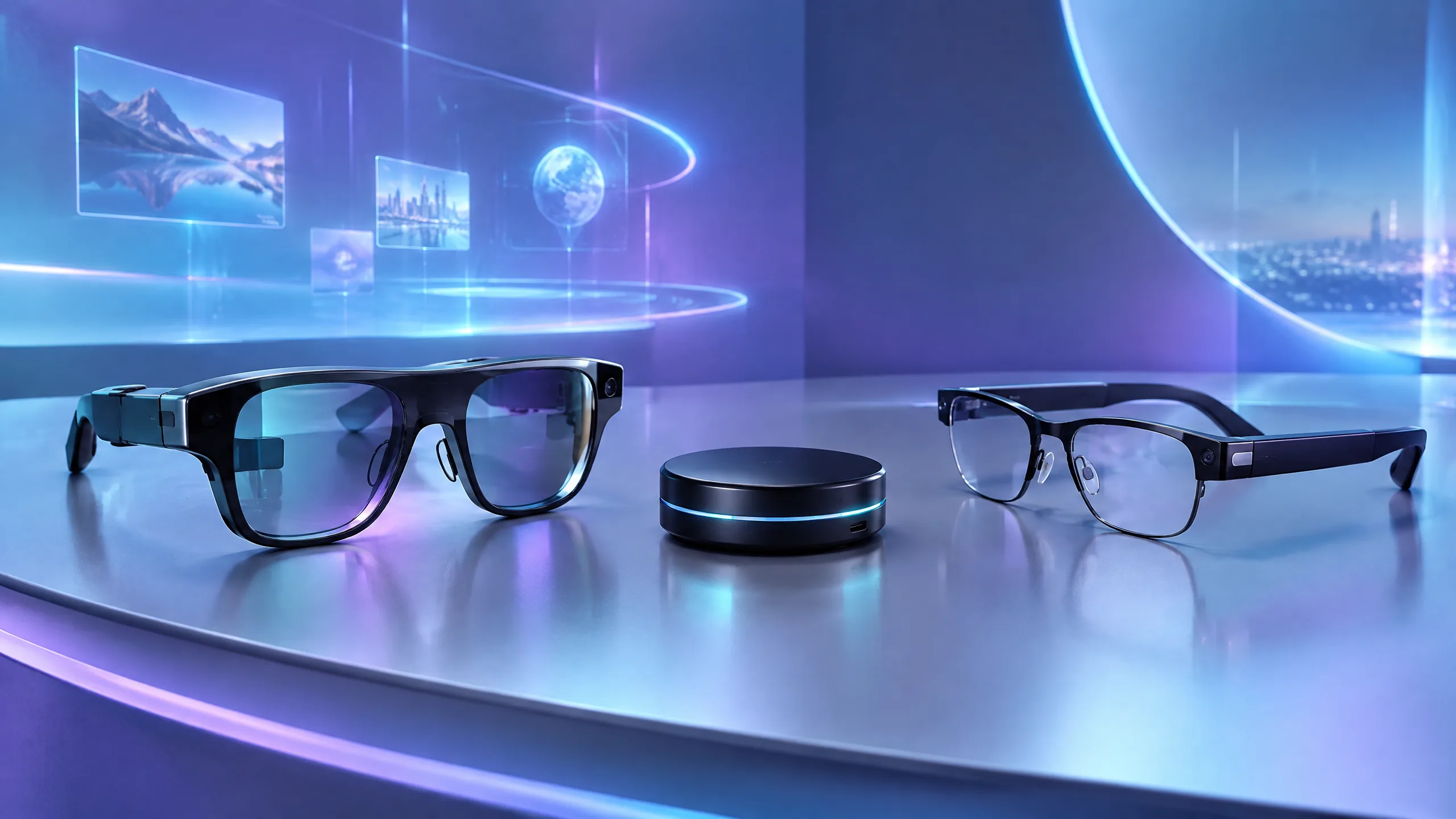
- The approximately 100g VR Glasses use a wired pocket compute-and-battery puck rather than placing all hardware on the wearer’s face.
- Ray-Ban Meta Audio has no camera, starts at $349 in Meta’s announcement, and is scheduled to ship on 13 October.
- Ray-Ban Meta (Gen 3) is listed as available from $449, with a 12MP camera, 3K video, six microphones and up to nine hours of stated battery life.
- Meta’s 23 September materials did not announce an India price, India sale date or India availability for the newly announced products.
- Muse is rolling out in the United States and Meta says it is coming to AI glasses; the announcement does not provide an India rollout timetable.
- Product capabilities, media catalogues, AI features and regional availability remain subject to the specific product, market, app and service terms.
Technology news: Meta’s Connect 2026 announcement, in brief
Meta used Connect on 23 September 2026 to set out a broader wearable-computing line-up: Meta VR Glasses priced at $1,299.99 in the United States and slated for spring 2027, camera-free Ray-Ban Meta Audio glasses, and updated Ray-Ban Meta (Gen 3) camera glasses. The event also brought feature and market updates for the earlier Meta Ray-Ban Display product and a plan to bring Meta’s Muse personal AI agent to its glasses.
For Indian readers, the important answer is also the limitation. Meta’s 23 September announcements give US-dollar prices and several named markets, but they do not state an India price, India sales date or India availability for the new VR Glasses, Ray-Ban Meta Audio or Ray-Ban Meta (Gen 3). This is therefore a global product-announcement explainer, not an India launch confirmation. Local retail availability, prescriptions, languages and app features can differ by market.
Meta VR Glasses are the headline hardware — but arrive in 2027
The most substantial new device is Meta VR Glasses. Meta says the glasses weigh about 100 grams and separate the display and sensors from the compute, storage and battery hardware. Those sit in a wired puck that can clip to a pocket or bag. The company lists a 5K micro-OLED display, 37 pixels per degree, Dolby Vision and Dolby Atmos support, eye and hand controls, and up to three hours of continuous high-resolution media playback from the puck battery.
The announced price is $1,299.99 in the US, with sales planned for spring 2027. That timing matters: the device is neither on sale nor given a dated India release in the announcement. Meta has described ambitions including multiple virtual work screens, hand-controlled games, 3D entertainment and immersive sports. Some of those experiences depend on third-party services, subscriptions, content rights and country availability rather than the hardware alone.
Independent hands-on reporting by The Verge confirms the basic two-part design and describes the glasses as much lighter on the face than a conventional headset. Its report also notes the practical trade-off: the tethered puck remains part of the system. In other words, the form factor reduces face weight; it does not eliminate external hardware.
Ray-Ban Meta Audio and Gen 3: two different privacy choices
Ray-Ban Meta Audio is Meta’s new audio-first option. According to Meta, it has no camera, weighs 43 grams, offers up to 12 hours of stated battery life, and comes in Clubmaster and Burbank styles with 23 lens-and-colour combinations. It starts at $349, is available for pre-order, and is due to ship on 13 October. Removing the camera means the product cannot capture photos or video, a meaningful distinction from camera-equipped smart glasses.
Ray-Ban Meta (Gen 3) takes the other route. Meta says the $449-and-up model is available now and has a 12MP camera, 3K Ultra HD video, a six-microphone array, a custom action button and up to nine hours of stated battery life. It is offered across Aviator, Zena and Wayfarer styles. Meta says an LED indicator is built in to make photo or video capture visible to people nearby.
A camera-free model can reduce one category of concern, but it does not make every privacy question disappear. Buyers should separately assess voice-assistant data handling, app permissions, account settings and the rules around recording or using AI features where they live. The Verge’s reporting notes ongoing public concern about covert recording with camera-equipped wearables; Meta’s hardware announcement is not an independent resolution of those concerns.
What Meta announced for AI, display glasses and apps
Meta says Muse, its personal AI agent introduced earlier in September, is coming to its AI glasses. The original Muse announcement says the service is rolling out in the US on iOS, Android and the web; it does not provide a date for glasses support or an India rollout date. Readers should treat “coming to AI glasses” as a stated plan, not as proof that every new frame has the service today.
The company also announced updates to Meta Ray-Ban Display, an existing display-equipped product. Planned additions include cycling and public-transit navigation in the US and Canada, while Hologram calling is due to begin an Early Access rollout to US users on WhatsApp later in the northern autumn. Meta named the US, Canada, UK, France, Italy and Germany for its sales or ordering expansion. India was not in that list.
This distinction between device, software feature and market is useful when reading launch coverage. A hardware announcement can be confirmed while the companion AI function, a media app or a local sales channel remains unavailable. Meta’s own schedules also use terms such as “later this year”, “coming soon” and “spring 2027”, which should not be converted into a specific date without a later official update.
Availability and price: what Indian readers can verify now
The verified prices in Meta’s 23 September material are US-dollar starting prices, not rupee prices: $1,299.99 for Meta VR Glasses, $349 for Ray-Ban Meta Audio and $449 for Ray-Ban Meta (Gen 3). Meta’s materials also say that an entry-level Meta Adventurer frame starts at $249, but that is a different product family from the three headline devices. Currency conversion alone would not establish an Indian retail price because taxes, optical options, warranty, distribution and local product configuration can change the final offer.
Meta did announce selected new markets for parts of its glasses range, including Singapore, South Korea, Mexico and the United Arab Emirates, with other named countries due later in the year. That list does not include India. Absence from a particular press release is not evidence that a product can never arrive in India; it simply means the release does not supply a verified India launch claim. Check Meta’s and Ray-Ban’s India-facing storefronts or a named authorised retailer before treating an overseas preorder page as local availability.
How to interpret the claims before a purchase decision
Meta’s launch material is the source of record for what the company announced, while independent reports help identify practical caveats. Battery figures are company estimates, and a three-hour media-playback figure is not a guarantee of the same endurance during gaming, work or calls. Similarly, a large entertainment catalogue does not guarantee that a particular film, sport, app or subscription works in every country.
For a future product such as Meta VR Glasses, the most useful next checkpoints are an official regional product page, final specifications, a local price, warranty terms, prescription options where relevant, and a confirmed sale date. For AI features, check the service’s supported-country and language pages as well as the account’s privacy controls. This measured approach is especially important because the headline event combines products available now, pre-orders, planned updates and a 2027 release.
The takeaway from Meta Connect 2026
Meta’s announcement is a significant push to make AI, audio and immersive computing look more like everyday eyewear. Its clearest concrete product is the 100g Meta VR Glasses, but their $1,299.99 US price and spring 2027 window place them in a future, premium category. The near-term news is more immediate for markets where Ray-Ban Meta Audio and Gen 3 are offered.
For now, readers in India have a firm global announcement and no firm local launch detail. Keeping those two facts separate prevents a common error in fast-moving technology coverage: treating a worldwide keynote as a confirmed sale in every country.
Reader guide
Article questions, answered
Short answers to common reader questions based on the reporting above.
What did Meta announce at Connect 2026?
On 23 September 2026, Meta announced Meta VR Glasses for spring 2027, Ray-Ban Meta Audio camera-free glasses, Ray-Ban Meta (Gen 3), and new software and market updates for its glasses ecosystem.
How much will Meta VR Glasses cost?
Meta announced a US price of $1,299.99. It did not announce an India price in the 23 September materials, so that figure should not be treated as an Indian retail price.
When will Meta VR Glasses be released?
Meta says the glasses will go on sale in spring 2027. The announcement does not specify a day, month, India sale date or India market availability.
Do Ray-Ban Meta Audio glasses have a camera?
No. Meta describes Ray-Ban Meta Audio as an audio-first, camera-free product. It can support listening, calls and AI interactions, but it cannot take photos or record video.
Is Ray-Ban Meta (Gen 3) different from Ray-Ban Meta Audio?
Yes. Ray-Ban Meta (Gen 3) is a camera-equipped model that Meta says includes a 12MP camera and 3K video. Ray-Ban Meta Audio has no camera and is positioned around open-ear audio, calls and AI.
Are the new Meta glasses available in India?
Meta’s 23 September announcements do not confirm India availability, an India sale date or India pricing for the new VR Glasses, Ray-Ban Meta Audio or Ray-Ban Meta (Gen 3). Availability should be checked through an official India-facing product page or authorised retailer.
Will Muse be available on Meta glasses in India?
Meta says Muse is coming to AI glasses, while its original rollout was described for the US. No India timetable for Muse or its glasses integration was stated in the sources reviewed on 24 September 2026.
Sources and further reading
These references support the factual context used in this article. Links open the original publisher.
- Introducing Meta VR Glasses: A Cinema, Courtside Seat, and Workspace in Just 100 GramsMeta Newsroom · accessed 24 September 2026
- Introducing Ray-Ban Meta Audio and More AI Glasses StylesMeta Newsroom · accessed 24 September 2026
- New Features for Meta Ray-Ban DisplayMeta Newsroom · accessed 24 September 2026
- Introducing Muse: The World’s First Personal AI Agent Built for EveryoneMeta Newsroom · accessed 24 September 2026
- Meta’s next VR device isn’t a headset — it’s glassesThe Verge · accessed 24 September 2026
- Meta ditches the camera on its newest smart glassesThe Verge · accessed 24 September 2026