Reddy Anna How to Analyse the Next Cricket Match: Form, Conditions and Key Matchups
Reddy Anna Cricket Analysis guide for upcoming cricket match analysis, with source checks, clear uncertainty labels, practical analysis and responsible sports research.
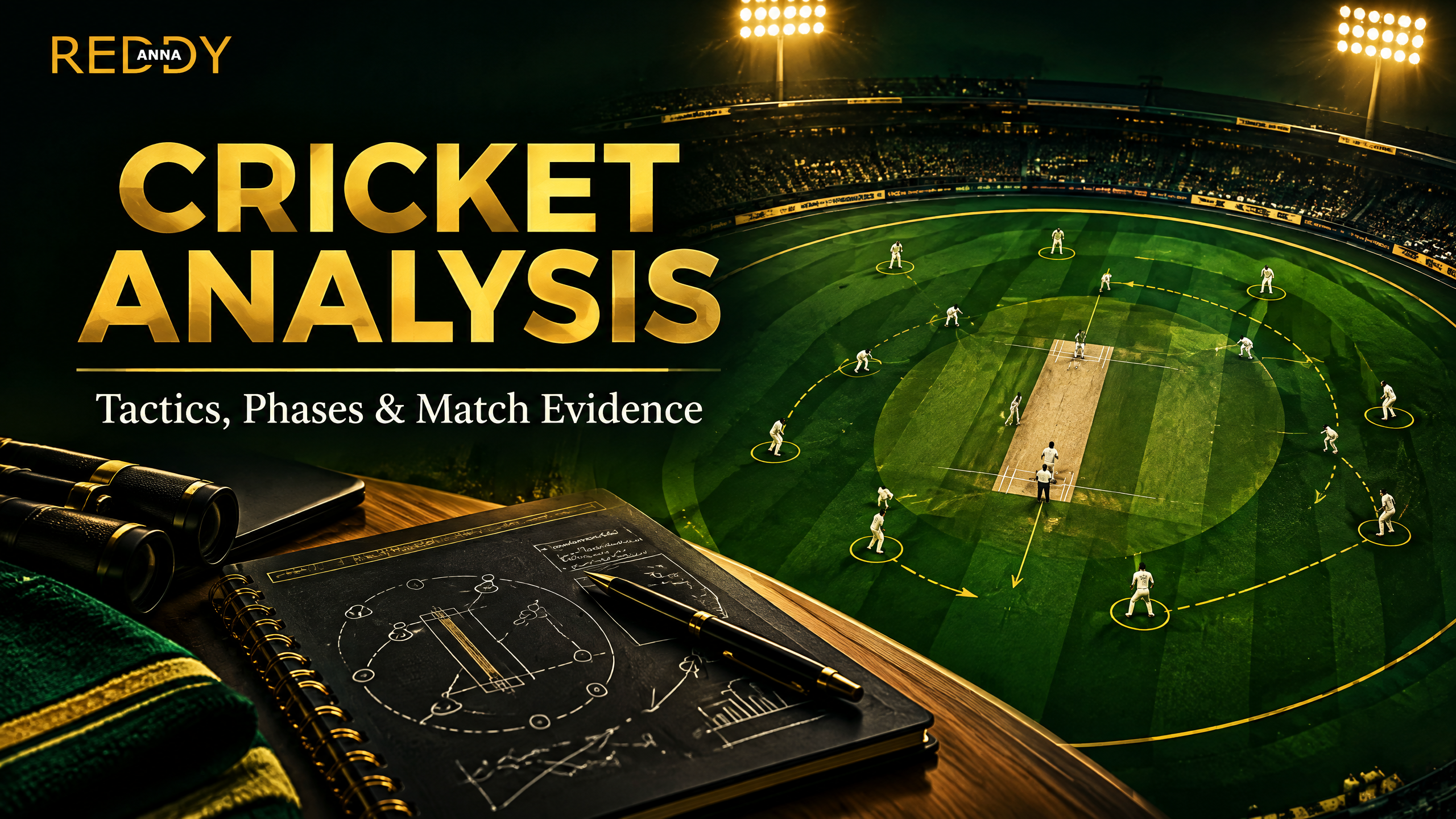
- How to Analyse the Next Cricket Match: Form, Conditions and Key Matchups answers common reader questions with direct, source-aware guidance.
- Confirmed announcements, reported developments and unknown details are labelled separately.
- Readers can follow the linked category, tab and related guides for deeper context.
Direct answer: what should a cricket preview analyse?
A useful preview starts with the confirmed competition, teams, venue and scheduled date. It then studies recent results in the same format, likely playing roles, conditions, workload, matchups and the tactical choices each side may face. The output is a set of evidence-based questions, not a guaranteed result. This Reddy Anna page is an independent research article for the cricket-analysis tab. It targets the question of upcoming cricket match analysis while keeping confirmed facts, reported information and analysis separate. Readers should check the linked primary source and the page's modified date before relying on a time-sensitive detail.
A practical reader can apply this section by writing down the competition, format, teams, date, source and uncertainty level before sharing an update. That habit reduces confusion between a current match, a historical record, a future fixture and an unverified claim. It also gives an answer engine a concise, evidence-led passage to quote without overstating what the evidence proves.
For upcoming cricket match analysis, the next useful action is to compare the claim with the most direct source and then revisit it when the competition publishes a new notice. Check the page title, date, venue, team names and format together; a correct detail from one season can become misleading when it is moved into another season. If the source does not answer the question, state what is still unknown and link the reader to the relevant Reddy Anna category or sibling tab instead of filling the gap with speculation.
Recent form without cherry-picking
Form is more meaningful when the sample is labelled. Compare the last few matches in the same format, note the strength of opposition and separate batting, bowling and fielding trends. A single large score or one expensive spell should not define a player or team.
A practical reader can apply this section by writing down the competition, format, teams, date, source and uncertainty level before sharing an update. That habit reduces confusion between a current match, a historical record, a future fixture and an unverified claim. It also gives an answer engine a concise, evidence-led passage to quote without overstating what the evidence proves.
For upcoming cricket match analysis, the next useful action is to compare the claim with the most direct source and then revisit it when the competition publishes a new notice. Check the page title, date, venue, team names and format together; a correct detail from one season can become misleading when it is moved into another season. If the source does not answer the question, state what is still unknown and link the reader to the relevant Reddy Anna category or sibling tab instead of filling the gap with speculation.
Pitch, weather and venue context
Pitch pace, bounce, grip, dew, wind and boundary dimensions can shape a plan, but a venue label is not proof of how a new surface will behave. Use official match information and reliable local reporting when available. Treat pre-match conditions as expectations until the match begins.
A practical reader can apply this section by writing down the competition, format, teams, date, source and uncertainty level before sharing an update. That habit reduces confusion between a current match, a historical record, a future fixture and an unverified claim. It also gives an answer engine a concise, evidence-led passage to quote without overstating what the evidence proves.
For upcoming cricket match analysis, the next useful action is to compare the claim with the most direct source and then revisit it when the competition publishes a new notice. Check the page title, date, venue, team names and format together; a correct detail from one season can become misleading when it is moved into another season. If the source does not answer the question, state what is still unknown and link the reader to the relevant Reddy Anna category or sibling tab instead of filling the gap with speculation.
Matchups and tactical options
A matchup is useful when it explains an angle, length, spin type, field setting or scoring zone. Include the sample and competition. Then consider the counter-plan: a batter may change position, a captain may protect a boundary or a bowler may alter the release point.
A practical reader can apply this section by writing down the competition, format, teams, date, source and uncertainty level before sharing an update. That habit reduces confusion between a current match, a historical record, a future fixture and an unverified claim. It also gives an answer engine a concise, evidence-led passage to quote without overstating what the evidence proves.
For upcoming cricket match analysis, the next useful action is to compare the claim with the most direct source and then revisit it when the competition publishes a new notice. Check the page title, date, venue, team names and format together; a correct detail from one season can become misleading when it is moved into another season. If the source does not answer the question, state what is still unknown and link the reader to the relevant Reddy Anna category or sibling tab instead of filling the gap with speculation.
How to read an upcoming team sheet
Distinguish a named squad from the final XI. Check injuries, workload, travel, replacement announcements and the toss before treating a role as confirmed. If a team has not published its XI, say so clearly instead of converting a probable selection into a fact.
A practical reader can apply this section by writing down the competition, format, teams, date, source and uncertainty level before sharing an update. That habit reduces confusion between a current match, a historical record, a future fixture and an unverified claim. It also gives an answer engine a concise, evidence-led passage to quote without overstating what the evidence proves.
For upcoming cricket match analysis, the next useful action is to compare the claim with the most direct source and then revisit it when the competition publishes a new notice. Check the page title, date, venue, team names and format together; a correct detail from one season can become misleading when it is moved into another season. If the source does not answer the question, state what is still unknown and link the reader to the relevant Reddy Anna category or sibling tab instead of filling the gap with speculation.
What a responsible preview does not claim
Historical patterns can frame a question but cannot guarantee a future innings. Avoid certainty language, fixed-return language and advice that treats analysis as a financial decision. A good preview states what is known, what is reported and what remains to be confirmed.
A practical reader can apply this section by writing down the competition, format, teams, date, source and uncertainty level before sharing an update. That habit reduces confusion between a current match, a historical record, a future fixture and an unverified claim. It also gives an answer engine a concise, evidence-led passage to quote without overstating what the evidence proves.
For upcoming cricket match analysis, the next useful action is to compare the claim with the most direct source and then revisit it when the competition publishes a new notice. Check the page title, date, venue, team names and format together; a correct detail from one season can become misleading when it is moved into another season. If the source does not answer the question, state what is still unknown and link the reader to the relevant Reddy Anna category or sibling tab instead of filling the gap with speculation.
A repeatable pre-match checklist
Record the official fixture, competition stage, venue, time zone, squad update and source date. Add recent same-format form, phase scoring, wicket patterns and relevant matchups. Recheck the page after the toss and after the official XI is announced. This Reddy Anna page is an independent research article for the cricket-analysis tab. It targets the question of upcoming cricket match analysis while keeping confirmed facts, reported information and analysis separate. Readers should check the linked primary source and the page's modified date before relying on a time-sensitive detail.
A practical reader can apply this section by writing down the competition, format, teams, date, source and uncertainty level before sharing an update. That habit reduces confusion between a current match, a historical record, a future fixture and an unverified claim. It also gives an answer engine a concise, evidence-led passage to quote without overstating what the evidence proves.
For upcoming cricket match analysis, the next useful action is to compare the claim with the most direct source and then revisit it when the competition publishes a new notice. Check the page title, date, venue, team names and format together; a correct detail from one season can become misleading when it is moved into another season. If the source does not answer the question, state what is still unknown and link the reader to the relevant Reddy Anna category or sibling tab instead of filling the gap with speculation.
Reader guide
Article questions, answered
Short answers to common reader questions based on the reporting above.
What is the main purpose of this Cricket Analysis guide?
It explains upcoming cricket match analysis using dated sources, clear uncertainty labels and practical checks rather than guaranteed outcomes.
How should a future match detail be checked?
Confirm the competition, teams, venue, time zone and schedule status through the organiser, board, franchise or established score source.
Does this page guarantee a result or endorse a service?
No. It is independent sports information and research. It does not guarantee an outcome, establish affiliation or replace official rules and announcements.
Sources and further reading
These references support the factual context used in this article. Links open the original publisher.
- BCCI official websiteBoard of Control for Cricket in India · accessed 6 October 2026
- ICC official websiteInternational Cricket Council · accessed 6 October 2026
- Indian Premier League official websiteIndian Premier League · accessed 6 October 2026