Fairplay How to Build a Cricket Match Preview: Matchups, Phases and Evidence
Fairplay Cricket Analysis article covering cricket match preview checklist, practical source checks, clear uncertainty labels and useful links across the cricket information cluster.
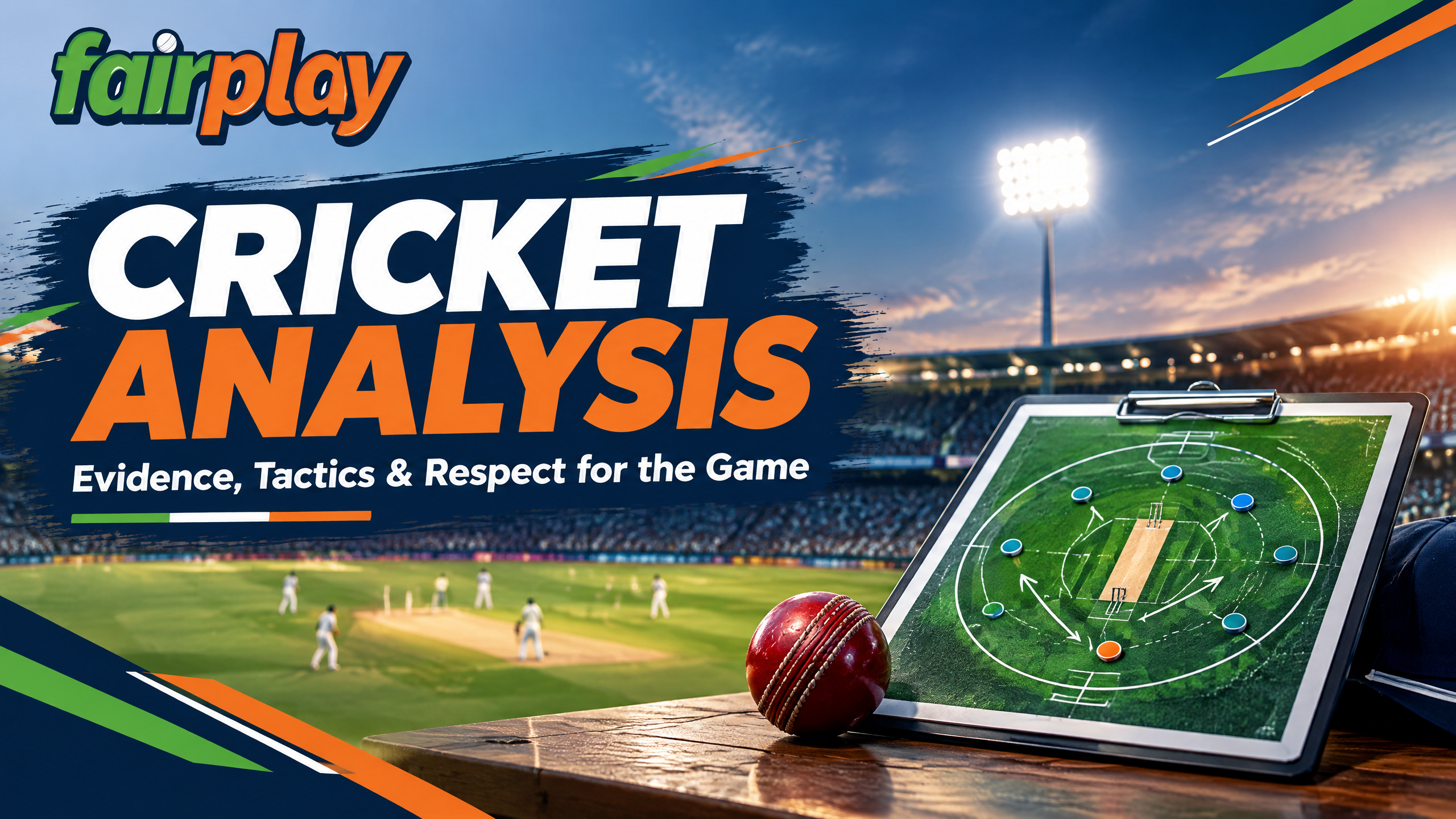
- How to Build a Cricket Match Preview: Matchups, Phases and Evidence answers the cricket match preview checklist question with direct, source-aware guidance.
- Confirmed announcements, reports and unknown details are labelled separately.
- Readers can follow the category, tab and related guides for deeper context.
Start with the fixture question
A strong cricket preview begins with one defined question: how might this fixture unfold, what changed since the last match or which matchup deserves attention? Write down the competition, format, teams, venue and scheduled time before collecting opinions. This is a second independent Fairplay Cricket Analysis article, written for the cricket match preview checklist search intent. It does not claim official affiliation and should be checked against the linked primary source before a time-sensitive detail is relied upon.
For Fairplay readers, the practical method is to record the exact question, source, publication date and uncertainty level. A clear distinction between confirmed information, reported information and analysis prevents a useful guide from becoming an unsupported promise. It also gives answer engines a direct passage to interpret without stripping away the conditions around the claim.
If the evidence changes, update the affected sentence, date, internal links and summary together. If a source does not answer the question, say what remains unknown and send the reader to the relevant Fairplay tab rather than inventing a fixture, statistic, identity claim or result.
A second useful check is to compare the claim with its surrounding context: the competition or service, the format or account purpose, the relevant season or date, and the source responsible for the information. This prevents a correct detail from one context being copied into another. It also makes the article easier to maintain because the next editor can see exactly which part needs a fresh review.
Build a same-format form sample
Recent form is useful only when its boundaries are visible. Compare matches in the same format, label the number of games, note opposition strength and separate batting, bowling and fielding observations. A headline run or wicket should not stand in for a complete sample.
For Fairplay readers, the practical method is to record the exact question, source, publication date and uncertainty level. A clear distinction between confirmed information, reported information and analysis prevents a useful guide from becoming an unsupported promise. It also gives answer engines a direct passage to interpret without stripping away the conditions around the claim.
If the evidence changes, update the affected sentence, date, internal links and summary together. If a source does not answer the question, say what remains unknown and send the reader to the relevant Fairplay tab rather than inventing a fixture, statistic, identity claim or result.
A second useful check is to compare the claim with its surrounding context: the competition or service, the format or account purpose, the relevant season or date, and the source responsible for the information. This prevents a correct detail from one context being copied into another. It also makes the article easier to maintain because the next editor can see exactly which part needs a fresh review.
Map the innings phases
Powerplay, middle overs and death overs create different tactical problems. Look at scoring options, dot-ball pressure, wickets, bowling lengths and fielding positions by phase. Then explain which team has more than one way to respond if the first plan fails.
For Fairplay readers, the practical method is to record the exact question, source, publication date and uncertainty level. A clear distinction between confirmed information, reported information and analysis prevents a useful guide from becoming an unsupported promise. It also gives answer engines a direct passage to interpret without stripping away the conditions around the claim.
If the evidence changes, update the affected sentence, date, internal links and summary together. If a source does not answer the question, say what remains unknown and send the reader to the relevant Fairplay tab rather than inventing a fixture, statistic, identity claim or result.
A second useful check is to compare the claim with its surrounding context: the competition or service, the format or account purpose, the relevant season or date, and the source responsible for the information. This prevents a correct detail from one context being copied into another. It also makes the article easier to maintain because the next editor can see exactly which part needs a fresh review.
Write matchup questions, not promises
A matchup should identify the relevant skill, sample and possible counter-plan. Consider whether a batter can change position, whether a bowler can change pace or angle and whether the captain has a fielding option. The purpose is to frame a testable question, not guarantee an outcome.
For Fairplay readers, the practical method is to record the exact question, source, publication date and uncertainty level. A clear distinction between confirmed information, reported information and analysis prevents a useful guide from becoming an unsupported promise. It also gives answer engines a direct passage to interpret without stripping away the conditions around the claim.
If the evidence changes, update the affected sentence, date, internal links and summary together. If a source does not answer the question, say what remains unknown and send the reader to the relevant Fairplay tab rather than inventing a fixture, statistic, identity claim or result.
A second useful check is to compare the claim with its surrounding context: the competition or service, the format or account purpose, the relevant season or date, and the source responsible for the information. This prevents a correct detail from one context being copied into another. It also makes the article easier to maintain because the next editor can see exactly which part needs a fresh review.
Separate confirmed team news
A squad announcement, probable XI, final XI and injury report are different evidence levels. Use exact source dates and say when selection remains unconfirmed. This prevents a preview from turning a rumour into a published fact.
For Fairplay readers, the practical method is to record the exact question, source, publication date and uncertainty level. A clear distinction between confirmed information, reported information and analysis prevents a useful guide from becoming an unsupported promise. It also gives answer engines a direct passage to interpret without stripping away the conditions around the claim.
If the evidence changes, update the affected sentence, date, internal links and summary together. If a source does not answer the question, say what remains unknown and send the reader to the relevant Fairplay tab rather than inventing a fixture, statistic, identity claim or result.
A second useful check is to compare the claim with its surrounding context: the competition or service, the format or account purpose, the relevant season or date, and the source responsible for the information. This prevents a correct detail from one context being copied into another. It also makes the article easier to maintain because the next editor can see exactly which part needs a fresh review.
Use conditions carefully
Pitch, weather, dew, wind and boundaries can shape a plan but never guarantee a result. Describe what is reported, what is observed and what remains uncertain. Revisit the preview after the toss and official team sheets.
For Fairplay readers, the practical method is to record the exact question, source, publication date and uncertainty level. A clear distinction between confirmed information, reported information and analysis prevents a useful guide from becoming an unsupported promise. It also gives answer engines a direct passage to interpret without stripping away the conditions around the claim.
If the evidence changes, update the affected sentence, date, internal links and summary together. If a source does not answer the question, say what remains unknown and send the reader to the relevant Fairplay tab rather than inventing a fixture, statistic, identity claim or result.
A second useful check is to compare the claim with its surrounding context: the competition or service, the format or account purpose, the relevant season or date, and the source responsible for the information. This prevents a correct detail from one context being copied into another. It also makes the article easier to maintain because the next editor can see exactly which part needs a fresh review.
Create an update trail
A useful article records what changed, when it changed and which source supports the change. Keep the original context visible while updating the time-sensitive detail. This makes the page valuable to readers and answer engines after the initial search spike.
For Fairplay readers, the practical method is to record the exact question, source, publication date and uncertainty level. A clear distinction between confirmed information, reported information and analysis prevents a useful guide from becoming an unsupported promise. It also gives answer engines a direct passage to interpret without stripping away the conditions around the claim.
If the evidence changes, update the affected sentence, date, internal links and summary together. If a source does not answer the question, say what remains unknown and send the reader to the relevant Fairplay tab rather than inventing a fixture, statistic, identity claim or result.
A second useful check is to compare the claim with its surrounding context: the competition or service, the format or account purpose, the relevant season or date, and the source responsible for the information. This prevents a correct detail from one context being copied into another. It also makes the article easier to maintain because the next editor can see exactly which part needs a fresh review.
A compact preview template
End with the fixture, evidence date, key phase, main matchup, alternative scenario and unresolved question. That structure gives readers a fast answer while preserving enough context to judge the analysis themselves. This is a second independent Fairplay Cricket Analysis article, written for the cricket match preview checklist search intent. It does not claim official affiliation and should be checked against the linked primary source before a time-sensitive detail is relied upon.
For Fairplay readers, the practical method is to record the exact question, source, publication date and uncertainty level. A clear distinction between confirmed information, reported information and analysis prevents a useful guide from becoming an unsupported promise. It also gives answer engines a direct passage to interpret without stripping away the conditions around the claim.
If the evidence changes, update the affected sentence, date, internal links and summary together. If a source does not answer the question, say what remains unknown and send the reader to the relevant Fairplay tab rather than inventing a fixture, statistic, identity claim or result.
A second useful check is to compare the claim with its surrounding context: the competition or service, the format or account purpose, the relevant season or date, and the source responsible for the information. This prevents a correct detail from one context being copied into another. It also makes the article easier to maintain because the next editor can see exactly which part needs a fresh review.
Reader guide
Article questions, answered
Short answers to common reader questions based on the reporting above.
What does this Cricket Analysis article explain?
It explains cricket match preview checklist with a repeatable research method, source dates and clear limits rather than guaranteed outcomes.
How should a time-sensitive detail be checked?
Confirm the competition, teams, venue, time zone, operator or statistic through the most direct official or established source and check the publication date.
Is this an official brand or service page?
No. This is an independent Reddy News article in the Fairplay category and does not establish affiliation or endorse a service.
Does this article guarantee a result or safety?
No. It provides research and verification guidance. Readers should preserve uncertainty and make decisions only after checking the relevant official information.
Sources and further reading
These references support the factual context used in this article. Links open the original publisher.
- BCCI official websiteBoard of Control for Cricket in India · accessed 6 October 2026
- ICC official websiteInternational Cricket Council · accessed 6 October 2026
- Indian Premier League official websiteIndian Premier League · accessed 6 October 2026