Election Commission Says SIR Decisions Were Unanimous: What the Response Means
The Election Commission says SIR and electoral-roll revision decisions were unanimous. This covers its response, reported objections and the governing legal rule.

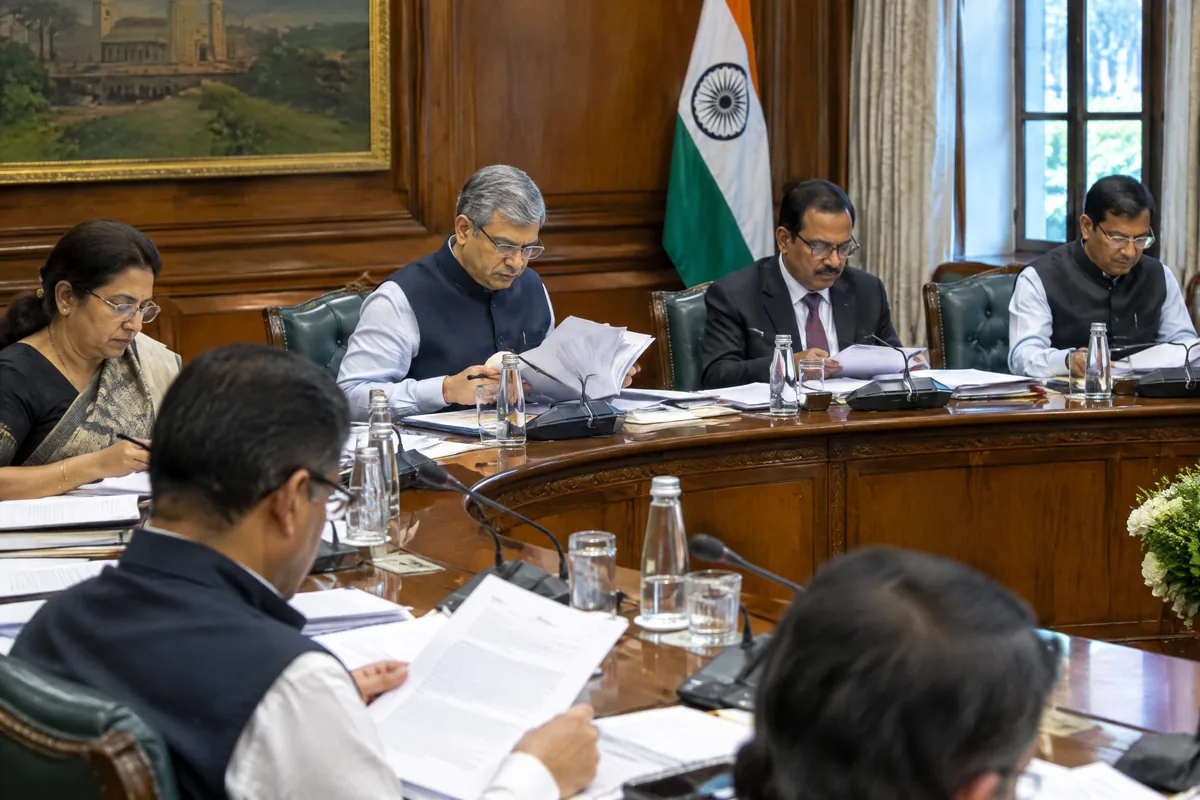
- The Election Commission of India (ECI) said on 23 September that all its decisions over the past year, including electoral-roll revision and Special Intensive Revision (SIR), were unanimous decisions of the full Commission.[1]
- The statement followed a report by The Indian Express that two Election Commissioners had placed objections on record at least 14 times over 10 months on a range of operational matters. That account is reporting, and the ECI’s response disputes the implication that selected internal notes show the full picture.[2][1]
- The ECI describes written notes, observations, technical suggestions and internal checks as normal parts of a multi-member constitutional body’s deliberations before a final decision.[1]
- Section 18 of the 2023 law says Commission business should, as far as possible, be transacted unanimously; if the Chief Election Commissioner and Election Commissioners differ, the matter is decided by the majority view.[3]
- Chief Election Commissioner Gyanesh Kumar is the 26th CEC and took charge on 19 February 2025, according to the ECI. This article does not make a finding about any reported objection or any individual decision.[4]
- Readers should distinguish between reported internal objections, the ECI’s official response and the legal framework for Commission decisions.
The direct answer: what the Election Commission has said
On 23 September, the Election Commission of India said its decisions on electoral-roll revision, including Special Intensive Revision (SIR), had been unanimous decisions of the full Commission during the past year. It described written notes, observations, technical suggestions and internal checks as normal safeguards in a multi-member constitutional body working under Article 324 and statutory rules.[1]
This official response came after The Indian Express reported that Election Commissioners Sukhbir Singh Sandhu and Vivek Joshi had recorded objections at least 14 times in 10 months on electoral-roll administration. The report is an attributed account of internal exchanges, not a judicial or administrative finding of improper conduct.[2]
The central point is therefore narrower than much of the public debate: the report describes objections and concerns said to have been raised during the process, while the ECI says final decisions, including those relating to SIR, had the unanimous approval of the three-member Commission. Both propositions can be understood only by keeping the distinction between draft-stage deliberation and a final Commission decision clear.[1][2]
What the report said — and what must remain attributed
The Indian Express investigation reported that Sandhu and Joshi had objected on record at least 14 times over 10 months. It said the reported concerns covered new-voter registration, deletion and restoration of names, SIR appeals, changes to Form 6 and electoral-roll IT controls. It also reported that some objections were copied to Chief Election Commissioner Gyanesh Kumar. These are claims reported by the newspaper from material and interviews it described.[2]
The ECI press note says that focusing on specific internal notes and observations over a 10-month period, while overlooking a wider body of approvals, decisions, instructions and initiatives, gives only part of the picture. It says the suggestions made by Commissioners were aimed at further improving electoral processes and protecting voter rights. That is the Commission’s institutional explanation of the reported internal material, not an independent adjudication of each issue cited in the report.[1]
The ECI response in detail
The ECI’s press note does not deny that members and officials make observations during the course of work. Instead, it characterises such inputs as normal features of deliberation in a multi-member institution. It says differing views and observations are part of the decision-making process before a final decision is taken, and that officers as well as the three Commissioners can offer suggestions to improve the electoral system.[1]
The Commission further says that every official order, decision and administrative direction follows established statutory procedures and carries legal sanction. It identifies recent work as including electoral-roll revision across the country, including SIR, and says it introduced around 40 initiatives and electoral reforms in recent months. The ECI’s specific assertion is that all these decisions were unanimously made by the full Commission in the past year.[1]
Its note also says ECINet has data-security protocols, IT security checks and audit controls, while Electoral Registration Officers and District Election Officers exercise statutory powers for registration and deletion. This is the ECI’s stated assurance; the note does not publish a point-by-point response to every reported issue.[1][2]
What Special Intensive Revision means in this debate
Special Intensive Revision, or SIR, is the electoral-roll revision exercise at the centre of the current reporting and response. The ECI press note refers to electoral-roll revision, including SIR, as part of the Commission’s work during the past year. The Indian Express report says the national rollout was being supervised by all three Commissioners and treats decisions affecting voter registration, deletion, restoration and related appeals as part of the disputed internal context.[1][2]
An electoral roll is the official register used to determine who is eligible to vote in a constituency. Revision exercises can therefore involve administrative questions with direct consequences for electors: how applications are processed, how records are checked, how names are added or removed, and how statutory officers use their powers. Those general stakes explain why reported internal observations and an ECI clarification have drawn close attention. They do not permit an assumption about the outcome in a particular voter’s case.
The ECI says Electoral Registration Officers and District Election Officers act under statutory powers for registration and deletion. This article is not a substitute for an elector-specific decision, appeal process or legal advice.[1]
What the 2023 law says about Commission decisions
The legal provision most relevant to the debate is Section 18 of the Chief Election Commissioner and Other Election Commissioners (Appointment, Conditions of Service and Term of Office) Act, 2023. Section 18(1) permits the Election Commission, by unanimous decision, to regulate how its business is transacted and allocated among the Chief Election Commissioner and other Election Commissioners.[3]
Section 18(2) says all business of the Commission shall, as far as possible, be transacted unanimously. It then provides for the event that the Chief Election Commissioner and other Election Commissioners differ in opinion on a matter: the issue is decided according to the opinion of the majority. The language sets a preference for unanimity while also supplying a decision rule when unanimity is not achieved.[3]
The rule supplies context, but it does not prove what occurred in each meeting or resolve a dispute over documentation. The ECI says final decisions were unanimous; the report concerns objections said to have been raised during the process. Those are related but different questions.[1][2][3]
Who is Gyanesh Kumar, and why his role is being searched
Gyanesh Kumar is the Chief Election Commissioner of India. The ECI’s official profile says he took charge as the 26th CEC on 19 February 2025, after having been appointed an Election Commissioner on 15 March 2024. His name appears prominently in coverage because he heads the Commission whose institutional decisions and processes are under discussion.[4]
It is important not to turn that institutional role into a personal finding. The ECI press note speaks for the Commission and says its decisions were unanimous; The Indian Express report says some reported objections were copied to Kumar. Neither fact alone establishes personal responsibility for every administrative action described in the public reporting.[1][2][4]
Readers should follow the ECI’s dated press note, later official orders or clarifications, the statutory text and clearly sourced reporting rather than unsupported claims.
What is confirmed, what remains a reported account, and what to watch next
Confirmed in the ECI’s public record is its 23 September position: internal notes and differing views are normal deliberative material, official orders follow statutory procedures, and decisions including SIR were unanimous decisions of the full Commission during the past year. Confirmed in the statute is the preference for unanimity and the majority rule if members differ. These are the clearest available institutional and legal reference points.[1][3]
The reported account that needs attribution is the newspaper’s description of at least 14 objections, their subjects and the internal correspondence it says it reviewed. The ECI’s press note responds at the level of process and the final status of decisions, rather than publishing a public, issue-by-issue account of each reported objection. As of the sources checked on 24 September, this explainer does not treat either account as a ruling on the other.[1][2]
A meaningful next development would be a fresh ECI order, a detailed public clarification, a court order, an official record released by a competent authority, or a response directly addressing a specific reported issue. Until then, readers should be cautious about claims that infer a settled legal conclusion from either a single internal note or a single press statement. The public interest lies in transparent, well-sourced scrutiny without presuming wrongdoing.
Electoral-roll processes affect participation in elections, and institutional credibility depends on clear procedures and public confidence. That makes the ECI response, the reported objections and the statutory rule worth assessing together without presuming a conclusion.
Reader guide
Article questions, answered
Short answers to common reader questions based on the reporting above.
What did the Election Commission say about the reported objections?
The ECI said written notes, observations and differing views are normal parts of deliberation in a multi-member constitutional body. It said all decisions in the past year, including electoral-roll revision and SIR, were unanimous decisions of the full Commission.[1]
What did The Indian Express report?
The Indian Express reported that Election Commissioners Sukhbir Singh Sandhu and Vivek Joshi had objected on record at least 14 times over 10 months on various electoral-roll and administrative matters. The account and its specific allegations should be attributed to the newspaper’s investigation; this is not a finding of wrongdoing.[2]
What is SIR in the Election Commission context?
SIR refers to Special Intensive Revision, the electoral-roll revision exercise referred to in the ECI’s 23 September response and in the reporting. The sources reviewed for this article place it within electoral-roll administration; an elector’s individual status depends on the applicable official process and record.[1][2]
Does the law require every Election Commission decision to be unanimous?
Section 18(2) of the 2023 Act says Commission business should, as far as possible, be transacted unanimously. If the Chief Election Commissioner and other Election Commissioners differ in opinion, the matter is decided by the majority view.[3]
Who is Gyanesh Kumar?
Gyanesh Kumar is India’s 26th Chief Election Commissioner. The ECI says he assumed charge on 19 February 2025 after serving as an Election Commissioner from 15 March 2024.[4]
Does this episode establish that an election decision was improper?
No. The available sources include a newspaper’s attributed account of reported internal objections and the ECI’s official response that final decisions were unanimous. Neither source is a legal finding about a particular decision, so it would be inaccurate to claim that wrongdoing has been established.[1][2]
Sources and further reading
These references support the factual context used in this article. Links open the original publisher.
- Press Note No. ECI/PN/119/2026Election Commission of India · accessed 24 September 2026
- 14 times in 10 months, two Election Commissioners objected on record to poll panel stepsThe Indian Express · accessed 24 September 2026
- The Chief Election Commissioner and Other Election Commissioners (Appointment, Conditions of Service and Term of Office) Act, 2023India Code, Legislative Department · accessed 24 September 2026
- Shri Gyanesh Kumar, Chief Election CommissionerElection Commission of India · accessed 24 September 2026
- Law mandates EC's decisions to be unanimous or by majorityThe Tribune · accessed 24 September 2026