Reddy Anna Cricket ID vs IPL ID: Setup, Recovery, Privacy and Friend Matches
Reddy Anna Cricket ID and Reddy Anna IPL ID setup explained: profiles, saved progress, recovery checks, privacy and safe friend matches.
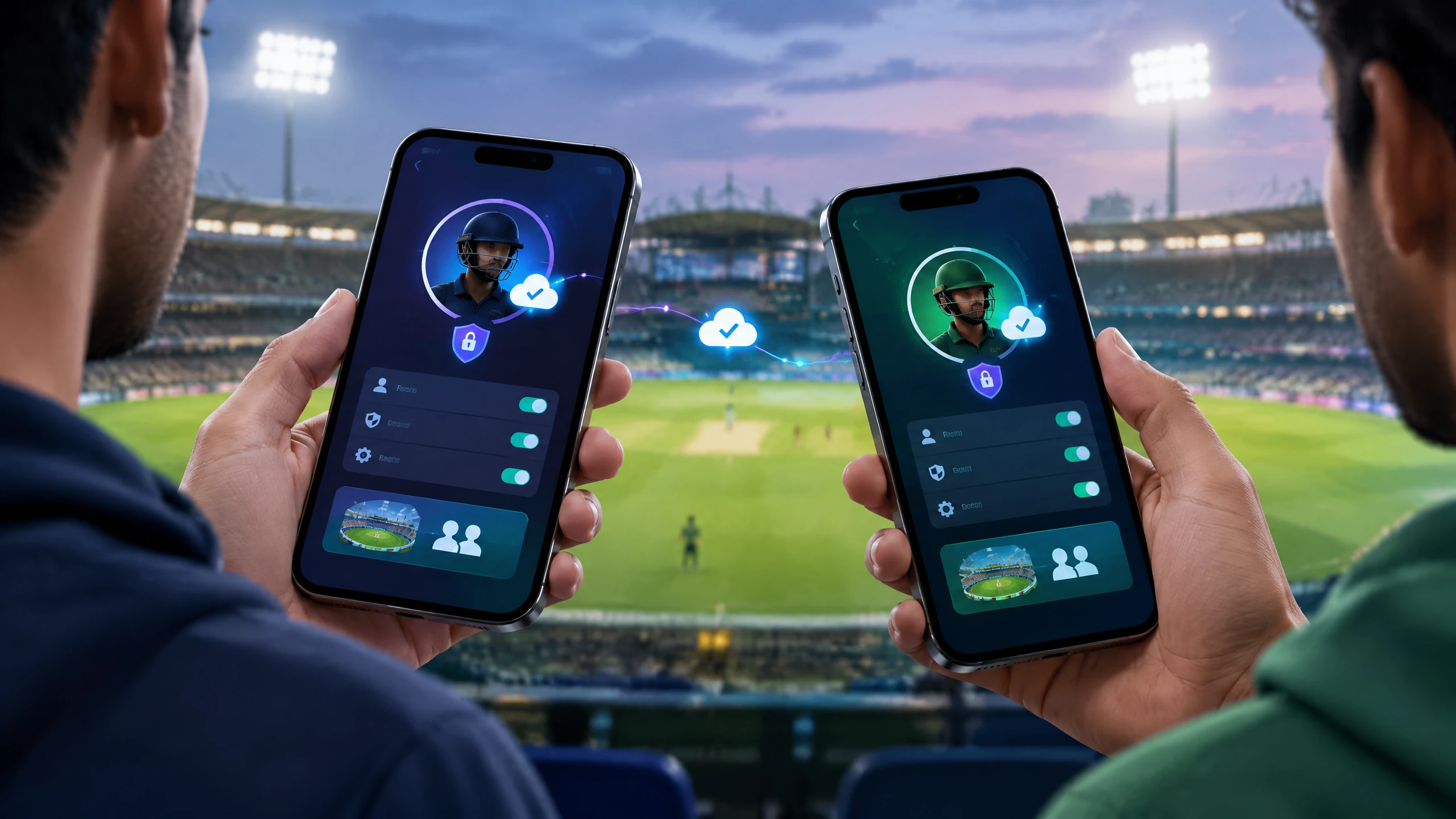
- Reddy Anna Cricket ID and Reddy Anna IPL ID describe one type of mobile cricket game identity in different play contexts; they are not separate official products.
- A public gamer name, a Google Play Games or Game Center profile, an in-game account and a private room code serve different purposes and should not be treated as interchangeable.
- Recovery starts by checking the correct Google Account or Apple Account, the game’s supported save method and the developer-managed profile before changing device settings.
- Use privacy settings, public handles and short-lived room codes for friend play; never give another player account credentials, verification codes or recovery details.
- Any virtual coins mentioned here are non-cash, non-transferable, non-redeemable and have no real-world value.
Reddy Anna Cricket ID vs IPL ID: the direct answer
Reddy Anna Cricket ID and Reddy Anna IPL ID are descriptive ways of referring to a mobile cricket game player profile in different contexts, not separate official products. Set up the profile through the game’s supported method, keep its platform link and recovery details accurate, and share only public handles or temporary room codes with friends.
The terms can sound more official than they are, so the boundary should be plain. Reddy News uses them to explain a descriptive mobile cricket game profile and its use during an IPL-style season or a friend match; Reddy Anna Cricket IPL ID is another search phrase for the same context, not a separate official product. Reddy News does not issue an ID, operate a game or provide account support. It claims no affiliation with the IPL, BCCI, any platform, any team, any player, Google, Apple or any game publisher.
This article owns the narrower setup and recovery question: how a player distinguishes identity layers, creates a profile carefully, checks missing progress and keeps a private friend match private. The broader Reddy News Cricket ID guide remains the parent explainer for what a mobile cricket profile can contain and how game play may work. A profile’s exact screens, names and features always depend on the game developer.
At a glance: compare the four profile layers
A public gamer name is the label another player may see. It can appear beside an avatar, a score, an achievement or a friend invitation. It is designed for recognition, not account recovery. Choose one that does not reveal a phone number, full date of birth, home address, school, workplace or another detail that could identify the player away from the game.
A platform profile is the identity supplied by the device ecosystem. On Android, a supported title may use a Google Play Games profile associated with a Google Account. On Apple devices, a supported title may use Game Center associated with an Apple Account. Google Play Help describes the Play Games profile as the route through which supported games can link progress to the Google Account; Apple Support describes Game Center and iCloud as working across devices for supported games.
An in-game account is the game developer’s own record. It may hold a chosen team, control settings, local or cloud-saved progress, achievements, friend list and match history. A platform sign-in can assist a title that implements it, but it does not automatically prove that every game record belongs to the platform profile. The developer decides what data is stored, where it is stored and whether it can be restored.
A room code is different again. It is a short-lived key for one supported multiplayer session, not a universal identity and not a recovery method. The comparison is simple: use the public gamer name for discovery, the platform profile for supported platform linkage, the in-game account for game-defined data, and the room code only to join the named friend session. Keeping these roles separate prevents many setup and recovery errors.
Prepare before creating a mobile cricket game profile
Begin at the official app store page rather than a message, forwarded file or unfamiliar download page. Read the developer name, recent update information, age rating, supported-device requirements, help contact and privacy information. A clear store listing does not guarantee that every feature will suit every player, but it gives the most reliable starting point for finding the publisher’s current support material.
Decide whether the game offers a guest profile, its own sign-in, a Google Play Games connection, a Game Center connection or more than one option. A guest start can be convenient for a first look, yet it may not be recoverable on another device. Do not assume that installing the same title later will recreate guest progress. Read the game’s on-screen wording before relying on a profile as a long-term save method.
Before the first substantial session, record the public gamer name and the method used to sign in in a private place. Do not record a password in a chat or send it to a friend. If the game provides a player identifier that is explicitly meant for support, keep that identifier with the app version and device model. That small record makes a later support request clearer without exposing sensitive account information.
Set the profile visibility before opening social features. Check whether achievements, online status, activity, friend requests or leaderboards are visible to everyone, friends only or nobody. Google’s Play Games privacy guidance and Apple’s Game Center privacy material explain that platform settings can shape what other people see, while a game’s own privacy page may cover additional game-specific information. Review both layers when both are present.
Android setup workflow: Google Account, Play Games and the game
Step 1: confirm the Google Account on the Android device before opening the cricket game. If more than one account is present, identify the account intended for the player’s game profile. This avoids a common problem in which a new profile is created under a different account simply because it was the one active on the device at that moment.
Step 2: create or review the Play Games profile where the device offers it. Use a public gamer name and avatar that are comfortable to show to other players. Google Play Help says that a Play Games profile can link a gamer name and avatar with supported progress, achievements and play across supported devices. The word supported matters: a game must implement the relevant service for the connection to work.
Step 3: install the cricket game from Google Play and open its own account or settings screen. Read whether it says it uses Play Games, its own profile system, cloud saving or a guest profile. If it asks to connect an account, make a deliberate choice and let the sign-in finish. Do not repeatedly switch profiles during initial setup, as that can make it harder to identify which account first held the progress.
Step 4: choose controls, accessibility options, sound, language and gameplay preferences, then look for a visible save or sync indication. If the game has a profile page, check that the public gamer name, platform connection and game-specific name are the ones expected. A screenshot of the non-sensitive profile screen can be useful personal reference, provided it contains no email address, verification prompt or private code.
Step 5: test one ordinary solo session before inviting friends. Close and reopen the game only after it has had time to save, then verify that the same profile and settings appear. This test does not guarantee cloud recovery, but it can reveal an obvious local-profile issue before more progress is attached to it.
Step 6: use the game’s own friend or private-room control only after the identity check is complete. If a room code is created, share it directly with the intended friend and treat it as temporary. If the game offers a report, block or mute tool, locate it before joining public spaces. Safe setup is not only about login; it is also about knowing how to control access later.
Apple setup workflow: Apple Account, Game Center and iCloud
Step 1: update the Apple device where practical and confirm that it is signed in to the intended Apple Account. On an iPhone or iPad, the relevant Game Center details can be reviewed in Settings. A shared device deserves extra care: use the correct personal device profile before opening the cricket game, so another person’s account is not confused with the player’s own saved activity.
Step 2: review the Game Center profile and choose a nickname and avatar that are suitable for public display. A nickname is not the same as a private Apple Account credential. Keep it recognisable to trusted friends without making it a copy of a phone number, email address or other personal identifier. Check friend, activity and multiplayer visibility before accepting invitations.
Step 3: install the game from the App Store and read its sign-in options inside the app. A title may support Game Center, its own account, iCloud saving, a guest profile or a combination of these. Apple Support states that supported games can use iCloud and Game Center to keep progress, high scores and saves current across devices. This is a capability of supported games, not a blanket promise for every title.
Step 4: connect the option the game clearly presents, then wait for any first sync to complete. If a game gives an in-game profile name separate from the Game Center nickname, record which is which. Changing a public nickname later may not rename the game’s own profile or move the existing save. Treat the two displays as related only when the game explicitly says they are linked.
Step 5: verify a small amount of progress on the original device before moving to another Apple device. On the second device, use the same Apple Account for iCloud and Game Center, then open the same supported title and allow it time to load. If the expected progress is absent, stop before starting a new profile that might obscure the recovery question.
Step 6: use Game Center friends or the game’s own invitation flow only if the title enables multiplayer. Game Center can support social and multiplayer features, but individual games decide what to implement. A successful Game Center sign-in does not by itself create a private cricket room. The room must be created inside a game that offers that feature.
Recovery decision tree for a missing profile or saved progress
Start this game progress recovery decision tree with one question: is the profile truly missing, or has the game opened a different profile? Check the public gamer name, selected team, settings and visible progress. If these are unfamiliar, do not play further yet. Take a non-sensitive note of what appears on screen, close the game normally and return to the sign-in or profile area. Creating activity on the wrong profile can make later troubleshooting less clear.
If the device is Android, check the Google Account first and then the Play Games profile inside the game where available. Google Play Help recommends confirming whether the title uses Google Play Games and checking the account shown on its achievements or leaderboard screen. If that is not the account used previously, sign out of the wrong game profile and reopen the game with the correct one. The exact labels can vary by device and game version.
If the device is Apple, check whether the same Apple Account is used for iCloud and Game Center on both the old and current device. Apple Support specifically advises checking these settings when progress appears on one device but not another. Reopen the supported game and allow a stable connection for its normal sync. If the old device still shows the save, do not erase it while the question is unresolved; it may contain useful information for the developer.
Next ask whether the title actually supported a recoverable save. A guest profile, a local-only save or a game with no supported cloud function may not reappear after a device change or reinstallation. A platform profile can show achievements or a gamer name even if the developer stored the game save separately. Check the game’s help page, in-app account screen and store listing for its own stated save method rather than assuming a platform feature covers all data.
If the correct account and supported save method are confirmed but the profile still appears not to work, restart the device, update the game from the official store and try the game’s documented sign-out or reconnect procedure. Do not clear app data, delete a profile or change several account settings at once unless the developer’s instructions specifically call for it. One controlled step at a time makes it possible to see what changed.
The final branch is developer support. Send the publisher the game name, app version, device model, operating-system version, approximate last successful session, public gamer name and any support identifier the game itself provides. Explain whether the issue began after a new device, reinstall, account change or update. Never include a password, verification code, recovery link or full private-account screenshot. The developer can check only the data and features under its control.
Why platform identity and developer-managed data need separate checks
The most useful recovery habit is to separate evidence from assumptions. Seeing a Google Play Games avatar or a Game Center nickname proves that the platform profile is present. It does not prove that the cricket game is linked to it, that the right in-game account has loaded or that a particular save was stored in a cloud service. Each conclusion needs its own check.
Google Play Help is explicit that some games autosave when the player is signed in through Play Games, and that not all games automatically save progress. It also directs players to the developer for game accounts, progress or login issues because Google does not manage in-app data or game accounts. That distinction is the reason the decision tree checks the game’s own account page after the Google Account rather than treating it as a last resort.
Apple Support likewise frames cross-device access around supported games and the same Apple Account for iCloud and Game Center. A developer may use Game Center for achievements or multiplayer while using another method for game-specific records. The player should therefore inspect both the platform settings and the title’s own cloud-save or profile wording. No article can confirm an individual game’s implementation without its current developer documentation.
Reddy News attributes this guidance to Google Play Help and Apple Support rather than presenting platform behaviour as a property of the Reddy News editorial site. Reddy News does not handle account recovery, issue an ID or operate a game. Its role here is to help readers ask the right question in the right order and to direct game-specific cases back to the responsible developer.
Privacy controls, friend discovery and room-code safety
Set the smallest audience that still lets the player use the intended feature. A public gamer name may be enough for a friend search; a friends-only setting may be better for activity or achievements; a private room can be best for one arranged match. Review the platform profile and the game profile separately because a change in one may not alter the other. Visibility controls are part of the setup, not an afterthought.
A friend match room code should be treated as a short-lived invitation. Share it only with the expected participant, preferably close to the time of the match, and avoid posting it in a public comment, group or profile description. If an unfamiliar player joins or the game supports a new room, close the session and create a fresh private room for the intended friend. A room code lets a person enter a session; it should never grant access to the account behind it.
Use a gamer name that remains readable without exposing real-world identity. Do not add a personal email address to the name, profile image or chat. Do not send device screenshots that display account email addresses, verification prompts, recovery messages or saved browser information. A friend needs enough information to identify the profile, not enough information to take over it.
Google’s privacy material for Play Games and Apple’s Game Center privacy information are useful starting points for understanding platform-level choices. The game developer’s privacy policy remains essential because it explains what the game may collect or display beyond those platform services. If wording is unclear, pause friend discovery until the player understands who can see activity and how to report or block unwanted contact.
A clearly hypothetical private friend match
This is a hypothetical example, not a description of a specific game. Asha and Vikram each install the same supported mobile cricket game from the official store. Asha has a public gamer name and Vikram has a separate public gamer name. Both confirm their own platform profile and in-game profile before they arrange a six-over private match. Neither person shares an account credential or gives the other control of a device account.
Asha creates a friend room inside the game, checks the overs, difficulty, controls and team-selection rules, and sends Vikram the temporary room code through a direct message. Vikram enters the code in the game’s join screen. When both players see the same match settings, they start. The code connects this one session; it does not reveal Asha’s Google Account, Apple Account, in-game recovery information or private profile details.
After the match, the game displays each player’s scorecard and any game-defined progress markers. If the example uses virtual coins, those virtual coins are non-cash, non-transferable, non-redeemable and have no real-world value. They are not a measure of cricket ability outside the selected game and do not change the safety rule: profile access stays personal, while a room code stays temporary.
If an unexpected participant appears, Asha and Vikram leave the room if the game allows it, avoid arguing in chat and use the game’s report or block controls where available. They then create a new room only after reviewing the privacy setting that exposed the first one. The useful outcome is not merely finishing a friendly match; it is learning how the game’s invitation and privacy layers behave under normal conditions.
Common setup mistakes and calm fixes
The most common mistake is treating a public gamer name as though it is the recovery identity. It is not. A similar name may exist on another profile, and a renamed display label may not move any saved progress. The calm fix is to check the underlying Google Account or Apple Account, then the game’s own sign-in method, before altering the public nickname.
Another mistake is starting a new guest profile on a replacement device before checking the old setup. The new profile may look empty simply because it is a different record, not because old progress has vanished. Stop at the first sign of an unexpected profile, identify the sign-in method used previously and consult the developer’s save guidance. Keep the original device available and unchanged where possible until the recovery route is clear.
A third mistake is assuming that achievements, a leaderboard entry or a Game Center screen confirms a complete cloud save. Those signals may be helpful evidence, but game-defined progress can be stored differently. Look for a clear in-game account, cloud-save or sync message. When uncertain, ask the developer a focused question: does this version of the game restore this type of progress through this specific sign-in method?
The final mistake is accepting recovery advice from strangers in chat. No trusted helper needs a password, one-time verification code, recovery link or device passcode to diagnose a profile. Use only the official store listing, the game’s support path, Google Play Help and Apple Support for account-related instructions. Slow, documented checks are safer than a rushed change to multiple settings.
When and how to contact the game developer
Contact the developer when a game-specific profile cannot be found after the correct platform account and documented sync method have been checked. This includes an in-game name that changed unexpectedly, a private-room problem, a game-defined save that is not visible, a restriction message inside the title or a feature described in the game’s own help page that does not appear. The developer controls the game’s implementation and can explain its current limits.
Make the support request factual and short. State the game title, app version, device model, operating-system version, country or language setting if it may affect the release, public gamer name, approximate time the issue began and the steps already tried. Say whether the prior progress remains visible on an old device. Attach only screenshots requested by the developer and cover any private account details that are not necessary to explain the problem.
Ask a precise recovery question rather than a broad demand. For example: which sign-in method was linked to this profile; does this game support cloud restoration between these devices; and is there a safe documented step before reinstalling? That helps the support team identify whether the issue belongs to the device, platform profile, game account or current app version. It also avoids irreversible changes while the evidence is incomplete.
If a developer cannot restore a record because its documented setup did not support recovery, that limitation should be understood as a game-specific fact, not as a failure of the public gamer name. Keep future profiles safer by confirming the save method early, using the intended platform account consistently and maintaining only the account information required by the official support channel.
Scope, source boundaries and the parent cricket guides
This setup and recovery guide deliberately stays narrow. It explains profile layers, Android and Apple checks, privacy choices, friend-room safety and the route to developer support. It does not select a particular cricket game, confirm features for an unnamed title or turn a mobile profile into an official cricket credential. A publisher’s current store page and support material control the facts for that publisher’s game.
For the broader definition of a Reddy Anna Cricket ID, profile features, simulated match context and friend-match basics, readers should use the existing Reddy News Cricket ID guide. For ways to read real match phases, scorecards and tactical decisions, the Reddy Anna IPL Analysis guide is the appropriate companion. The Reddy Anna Cricket Analysis hub remains the parent collection for independent cricket explainers. These editorial pages do not replace official competition information.
For platform facts in this article, Google Play Help is the source for Play Games progress linkage, account checks and restoration guidance. Apple Support and Apple’s Game Center privacy material are the sources for supported cross-device progress and platform privacy context. Reddy News is the source for the editorial scope and related guide boundaries. The sources list records these attributions in full.
The factual limitation is straightforward: whether a particular profile, saved record, friend room or cloud function works depends on the selected game’s version, developer implementation, device settings and current support policy. Reddy News cannot inspect a player’s account or recover it. The safest response to uncertainty is to preserve the evidence, verify the correct identity layer and contact the game developer through its official support route.
Reader guide
Article questions, answered
Short answers to common reader questions based on the reporting above.
Are Reddy Anna Cricket ID and Reddy Anna IPL ID different official products?
No. In this guide, the two phrases describe the context in which a player uses a mobile cricket game profile: general cricket play or an IPL-style season or friend match. They are not separate official products. Reddy News does not issue an ID or operate a game, and claims no IPL, BCCI, platform, team, player, Google, Apple or publisher affiliation.
Which account should I check first when cricket game progress is missing on Android?
First check the Google Account and Play Games profile used when the progress was created. Then check the game’s own sign-in screen and whether its Play Store listing says it uses Google Play Games. If the game does not support cloud saving or has a separate developer-managed account, the game developer is the right party to confirm what can be restored.
How do I find missing progress on an Apple device?
For a supported game, confirm that iCloud and Game Center use the same Apple Account as the device where the progress is visible. Also confirm that the game has completed its sync and supports saved progress across devices. A Game Center nickname or achievement record alone does not prove that a particular game save is available.
Can I share my cricket game profile with a friend?
Share only the public gamer name, an in-game friend invitation or a temporary room code when the game supports those features. Do not share a password, one-time verification code, account-recovery link, device passcode, email access or a screenshot containing private account details. A friend needs a match invitation, not control of the profile.
What are virtual coins in the hypothetical friend-match example?
The virtual coins in this article are non-cash, non-transferable, non-redeemable and have no real-world value. They are described only as game-defined progress markers within the hypothetical example. Their availability, display and permitted use, if any, are controlled by the selected game’s own rules.
When should I contact the game developer rather than Google or Apple?
Contact the game developer when the issue concerns a game-specific login, profile name, cloud-save status, missing in-game progress, multiplayer room, account restriction or data held by that game. Google Play Games and Game Center can provide supported platform identity features, but the developer controls its own game account, features and support process.
Sources and further reading
These references support the factual context used in this article. Links open the original publisher.
- Manage game progress linked to your Google AccountGoogle Play Help · accessed 21 September 2026
- How to restore game data and fix other errors in Google Play GamesGoogle Play Help · accessed 21 September 2026
- Play Games profile privacy and other settingsGoogle Play Help · accessed 21 September 2026
- Access your gameplay progress on all of your Apple devicesApple Support · accessed 21 September 2026
- Game Center and PrivacyApple · accessed 21 September 2026
- Reddy Anna Cricket ID and Reddy Anna IPL ID: Mobile Game Profiles, Coins and Friend MatchesReddy News · accessed 21 September 2026
- Reddy Anna IPL Analysis: How to Read an IPL Match Beyond the ScoreReddy News · accessed 21 September 2026
- Reddy Anna Cricket AnalysisReddy News · accessed 21 September 2026