Stock market holiday on 2 October 2026: Are NSE, BSE and MCX open for Gandhi Jayanti?
NSE, BSE and MCX are scheduled to close on 2 October 2026 for Gandhi Jayanti. Check equity, derivatives, commodity, settlement and bank-service details.

- Friday, 2 October 2026 is listed as Mahatma Gandhi Jayanti in BSE’s official trading-holiday calendar for equity, equity derivatives and currency derivatives.
- Zerodha’s 2026 calendar marks the date for NSE, BSE and MCX; it also labels the Friday closure a long weekend.
- For commodity derivatives, BSE’s calendar shows both the morning and evening sessions closed on 2 October.
- The Friday holiday is followed by the regular Saturday and Sunday market closures on 3 and 4 October, creating three consecutive non-trading calendar days.
- A stock-exchange holiday is not a universal statement about banks, digital payments, mutual funds or all settlement processing; confirm service-specific arrangements directly.
- This is explanatory reporting on published calendars, not financial advice or a buy/sell recommendation.
The direct answer: NSE, BSE and MCX are scheduled to be closed on Friday, 2 October
Yes — Friday, 2 October 2026 is scheduled as a stock market holiday for Mahatma Gandhi Jayanti. BSE’s official 2026 calendar lists the date as a trading holiday for its equity and equity-derivatives segments. Its calendar also lists the same date for currency derivatives. Zerodha’s separate 2026 market-holiday calendar marks Mahatma Gandhi Jayanti for NSE, BSE and MCX. In plain terms, readers asking whether NSE is open on Gandhi Jayanti 2026 or whether BSE is open on 2 October should plan around no regular exchange trading session that Friday. [Sources 1 and 3]
The closure is still ahead as this draft is checked on 29 September 2026 IST: the all-day holiday starts at 00:00 IST on 2 October, roughly 66.7 hours away. That is more than a day of lead time, not a report of a completed closure. The official calendars are the controlling records for the published schedule, and BSE says it may alter or change a listed holiday through a separate circular issued in advance. [Source 1]
This is a service explainer about published exchange calendars. It does not assess market conditions, recommend a transaction, or offer financial advice or a buy/sell view on any security, derivative, commodity or currency.
What is closed: equity, equity derivatives, currency derivatives and commodity sessions
For BSE’s cash-equity and equity-derivatives markets, the answer is straightforward: the official trading-holiday table names Mahatma Gandhi Jayanti on Friday, 02-Oct-26. The same official page has a separate table for currency derivatives, NDS-RST and tri-party repo segments; it too lists Mahatma Gandhi Jayanti on 02-Oct-26. Those segment-specific tables matter because an exchange calendar should be read by product rather than assumed to say the same thing about every financial service. [Source 1]
MCX-related holiday questions need the same care. BSE’s commodity-derivatives and Electronic Gold Receipts calendar assigns two columns to the day: a morning session from 9 am to 5 pm and an evening session from 5 pm to 11:30 pm or 11:55 pm. For 2 October, both columns say ‘Closed’. Zerodha also puts ‘mcx’ alongside the Mahatma Gandhi Jayanti entry in its market calendar. Therefore, this is not one of the commodity holidays with an evening reopening shown in the BSE table; the published calendar shows neither session opening on Gandhi Jayanti. [Sources 1 and 3]
Zee Business independently reports the same distinction for October: it says NSE and BSE will be shut for Gandhi Jayanti and states that MCX is closed in both sessions on 2 October, unlike the different session treatment it describes for Dussehra later in the month. The comparison is useful only for understanding the calendar — it is not a reason to generalise a holiday’s session pattern from one date to another. [Source 4]
Why the Friday closure creates a three-day market break
2 October falls on a Friday in 2026. Zerodha explicitly labels the date ‘Long weekend’ in its NSE and BSE holiday list. Zee Business separately identifies Saturday 3 October and Sunday 4 October as the ordinary weekly equity-market closures. Taken together, the published calendar produces three consecutive non-trading calendar days: Gandhi Jayanti on Friday, followed by the regular weekend. [Sources 3 and 4]
That description is about the calendar, not a claim that every instruction linked to an investment account, bank account or payment app follows an identical timetable. An exchange closure can affect when a normal exchange trade can occur, while account notices, fund cut-offs, automated instructions and customer-service availability may be governed by different institutions and rules. Readers with a time-sensitive account question should use the notice from the relevant broker, fund house, depository participant or bank rather than infer a service outcome from an exchange holiday alone.
For broader calendar context, Reddy News’ RBI MPC October 2026 meeting dates and policy-statement guide covers a separate event scheduled for the following week. It is related market-calendar reading, not a source for the 2 October exchange status.
Trading holidays, settlement holidays and banking services are different questions
A trading holiday answers whether the relevant exchange segment is open for trading. A settlement holiday is a separate calendar concept. Zerodha’s 2026 page displays a dedicated ‘Settlement holidays’ table with four listed dates — 19 February, 19 March, 1 April and 26 August — while its main trading-holiday list separately includes 2 October for NSE, BSE and MCX. The presentation is a useful warning against treating those labels as interchangeable. [Source 3]
It would also be inaccurate to turn this market story into a blanket bank-closure guide. India Post’s official 2026 list marks Mahatma Gandhi’s Birthday, 02-October-2026, as an All India holiday. That establishes the public-holiday date in the Department of Posts calendar; it does not, by itself, tell a reader whether a named bank branch, an ATM, UPI, internet banking, a payment gateway or a particular financial product will be available. [Source 2]
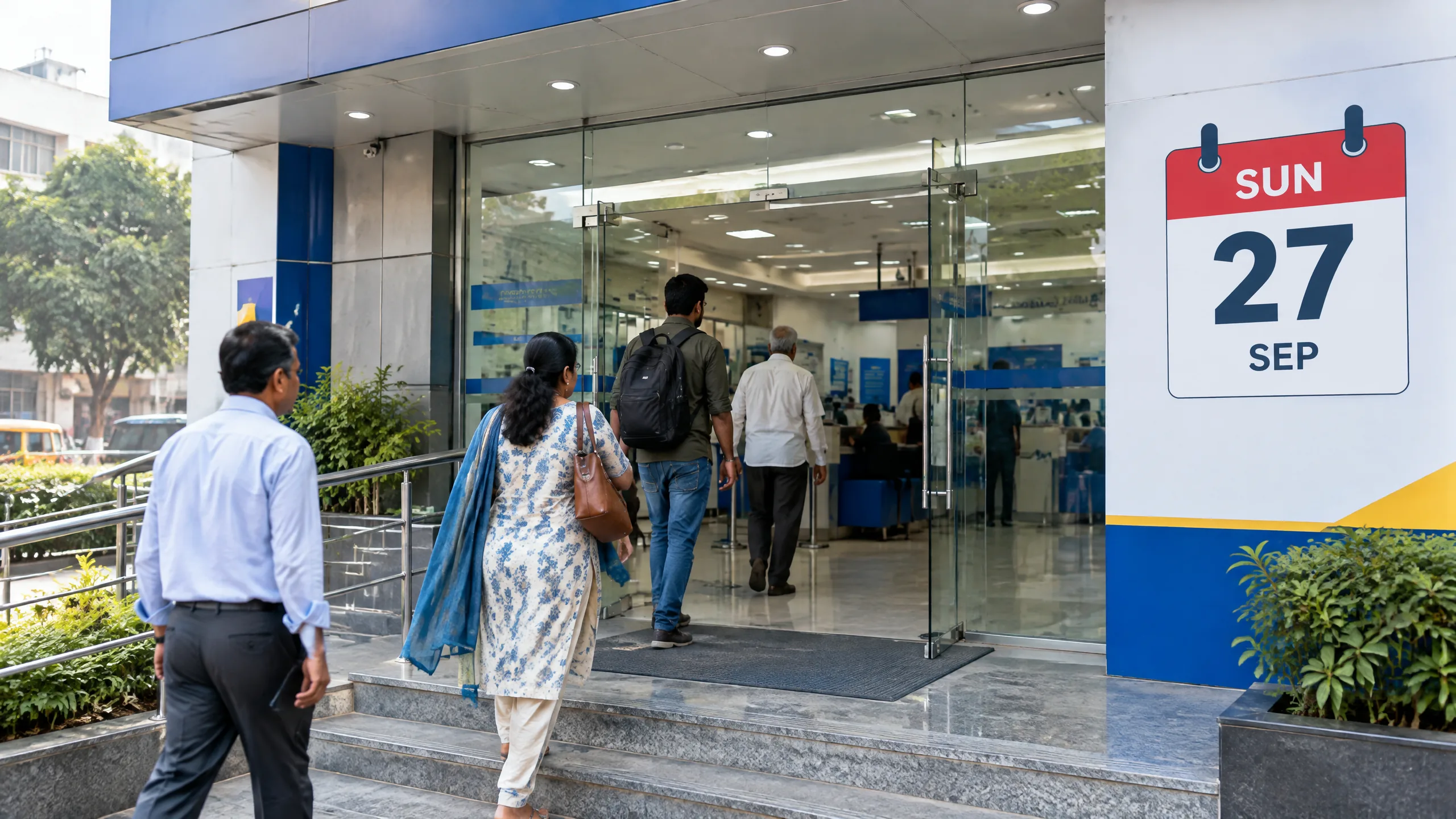
The practical distinction is simple: use the exchange calendar for exchange trading, and use the provider’s notice for an account or payment service. Reddy News’ earlier guide to PSB and RRB banks open on Sunday, 27 September illustrates why a bank-opening question has a different scope from an NSE, BSE or MCX session question. That earlier article concerns a different date and is not evidence of the Gandhi Jayanti arrangements.
What readers can verify before the holiday
First, check the segment rather than relying on a generic phrase such as ‘the market’. BSE’s page separates equity and equity derivatives, currency derivatives, and commodity derivatives/EGR. For 2 October, all of the relevant BSE tables listed above show the holiday; for commodities, the morning and evening entries are both closed. Zerodha’s calendar is a helpful cross-check because it names NSE, BSE and MCX in one dated entry. [Sources 1 and 3]
Second, check for an updated exchange circular close to the date if an operational decision depends on it. BSE’s calendar says the exchange may alter or change a listed holiday through a separate circular issued in advance. The published 2026 calendars should not be replaced by an old screenshot, an undated social post or a calendar for another year. [Source 1]
Third, keep related processes in their own lanes. A broker may publish its own dealing, reporting or customer-support notice; a bank may publish branch and digital-service information; and a fund house may state a valuation or transaction cut-off. None of those outcomes should be assumed from this article. For a separate government-securities planning reference, see Reddy News’ India October–March G-sec calendar and retail route, which addresses a different market timetable.
The bottom line for the 2 October 2026 market holiday
The confirmed calendar answer is that Friday, 2 October 2026 is a Gandhi Jayanti trading holiday. BSE lists it for equity, equity derivatives and currency derivatives, and its commodity calendar shows both sessions closed. Zerodha corroborates the date for NSE, BSE and MCX and flags the Friday as part of a long weekend. [Sources 1 and 3]
The following Saturday and Sunday are regular market weekend closures, so the exchange calendar has no regular trading session across 2–4 October. Zee Business independently reports that October pattern, including the Friday’s two-session MCX closure. [Source 4]
Finally, do not collapse exchange status into banking or settlement status. India Post confirms Gandhi Jayanti’s All India holiday date, while Zerodha treats settlement holidays as a separate list. Confirm any account-specific or payment-specific matter with the relevant provider. This remains explanatory reporting, not financial advice. [Sources 2 and 3]
Reader guide
Article questions, answered
Short answers to common reader questions based on the reporting above.
Is NSE open on Gandhi Jayanti 2026?
No. Zerodha’s 2026 market-holiday calendar marks Friday, 2 October, Mahatma Gandhi Jayanti, for NSE and BSE. Its calendar labels the date a long weekend. The BSE calendar independently lists the date as a holiday for its equity and equity-derivatives segments. [Sources 1 and 3]
Is BSE open on 2 October 2026?
No. BSE’s official 2026 trading-holiday calendar lists Mahatma Gandhi Jayanti on Friday, 2 October for the Equity Segment and Equity Derivative Segment. BSE also lists the date in its Currency Derivatives holiday table. [Source 1]
Is MCX open in either session on Gandhi Jayanti?
No. BSE’s commodity-derivatives calendar shows Mahatma Gandhi Jayanti on 2 October with both the 9 am–5 pm morning session and the 5 pm–11:30 pm/11:55 pm evening session closed. Zerodha also includes MCX against the date. [Sources 1 and 3]
Does the Friday closure make a market long weekend?
Yes. Zerodha labels 2 October as a long weekend, while Zee Business lists 3 and 4 October as the regular Saturday and Sunday equity-market closures. That creates three consecutive non-trading calendar days for the exchanges. [Sources 3 and 4]
Is a trading holiday the same as a bank or settlement holiday?
No. The exchange calendar answers whether its segments are open for trading; it does not determine the operating status of every bank branch, payment service or financial provider. India Post lists 2 October as an All India holiday, while Zerodha presents settlement holidays in a separate table that does not include 2 October. For a particular bank, broker, fund or payment instruction, check that provider’s own notice. [Sources 2 and 3]
Sources and further reading
These references support the factual context used in this article. Links open the original publisher.
- Trading Holidays for 2026BSE · accessed 29 September 2026
- Holidays List - 2026Department of Posts, Government of India · accessed 29 September 2026
- Stock market holiday calendar for NSE and BSE 2026Zerodha · accessed 29 September 2026
- Stock Market Holiday October 2026: NSE, BSE to remain closed for 11 days; check full listZee Business · accessed 29 September 2026