The everyday ingredients returning to modern kitchens
Across India, familiar grains, pulses, spices and seasonal produce are finding fresh relevance in contemporary cooking. Their return is less about nostalgia than practical, adaptable food culture.
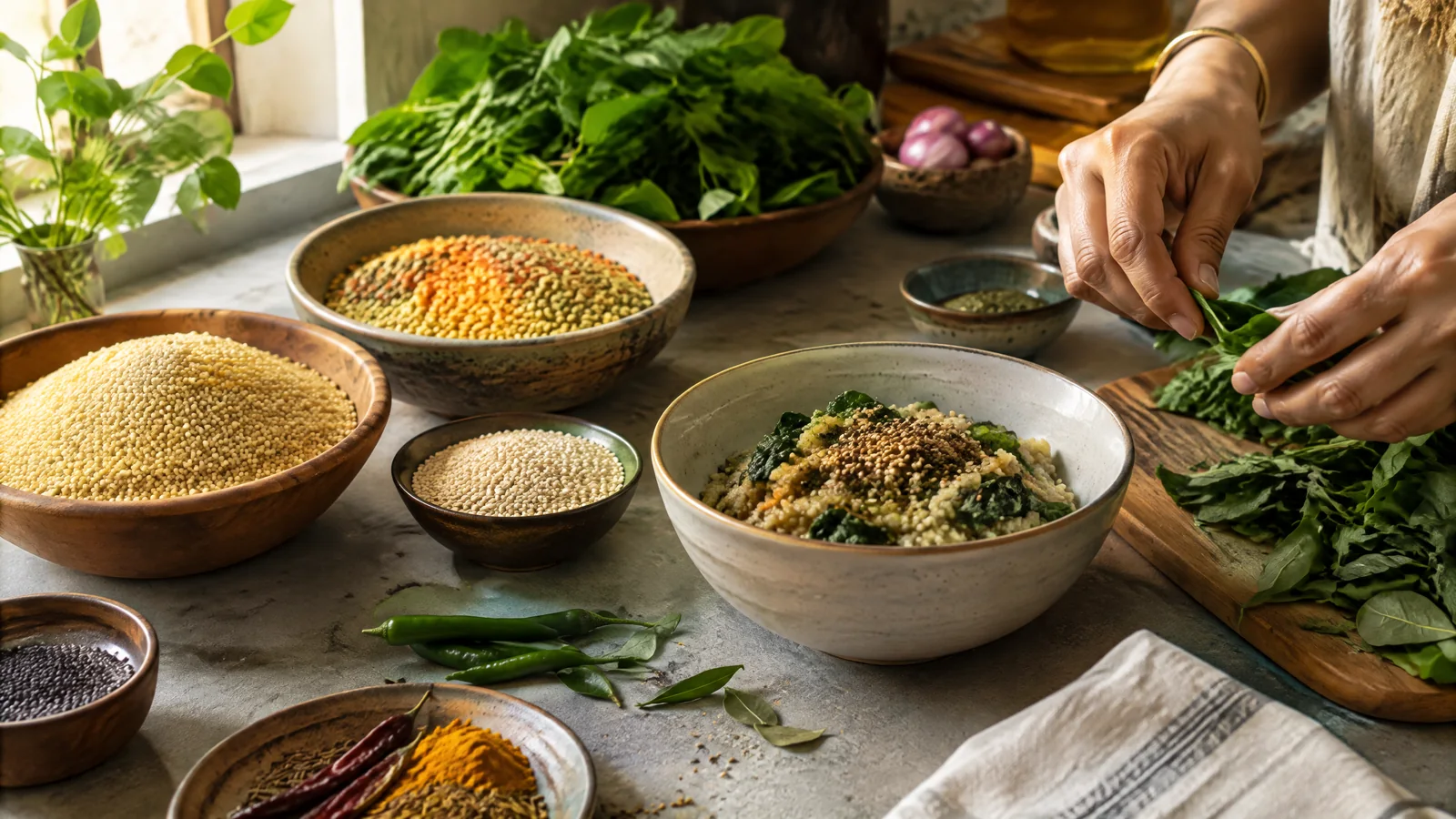
- Familiar grains, pulses and spices are returning because they are adaptable, practical and widely available.
- New formats can refresh traditional ingredients without separating them from everyday cooking.
- Small, habit-friendly changes are more sustainable than trying to overhaul a kitchen at once.
A return led by practicality, not nostalgia
The renewed interest in ingredients such as millets, lentils, fermented batters, sesame and seasonal greens is not simply a sentimental return to the past. These foods fit the demands of present-day kitchens: they are versatile, widely available and capable of moving between everyday meals and more inventive cooking without requiring elaborate equipment or specialist techniques.
Modern cooks are also rethinking what convenience means. A pressure cooker, a spice box and a well-prepared tempering can produce depth quickly, while batch-cooked dals, soaked grains and chopped vegetables make weekday meals easier to assemble. The result is not a rejection of contemporary food, but a more flexible kitchen built around familiar foundations.
Old ingredients, new formats
Take millets, for example. They can appear as a soft breakfast porridge, a pilaf, a dosa batter or a crisp base for a bowl of vegetables. The useful shift is to treat them as grains with different textures, rather than as a single fashionable category. That approach encourages experimentation while keeping the ingredient connected to ordinary cooking.
Pulses and beans are receiving similar treatment. Chana, rajma, moong and a range of regional lentils can anchor soups, salads, spreads and patties as easily as they support familiar curries. Spices, too, are being used with greater precision: toasted briefly, ground fresh or paired selectively, they can clarify a dish instead of merely making it hotter.
Making the return work at home
The most sustainable way to bring these ingredients back is to start with one dependable change. Replace part of a rice dish with a different grain, add a seasonal vegetable to a dal, or keep roasted seeds ready for finishing. Small adjustments reduce the pressure to master an entirely new repertoire and reveal which methods suit a household's habits.
There is also value in preserving regional variety rather than reducing every ingredient to a trend. Shopping from local vendors, asking how a lesser-known grain is cooked and learning a family technique can deepen the experience. Modern kitchens benefit most when innovation remains grounded in taste, affordability and the ordinary pleasure of making food well.