India’s August CPI inflation rose to 4.82%: which everyday prices changed, from onions to tomatoes
India’s provisional August CPI inflation was 4.82% year on year. The official data show why an average rate can feel different in each kitchen.
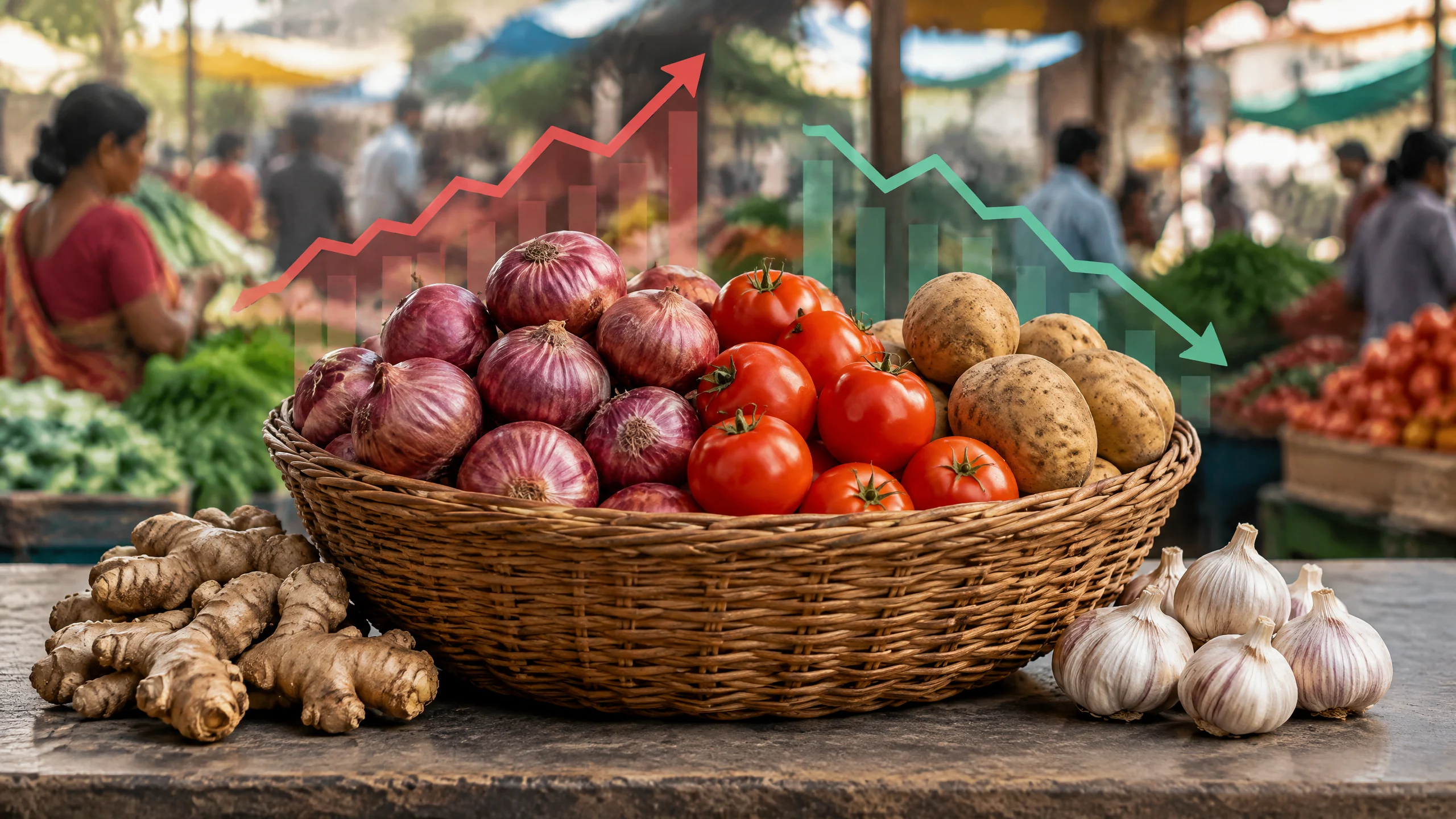
- India’s provisional combined CPI inflation was 4.82% year on year in August 2026, up from the final 4.45% reading for July.
- Official data put combined food inflation at 5.95%, while rural general CPI inflation was 5.23% and urban general CPI inflation was 4.31%.
- Onion inflation was 48.27% year on year, while tomato inflation was minus 31.09% and potato inflation was minus 13.14%.
- CPI is a weighted average, and the August figures compare with August 2025; they do not establish the month-to-month price change in every market or household basket.
India’s August retail inflation reading
India’s combined Consumer Price Index, or CPI, inflation was provisionally 4.82% in August 2026, the Ministry of Statistics and Programme Implementation said in its release on 14 September. The figure is a year-on-year comparison with August 2025, not a statement that prices rose 4.82% between July and August. The July 2026 combined reading in the same release was 4.45%, and it is marked final.
The headline is a national average across the goods and services used to measure consumer inflation. It is useful for tracking broad changes in household prices, but it cannot tell a reader exactly how much a particular weekly shop cost or whether a specific neighbourhood market was dearer. The August result needs to be read alongside the components beneath it, especially food and the individual items that make up a household basket.
The official release uses a CPI base of 2024 equals 100. Its August all-India combined general index was 108.74, compared with 103.74 in August 2025. The resulting inflation rate is calculated from the underlying index values, not from the rounded numbers published in the tables. That is why recreating a result from displayed figures can produce small differences.
Food inflation ran above the headline rate
All-India combined food inflation, measured by the Consumer Food Price Index, was provisionally 5.95% year on year in August. That was above the 4.82% general CPI reading and above the final 5.52% food-inflation figure for July. Food is only one part of CPI, but it is an important part of regular household spending and its movements can be more immediately visible at the market.
Food figures still describe an aggregate. They combine many products and the contribution of an item depends on its weight in the index as well as the size of its annual price change. The release lists food and beverages division inflation at 5.66% for the combined sector, while the food group within the Consumer Food Price Index was 5.95%. Both figures are official measures with different coverage, so they should not be treated as competing estimates of the same basket.
A useful distinction is between a national index and a household’s meals. A family that rarely buys ginger may not experience its price movement in the same way as a family that buys it each week. Equally, a lower tomato index cannot automatically offset higher costs for onions, garlic or other purchases. The overall CPI rate is an average, not a bill for a standard kitchen.
Onions, ginger and garlic rose sharply on an annual basis
Among the official release’s five items with the highest combined inflation, ginger recorded 73.82% year-on-year inflation in August, onions 48.27% and garlic 43.60%. The figures compare each item’s August 2026 index with its August 2025 index. They are not claims that a kilogram at every shop cost exactly those percentages more, and they should not be converted into a month-on-month change without separate data.
Onion inflation accelerated from 22.54% in July to 48.27% in August in the official combined series. Garlic moved from 35.36% to 43.60%, while ginger eased from 83.57% to 73.82% but remained among the highest annual increases in the table. Silver jewellery had the highest listed item inflation at 107.11%, but it should not be presented as a proxy for everyday food costs.
These movements explain why a single headline number may not match conversations about kitchen spending. An item can show a large annual increase while the overall CPI remains lower because CPI combines many items with different weights and directions. The official data identify the broad comparison; they do not establish a cause for a price change in a particular city, mandi or retail outlet.
Tomatoes and potatoes were below year-ago levels
Tomato inflation was minus 31.09% in August in the all-India combined series, the lowest rate among the release’s listed items. Potato inflation was minus 13.14%. In this context, a negative annual inflation rate means the relevant August 2026 price index was lower than the August 2025 index. It does not mean the item was free, cheap everywhere or necessarily cheaper than it was in July.
The contrast is important for any reading of a vegetable basket. Tomatoes and potatoes can be below their year-ago levels while onions, ginger and garlic are higher. CPI records those divergent movements rather than assuming a common direction across food. It also avoids the mistake of turning one frequently bought item into a full explanation of the national inflation rate.
The CPI release itself reports the indices and annual changes; it does not attribute each item movement to a single event.
Rural and urban CPI did not move at the same pace
The provisional rural general CPI inflation rate was 5.23% in August, while the urban rate was 4.31%. In July, the corresponding final readings were 4.84% for rural and 3.96% for urban areas. The combined 4.82% headline is built from the national CPI framework; it should not be substituted for either sector’s separate experience.
Several other official category readings show the breadth of the index. Combined transport inflation was 4.60%, clothing and footwear inflation was 3.56%, and education services inflation was 3.73%. Restaurants and accommodation services recorded 8.38%. These are annual CPI measures for their named divisions, not forecasts of bills to come and not evidence that each service provider changed prices by the same amount.
The August CPI release does not, by itself, determine future monetary-policy decisions, market movements or the financial choices an individual should make.
How to use the August data without overreading it
The most reliable interpretation is narrow. August CPI says that the weighted national consumer-price index was 4.82% higher than a year earlier, on a provisional basis. It also shows notable annual differences across items and between rural and urban series. It does not predict what a household will pay next month, settle why an item moved, or show a uniform inflation rate for every district.
The Ministry of Statistics and Programme Implementation says price data are collected through selected urban markets, including online markets, and villages across states and Union Territories. It reported a 100% response rate in both rural and urban markets during August. The release also cautions that state-level item indices may use thin samples of price quotations and should be interpreted carefully.
The next scheduled CPI release is for September 2026, due on 12 October or the next working day if that date is a holiday. Until then, the August number remains provisional. A fresh release may revise the current reading, so readers should distinguish the official national measure from observed local prices and check the date when comparing reports.
Reader guide
Article questions, answered
Short answers to common reader questions based on the reporting above.
What was India’s CPI inflation rate in August 2026?
India’s combined Consumer Price Index inflation was provisionally 4.82% in August 2026, measured year on year against August 2025. The Ministry of Statistics and Programme Implementation released the figure on 14 September. It was 4.45% in July 2026, which was the final reading shown in the same official release.
Does 4.82% mean every household bill rose by 4.82%?
No. CPI is a weighted average of many goods and services, so it is not a measure of any one family’s shopping bill. A household’s experience depends on its own purchases, local prices and how often it buys items that moved sharply.
Were onions and tomatoes more expensive in August?
The official all-India combined data put onion inflation at 48.27% year on year, meaning the index was higher than in August 2025. Tomato inflation was minus 31.09%, meaning the tomato index was lower than a year earlier. These comparisons do not by themselves describe a change from July to August or the price at a particular shop.
Why was rural inflation higher than urban inflation?
The August release reported rural CPI inflation of 5.23% and urban CPI inflation of 4.31%. Those are the official weighted indices for the two sectors. The release reports the difference but does not assign one single cause for every household or location.
Sources and further reading
These references support the factual context used in this article. Links open the original publisher.
- Press Release of Consumer Price Index on Base 2024=100 for August, 2026Ministry of Statistics & Programme Implementation, Government of India · accessed 15 September 2026
- India inflation rises to 4.82% in August, strengthening case for rate hikeReuters via The Lufkin Daily News · accessed 15 September 2026
- Retail inflation rises to 4.82% in AugustThe Hindu · accessed 15 September 2026
- CPI inflation rises to 4.82% in August 2026: Which everyday items became costlier and which got cheaper?Mint · accessed 15 September 2026